
In global architectural design and construction, the choice of building facades directly impacts cost, performance, and aesthetics. Among the most common systems, window walls and curtain walls are often confused. While both deliver natural light, visual appeal, and exterior protection, they differ significantly in design logic, installation methods, performance, and application scenarios. This article provides a detailed comparison to help architects, developers, and contractors make informed choices.
1. Definition
Window Wall
A window wall is an exterior facade system where aluminum frames with glazed units are installed between floor slabs. It is closer to a traditional window system but can cover the full height of a floor.
Curtain Wall
A curtain wall is an independent facade system suspended from the building’s structure. It carries only its own weight but not the primary structural load. Common types include stick-built systems and unitized systems.
From a structural perspective, window walls rely on floor slabs, while curtain walls form a continuous exterior skin. This distinction is the core difference between the two.
2. Cost Differences
Cost is often the top concern when comparing window walls and curtain walls.
Window Walls
Typically 15%–30% cheaper than curtain walls.
Simpler installation, closer to traditional windows.
More suitable for mid- to high-rise residential projects or budget-conscious developments.

Curtain Walls
Higher upfront cost, especially unitized systems that require extensive customization and prefabrication.
Commonly used in premium office towers, commercial complexes, and landmark projects.
Despite higher investment, they offer superior long-term performance and durability.
3. Installation Differences
The contrast in installation methods is another key factor.
Window Walls
Installed floor by floor, anchored to concrete slabs.
Relatively straightforward process, suitable for projects with limited site conditions.
Requires more on-site work, which may extend the construction timeline.
Curtain Walls
Unitized systems are largely prefabricated in factories and lifted into place on site.
Stick-built systems are assembled on site with mullions and transoms.
Higher prefabrication levels reduce site labor, shorten timelines, and improve installation accuracy.
4. Performance Differences
Performance plays a critical role in long-term building value.
Thermal Insulation & Energy Efficiency
Window walls are more affected by thermal bridging at slab edges.
Curtain walls can incorporate thermal breaks and Low-E glass, achieving significantly better energy performance.
Acoustic Performance
Window walls depend on glass thickness and sealant quality.
Curtain walls often use double or triple glazing, providing stronger sound insulation.
Water and Air Tightness
Window walls have more joints due to segmented installation, making them slightly weaker in waterproofing.
Curtain walls are engineered and tested as integrated systems, offering stronger water resistance and wind-load performance.
5. Application Differences
Each system suits different building types:
Window Walls
Mid- to high-rise residential projects.
Cost-sensitive developments.
Buildings requiring flexible modification.
Curtain Walls
Super-tall skyscrapers.
High-end office buildings and commercial complexes.
Airports, hospitals, exhibition centers, and other large public buildings.
Iconic projects requiring distinctive facades and top-tier performance.
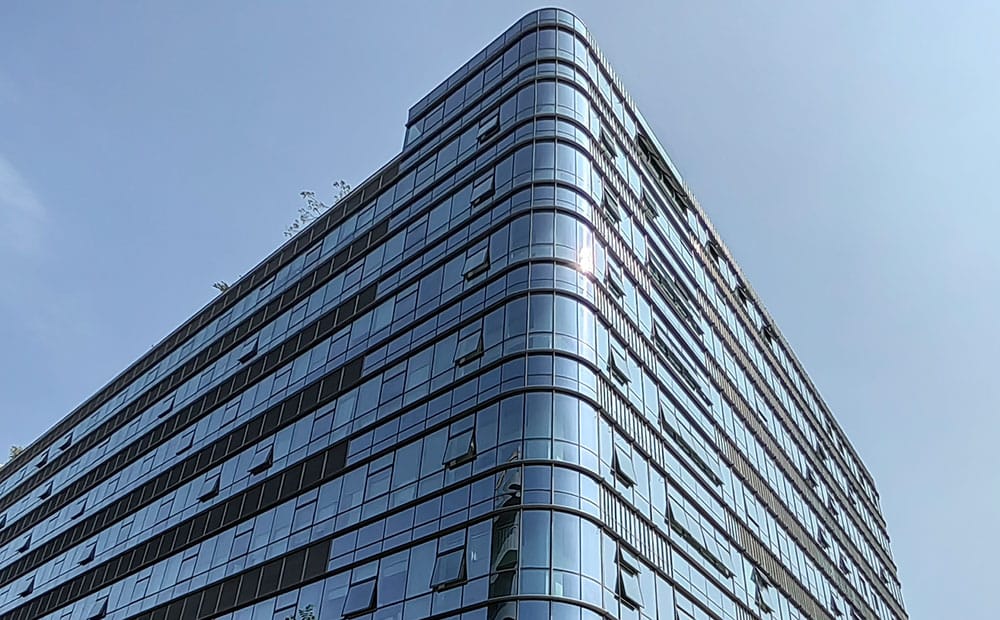
6. Professional Recommendations
Based on industry experience, here are key takeaways when comparing window walls and curtain walls:
For residential projects with tight budgets: Window walls are generally more economical.
For premium, high-rise, or landmark projects: Curtain walls should be prioritized for safety and performance.
Hybrid approach: Use different systems in different zones. For example, curtain walls for lower-level public spaces, window walls for upper-level residences—balancing cost and performance.
Consider lifecycle value: Don’t focus only on initial costs. Factor in energy savings, maintenance, and long-term aesthetics.
Both window walls and curtain walls are vital facade solutions in modern architecture. Their differences in cost, installation, performance, and application should guide system selection. The right choice not only affects appearance but also influences overall economics and sustainability.
If you are evaluating facade solutions for your project, working with an experienced team like ZDMQ can provide tailored design and cost analysis. Making the right decision will enhance aesthetics, performance, and market competitiveness for your building.

