
Glass curtain walls are not only a defining element of a building’s exterior appearance, but also play a crucial role in structural performance, energy efficiency, and safety.
However, over time, glass curtain walls may require replacement due to aging, sealant failure, structural deformation, or safety concerns.
Replacing a glass curtain wall is a highly technical process involving multiple disciplines—design, materials, construction, safety, and quality control.
This guide provides a comprehensive overview of the glass curtain wall replacement process—from initial assessment to final installation—helping international clients understand each stage, identify critical control points, and ensure safe, cost-effective, and high-quality project delivery.
1. Why Glass Curtain Wall Replacement Is Necessary
Before any work begins, it is essential to identify the reasons for replacement. The most common include:
1.1 Safety Risks
Cracked glass, loose fittings, failed sealants, corroded aluminum frames, or structural deformation can compromise building safety. Timely replacement prevents risks such as glass detachment, falling hazards, or water leakage.
1.2 Energy Efficiency and Performance Upgrades
Older curtain walls often use single-layer or basic tempered glass with limited insulation or acoustic performance.
Upgrading to double-glazed or Low-E glass can significantly enhance energy efficiency and occupant comfort.
1.3 Aesthetic Renewal and Renovation
Over time, curtain wall surfaces may show discoloration, oxidation, or staining. Replacing glass panels revitalizes the façade, restoring a modern, refreshed appearance.
1.4 Functional Modifications
During renovation, owners may wish to improve transparency, ventilation, daylighting, or spatial configuration. Curtain wall replacement allows these design goals to be achieved.
1.5 Compliance with Updated Codes and Standards
Many regions have adopted new building safety and energy codes.
Older curtain wall systems may no longer comply and must be upgraded to meet current standards.2. Pre-Replacement Preparation
Before construction, a thorough assessment of the existing façade and system conditions must be conducted.
This stage focuses on comprehensive evaluation and safety planning.
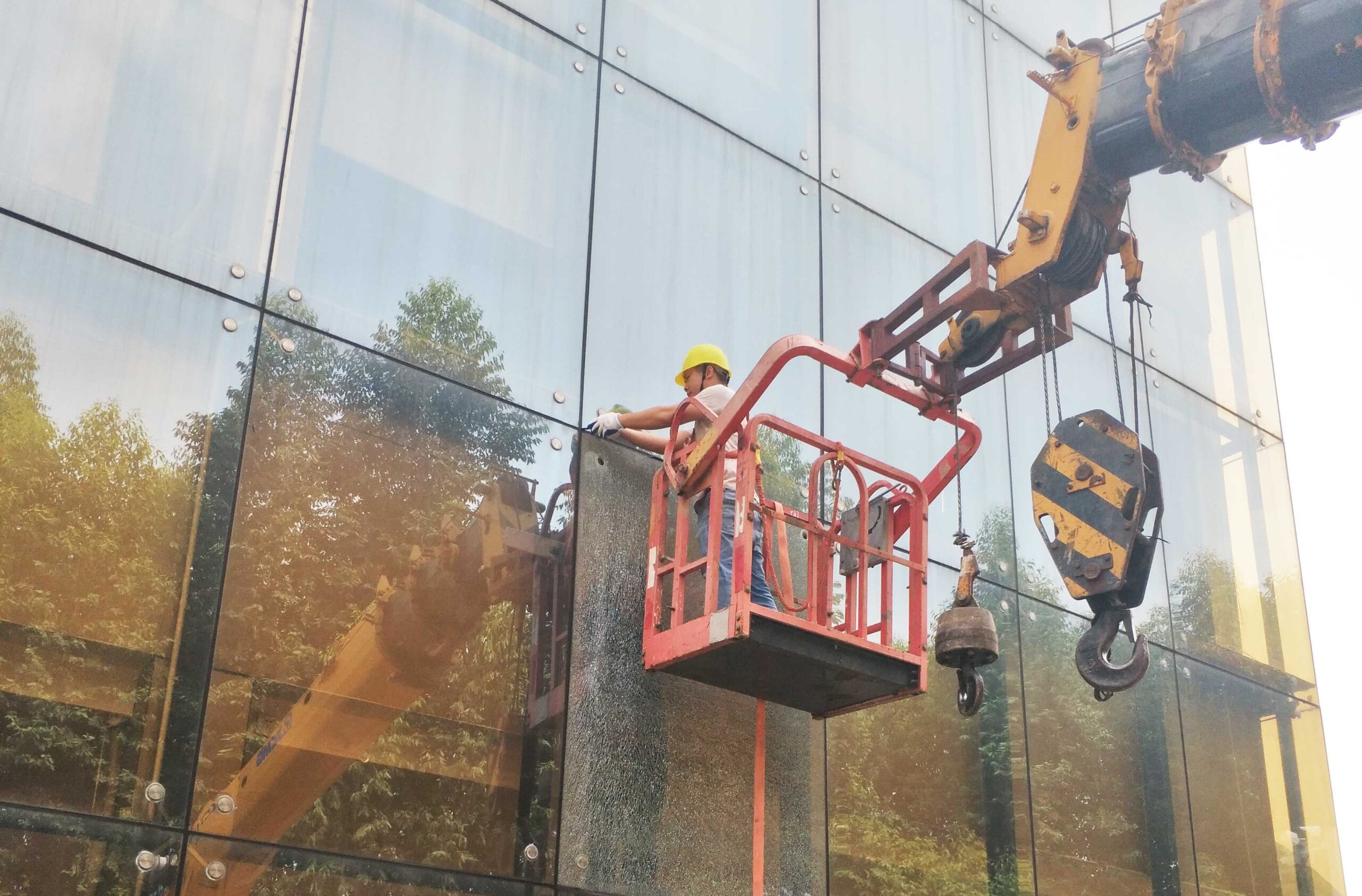
2.1 Site Inspection and Data Collection
A professional façade engineer should conduct a detailed inspection of the existing curtain wall, including:
Glass type, thickness, and dimensions
Aluminum framing structure
Condition of sealants and gaskets
Stability of anchors and fixing components
Evidence of leakage or damage
Measurements such as façade dimensions, story height, and access conditions must be recorded for design reference.
2.2 Technical Evaluation and Feasibility Study
Based on inspection results, assess whether localized replacement is possible or full façade removal is necessary.
This evaluation must consider the building’s load-bearing capacity, wind resistance, and safety requirements.
2.3 New Curtain Wall System Design
The new design should include:
Confirmed glass specifications (e.g., insulated, laminated, Low-E, tempered)
Structural strength and drainage calculations
Connection and sealing details
Energy performance optimization to meet modern standards
2.4 Construction and Safety Planning
Develop a detailed replacement work plan, including:
Demolition and installation sequence
Lifting equipment and hoisting routes
Temporary support system design
On-site safety management and fall-prevention measures
3. Major Steps in Glass Curtain Wall Replacement
The replacement process can generally be divided into six key stages, each requiring precise control of quality and safety.
Step 1: Removal of the Existing Curtain Wall
This is the most hazardous yet critical phase.
Before removal, the construction area must be isolated to protect pedestrians and building occupants.
Typical removal process:
1. Remove external decorative profiles and sealants
2. Disconnect glass panels from aluminum frames
3. Use vacuum lifters or cranes to safely detach glass units
4. Remove damaged or corroded frames and fittings
5. Clean and repair the existing substructure
Safety Tip:
For high-rise façades, use suspended platforms or aerial lifts and equip workers with safety harnesses, helmets, and debris nets.
Step 2: Structural Inspection and Base Repair
After removal, inspect and repair the underlying structure:
Check embedded parts, bolts, and brackets for looseness
Verify verticality and alignment of the frame structure
Remove residual sealant and debris
Reinforce or re-level the subframe if necessary
Any structural issues must be resolved before new glass installation to ensure long-term stability.
Step 3: Preparation of New Materials
Prepare all replacement materials, including glass panels, frames, sealants, gaskets, and fasteners.
Key requirements:
All glass must pass safety testing and have clean, undamaged edges
Aluminum profiles should meet specified surface treatment standards (anodized, powder-coated, etc.)
Use high-quality, UV-resistant silicone sealants
Ensure full compatibility among all materials and provide certification documents
For international projects, materials should comply with ASTM, EN, or GB standards and include sample approvals.
Step 4: Installation of the New Glass Curtain Wall
Installation should be carried out by experienced façade specialists following these steps:
1. Layout and Alignment
Mark reference lines on the structure to ensure precise vertical and horizontal alignment.
2. Frame Installation
Install mullions first, followed by transoms. All fasteners must be securely tightened and torque-checked.
3. Glass Installation
Use vacuum lifters or mechanical hoists to place glass panels accurately into position.
Maintain uniform joint gaps to accommodate thermal expansion and contraction.
4. Sealing and Waterproofing
Apply structural silicone and weatherproof sealants in a continuous, smooth bead without air bubbles.
5. Hardware and Accessory Installation
Install cover caps, flashing, drainage components, and finishing trims for a clean, uniform appearance.
Step 5: Testing and Final Inspection
After installation, perform comprehensive testing to ensure system integrity:
Visual Inspection: Verify flatness, color consistency, and absence of scratches
Water Tightness Test: Simulate rainfall to check for leakage
Wind Load Test: Confirm structural performance under design pressure
Sealant Adhesion Test: Verify curing and bonding strength
Cleaning: Remove excess sealant and construction residue
Only after all tests pass should the system receive final acceptance from supervisors or third-party inspectors.
Step 6: Maintenance and Aftercare
Post-installation maintenance is essential to extend the curtain wall’s lifespan:
Regularly clean glass surfaces to prevent corrosion from acid rain
Inspect sealants and gaskets periodically for aging or cracks
Tighten structural fasteners annually
Repair minor leaks or detached sealants promptly
Proper maintenance significantly reduces long-term costs and prolongs façade performance.
4. How to Choose a Professional Curtain Wall Replacement Contractor
For international clients, selecting a qualified partner is crucial. Evaluate candidates based on:
1. Experience and Certification
Prefer contractors with 10+ years of façade installation experience and international certifications (ISO, CE, etc.).
2. Design and Engineering Capability
Ensure the contractor can provide structural analysis, detail design, 3D/BIM modeling, and performance simulations.
3. Safety and Quality Systems
Verify that the company maintains strict safety training, risk assessment, and quality traceability systems.
4. Project Portfolio and Reputation
Review past projects, client testimonials, and after-sales service performance.
5. Transparent Pricing and Contract Terms
Request itemized quotations covering materials, labor, logistics, insurance, and warranty to avoid hidden costs.
Replacing a glass curtain wall is a multidisciplinary engineering process that integrates technical precision, architectural aesthetics, and strict safety management.
Its success depends on professional assessment, accurate design, skilled installation, and rigorous quality control.
Whether for commercial complexes, office towers, or luxury residences, a properly executed curtain wall replacement not only restores structural integrity and visual appeal but also enhances energy performance and asset value.
For international clients, partnering with an experienced and reliable façade contractor is the key to achieving safe, efficient, and long-lasting project results.
Would you like me to format this into a professional PDF report layout (with clear sections, headers, and optional visuals such as a step diagram or flowchart)? It would look like an exportable publication for client use.

