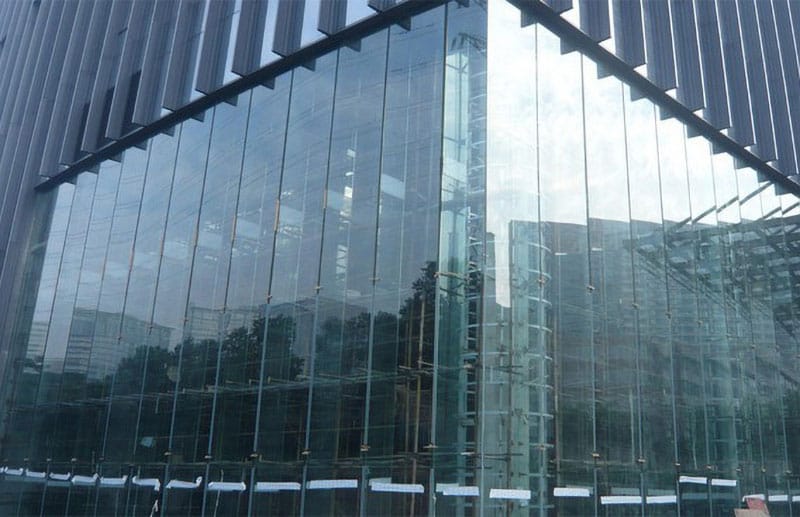
Glass curtain walls are becoming more and more common in modern buildings. They not only make the building look more fashionable, but also optimize lighting, energy saving and environmental protection. But many people may not know the common styles of glass curtain walls. Usually, the following styles can be listed, each with unique characteristics and applicable scenarios.
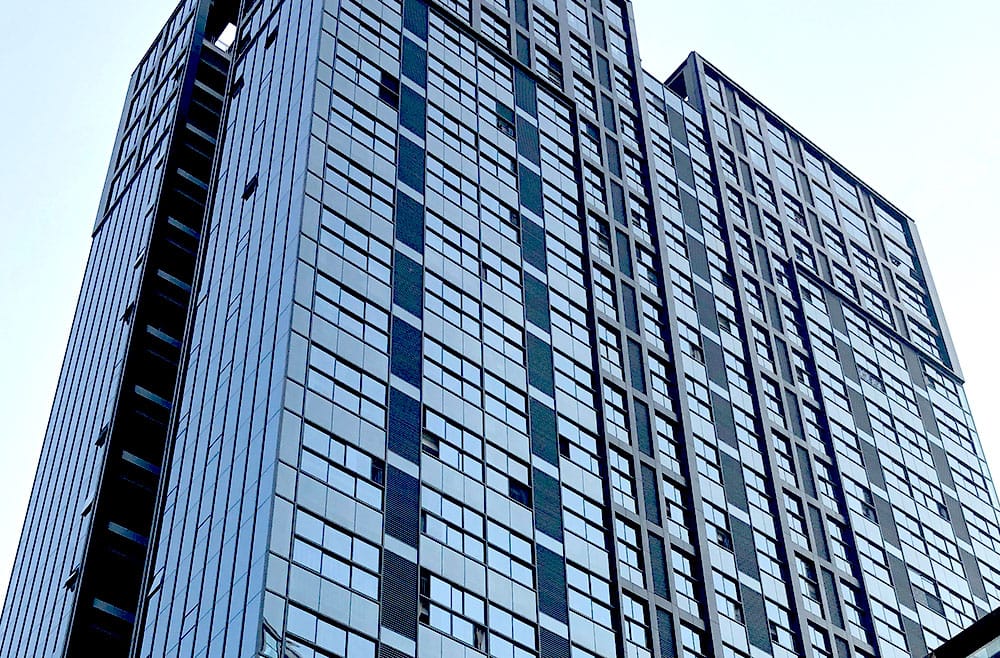
1. Framed glass curtain wall
Framed glass curtain wall is the most common curtain wall. It is like putting a metal skeleton coat on the building. The grid frame composed of aluminum alloy or steel is clearly visible, and the glass panels are embedded in these frames. It is common to see workers on the construction site installing the frame on site like Lego, and finally inserting the glass piece by piece. The advantages of framed glass curtain are affordable and easy maintenance. If any piece of glass is broken, it can be replaced.
2. Point-supported glass curtain wall
When you walk into an airport or art gallery, you will often see a wall with metal claws fixing the glass. This is a point-supported curtain wall. Each glass is grabbed by a stainless steel “spider claw” at the four corners, and fixed with bolts through a round hole in the middle, which looks like the glass floating in the air. The biggest highlight is the excellent transparency, which is particularly suitable for creating an open view. However, the installation precision is high, the glass must be pre-punched, and in case of typhoons and earthquakes, it is also necessary to consider whether the supporting structure can withstand it.
2. Unitized glass curtain wall
This type of curtain wall first assembles the frame, glass, and insulation layer into a complete unit in the factory, and then transports it to the construction site for direct hoisting. It is like tiling a building, and more than a dozen floors can be installed in a day. The curtain wall construction speed is 40% faster than the traditional method. However, the transportation cost is high, and the module size must be accurate to millimeters, which is more suitable for super-high-rise buildings with regular shapes.
4. Breathing curtain wall
Also known as double-layer curtain wall, a 20-50 cm air channel is left between the inner and outer layers of glass. In winter, the air outlet is closed for insulation, and in summer, it is opened for ventilation and heat dissipation, just like wearing a breathable down jacket for the building.
5. Full glass curtain wall
Most of the common glass curtain walls in the atrium of shopping malls belong to this type. The entire piece of glass has no frame support from bottom to top. The 12-meter-high ultra-white glass used in the sightseeing layer of the Shanghai World Financial Center is 19 mm thick and is suspended from the top and supported by the bottom.