
How to choose glass curtain wall profiles

If the exterior wall is decorated with curtain walls, would you choose glass curtain walls? If you really want to make glass curtain walls, how much do you know about profiles? As China’s top glass curtain wall manufacturing service provider, today I will tell you how to choose glass curtain wall profiles.
1. Basic understanding of glass curtain wall profiles
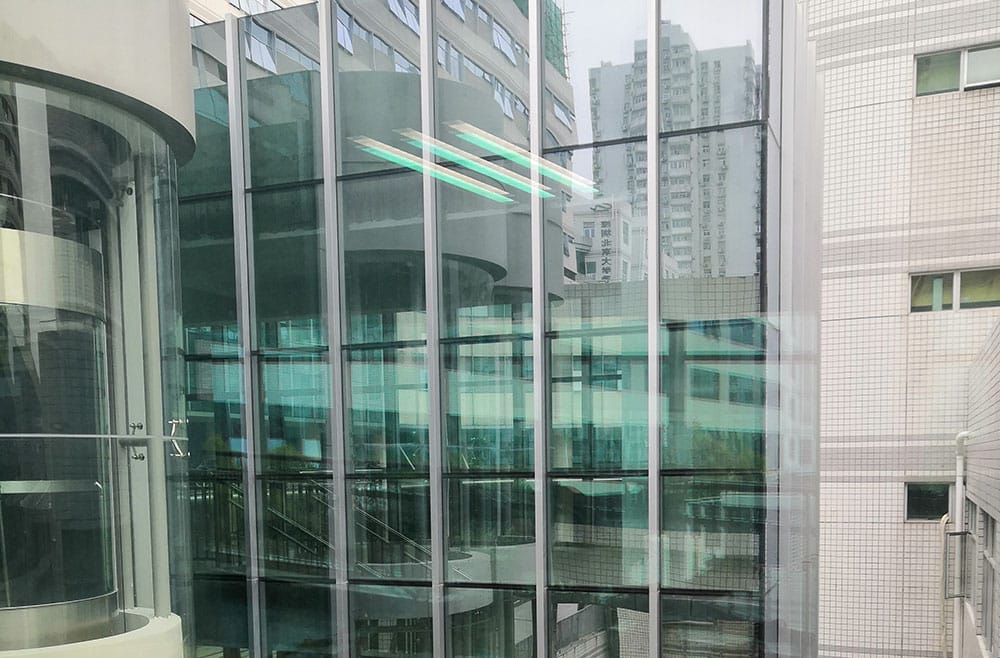
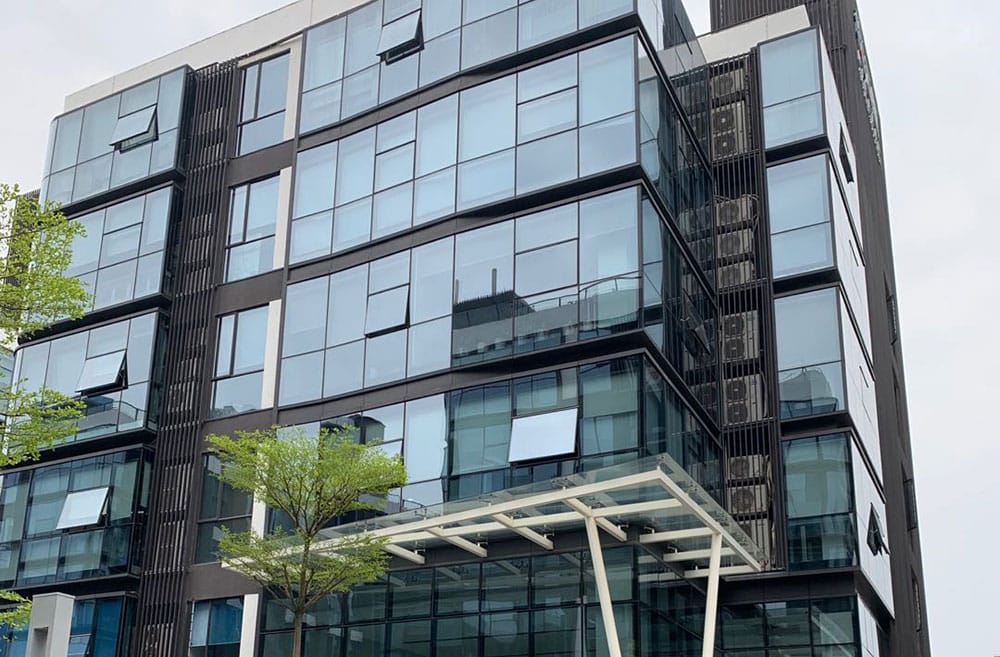
In simple terms, the “profile” of the glass curtain wall is a metal frame that supports and fixes the glass, just like the skeleton of the human body. Although it is usually invisible, it determines the stability, safety and service life of the entire curtain wall. Imagine that without the support of suitable profiles, those large areas of glass are like skin without a skeleton, and they cannot resist wind, rain and their own weight at all.
At present, the common curtain wall profiles on the market are mainly aluminum alloy, steel and stainless steel. Aluminum alloy occupies the vast majority of the curtain wall profile market due to its lightness, corrosion resistance and easy processing; steel is more used in occasions where structural strength needs to be emphasized; stainless steel is often used in seaside or highly polluted environments due to its excellent corrosion resistance.
The “cross-sectional shape” of the profile (that is, what the cross section looks like) directly affects its load-bearing capacity and use effect. Common cross-sectional shapes include rectangular, I-shaped, trough-shaped, etc. Different shapes are suitable for different force requirements. This is like building blocks, and blocks of different shapes are suitable for building structures in different parts.
How to choose glass curtain wall profiles

2. Key considerations for profile selection
1. Material selection: aluminum, steel or stainless steel?
Aluminum alloy profiles are currently the most common choice. It is like an “all-round player” – light weight (only 1/3 of steel), rust-free (an oxide film will form on the surface), easy to process into various shapes, and relatively affordable. For most ordinary high-rise buildings, aluminum alloy profiles are already competent enough.
Steel is like a “heavyweight boxer”. Its strength is several times that of aluminum alloy, and it is particularly suitable for situations with super-large spans or extreme wind pressure. However, steel has two obvious disadvantages: one is that it is easy to rust (unless special treatment is done), and the other is that it is heavy and will increase the overall load of the building. I have seen a project that used steel profiles in pursuit of a super-large column-free space, which resulted in a 15% increase in the foundation cost.
Stainless steel profiles are like “noble players”. They are almost rust-free and look high-end, but they are expensive (3-5 times that of aluminum alloys) and difficult to process. They are generally only used in projects with special appearance requirements or extreme corrosive environments (such as seaside chemical plants).
2. Profile thickness and size: thicker is not better
The wall thickness of the profile directly affects its bearing capacity, but thicker is not better. Too thick will increase unnecessary weight and cost, and too thin may cause deformation or safety problems. Generally speaking:
– The thickness of the curtain wall columns of ordinary office buildings is usually between 2.5-3.5mm
– The crossbeam can be slightly thinner, 2.0-2.5mm is enough
For super high-rise buildings or areas with particularly high wind pressure, it may need to be increased to 4mm or even thicker
When choosing, you must consider the local maximum wind pressure (you can consult the local meteorological department or design institute), just like buying an umbrella depends on the wind force in your city.
3. Surface treatment: not just for good looks
Surface treatment of profiles not only affects the appearance, but also the service life. Common treatment methods are:
– Anodizing: Form a protective film, available in silver, champagne, bronze and other colors, with a durability of about 10-15 years
– Powder coating: The most abundant color selection, like “spraying” the profile, with a durability of about 15-20 years
– Fluorocarbon spraying: The highest-end treatment, with extremely strong weather resistance, up to more than 25 years, and the most expensive
Coastal cities or industrial areas are recommended to choose at least powder coating, while high-end commercial buildings can consider fluorocarbon spraying for longer-term retention.
4. Thermal insulation performance: invisible but very important
Ordinary metal profiles will form “thermal bridges”, resulting in rapid heat transfer between indoors and outdoors. Common solutions now include:
– Thermal break aluminum alloy: adding insulation strips in the middle of the profile is like putting on “thermal underwear” for the profile, which can effectively block heat transfer
– Glue injection insulation: injecting special insulation materials into the cavity of the profile, which has better effect but higher cost
For cold areas in the north or buildings with high energy-saving requirements, thermal break design is almost a must. Although the price is 20-30% more expensive than ordinary profiles, the long-term savings in air conditioning costs are considerable.
3. Profile selection strategies for different building types
1. High-rise office buildings: safety first
The biggest challenge facing high-rise buildings is that wind pressure increases sharply with increasing height. I once participated in a project for a 200-meter-high building, and the wind pressure at the top was more than twice the ground value. For this type of building:
– The main column should be made of high-strength aluminum alloy (such as 6063-T6) or steel-aluminum composite structure
– The cross-section of the profile should be appropriately increased, and the wall thickness should not be less than 3mm
– The connector must be specially reinforced, just like “fastening the seat belt” for the profile
How to choose glass curtain wall profiles
2. Commercial complex: both beauty and function
Shopping centers and other commercial buildings often pursue a wide field of view and unique shape. At this time, the profile selection should consider:
– Use narrow frame design as much as possible (the smaller the width of the visible surface of the profile, the better) to maximize the glass area
– Choose high-end fluorocarbon spraying or special texture treatment for surface treatment to enhance the overall texture
– Special parts such as corners may require customized profiles, which requires communication with suppliers in advance
3. Residential projects: cost-effectiveness and sound insulation
Residential curtain walls are different from commercial buildings and pay more attention to:
– Cost-effectiveness: There is no need to excessively pursue high-end configurations. The combination of thermally broken aluminum alloy + powder spraying is usually sufficient
– Sound insulation: Choose multi-cavity profiles with sealing strips to effectively block noise
Safety: Especially for low-rise residential buildings, anti-theft factors should be considered, and the profile connection parts should be designed to be more secure
IV. Practical suggestions for profile procurement and construction
1. Supplier selection: Don’t just look at the price
There are good and bad profile suppliers on the market, so pay attention to the following when choosing:
– Check whether the manufacturer has formal qualifications (such as professional contracting qualifications for building curtain wall projects)
– Request a profile quality inspection report, especially component analysis and mechanical performance data
– On-site inspection of the factory’s production equipment and technical level, the consistency of products in small workshops is often very poor
Remember an industry experience: Products with prices lower than the market average price by more than 15% are likely to have shoddy work.
2. Construction and installation: details determine success or failure
No matter how good the profile is, improper installation will cause problems. Special attention should be paid during construction:
– Sealing treatment of the profile connection parts, which is a high-risk area for water leakage
– Leave enough gaps for thermal expansion and contraction, and the linear expansion coefficient of aluminum alloy is twice that of steel
– Avoid direct contact between different metals (such as aluminum and steel), otherwise electrochemical corrosion will occur
A real case: A project did not add an insulating gasket between the aluminum profile and the steel support during installation. Three years later, the connection parts were severely corroded and had to be replaced on a large scale.
3. Maintenance: Extend service life
Daily maintenance of curtain wall profiles is simple but important:
– Check the sealant status regularly (usually needs to be replaced every 5-8 years)
– Avoid using strong acid and alkali cleaners when cleaning to avoid damaging the surface treatment layer
– Professionally check whether the load-bearing components are deformed after a typhoon or earthquake
V. Future trends and innovative technologies
Curtain wall profile technology is also constantly developing. New trends worth paying attention to include:
– Ultra-narrow frame profiles: Through special reinforcement design, the visible surface width is minimized while ensuring strength
– Intelligent profiles: Integrated sensors can monitor temperature, deformation and other data
– Environmentally friendly materials: The proportion of recycled aluminum is constantly increasing, and some products have used 100% recycled aluminum
– 3D printing profiles: Especially suitable for special-shaped buildings, achieving complex shapes that cannot be completed by traditional processes
The selection of glass curtain wall profiles is a subject that requires comprehensive consideration of materials, performance, cost and aesthetics. If you are a non-professional, the most important thing is to find a reliable design company and supplier, clarify your needs and budget, and do not blindly pursue the highest configuration, but also do not compromise on key safety indicators. I hope this article can help you make a more informed decision when choosing curtain wall profiles.

发表评论

您的邮箱地址不会被公开。 必填项已用 * 标注