
“How much does a visible-frame glass curtain wall cost per square meter?”—this is one of the most common questions raised by property owners, designers, and developers when discussing a building façade project. However, behind this seemingly simple question lies a complex system involving multiple variables and requiring professional evaluation. Understanding these factors is the only way to obtain a truly meaningful quote and ensure the long-term quality of the project.
1. Core Material Costs: Choosing the Right Glass and Aluminum Profiles
Materials form the foundation of any curtain wall system, and their quality and specifications largely determine the starting price.
1. Glass Options
Single glazing / basic insulated glazing:
A cost-effective, economical choice.
Tempered glass:
Offers greater strength and improved safety—slightly higher in cost.
Laminated glass:
The safest option; shards adhere to the interlayer when broken—more expensive.
Low-E (low-emissivity) glass:
Significantly improves energy efficiency by enhancing insulation performance; preferred for high-quality projects and comes at a higher price.
Specialty glass (ultra-clear, ceramic frit, fire-resistant, etc.):
Prices vary widely depending on optical performance or functional requirements.
2. Aluminum Profile Specifications and Quality
Profile type & wall thickness:
Commonly used 6063-T5 aluminum profiles vary in cost depending on section complexity and thickness (especially load-bearing sections, typically ≥2.5 mm).
Surface treatment:
Powder coating is economical; PVDF (fluorocarbon) coating provides superior durability and aesthetics at a higher price; wood-grain or specialty finishes are priced separately.
Thermal break strips:
PA66+GF25 nylon strips are standard. Strip width and cavity design play key roles in overall thermal performance.
2. Design Complexity & Installation Difficulty: Turning Drawings Into Reality
The design defines the system and is a major factor in cost estimation.
Unitized vs. Stick Systems
Unitized curtain wall:
Higher factory prefabrication, better quality control, faster installation—overall cost tends to be higher but with superior consistency.
Stick-built curtain wall:
Highly adaptable for complex shapes, but requires excellent on-site workmanship and precision.
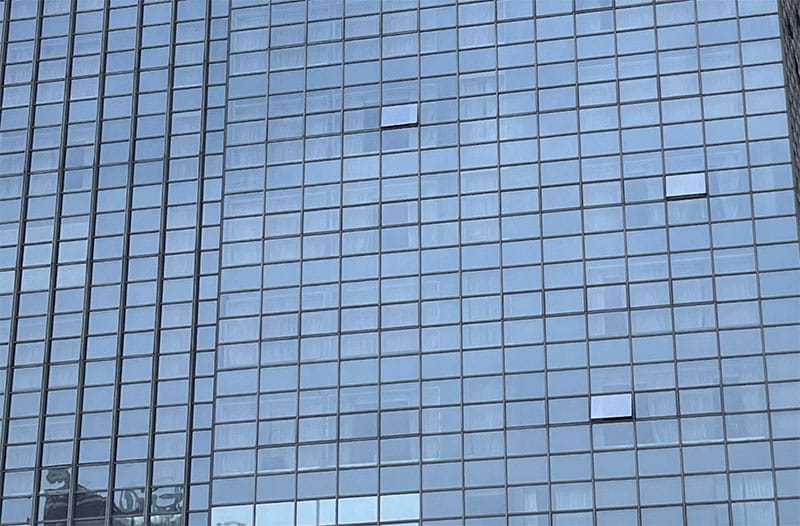
Special Shapes & Curved Designs
Unique façade geometry increases costs due to custom aluminum extrusion tooling, specialty glass fabrication, and more stringent surveying and alignment.
Building Height & Structural Requirements
For high-rise buildings (especially above 200 m), wind load and seismic requirements are more demanding. This results in thicker aluminum profiles, stronger glass, and enhanced fixing systems, increasing structural redundancy and cost.
Site Constraints
Tight urban sites, restrictions on cranes, complex working environments, or challenging weather conditions can significantly increase labor and time costs.
3. Project Scale & Schedule Management: The Double-Edged Sword of Scale
Project Size
Large-scale projects (tens of thousands of square meters) may benefit from economies of scale—bulk material purchasing, optimized layout, and reduced waste.
Construction Phasing
Continuous workflow and well-coordinated scheduling help avoid delays and unnecessary indirect costs.
Schedule Pressure
Fast-track projects require additional labor shifts, overtime, and night work, all of which increase overall costs.
4. Value-Added Services: Beyond Basic Material and Labor Costs
Professional Design Optimization
A qualified façade consultant can integrate structural logic, constructability, and cost-efficiency early in the design stage. Although this involves design fees, it significantly reduces risks, rework, and waste later.
Comprehensive Quality Assurance
From material inspections (coating thickness tests, glass stress tests) and concealed works inspections (anchor pull-out tests), to on-site air-tightness and water-tightness performance tests (per GB/T 15227), a solid QA system ensures long-term reliability.
Maintenance and Service Capability
A responsible contractor provides:
Clear warranty obligations
Rapid response maintenance teams
Spare materials for special specifications
Such capabilities are crucial for long-term building performance.
Reference Price Ranges
(Prices vary widely; the following ranges apply only to mainstream projects in China using standard configurations.)
Basic material cost:approx. 400 – 800 RMB/m²(materials only)
Turnkey installed cost (typical range):1,200 – 1,800 RMB/m²
High-end / special projects:
Complex shapes, super high-rise buildings, premium Low-E glass, or special technical requirements can easily reach 1,800 – 3,500 RMB/m² or higher
Important:Any “ballpark quote” that does not consider drawings, technical specifications, and site conditions has little real value. Accurate pricing requires a tailored professional assessment.
Choosing the Right Partner: The Key to Maximizing Long-Term Value
A trustworthy curtain wall contractor should excel in:
Design optimization:
Ensures cost efficiency without sacrificing performance.
Supply chain management:
Guarantees stable, high-quality material procurement.
Experienced construction teams:
Minimizes rework and unnecessary expenses.
Lifecycle service awareness:
A curtain wall is the building’s “long-term protective skin”—professional installation and reliable maintenance matter just as much as initial construction.
The cost of a visible-frame glass curtain wall is far more than a single price figure. It reflects comprehensive decisions involving building quality, functional performance, and long-term investment value.
Whenever you’re faced with the question “How much does a visible-frame glass curtain wall cost per square meter?”, reach out to a reputable professional curtain wall company. Whether you need early-stage design consultation, project execution support, system optimization, or post-completion maintenance, a qualified partner will provide customized, one-stop solutions—ensuring every investment contributes to lasting value and superior building performance.

