
In the modern urban skyline, curtain walls have become one of the most recognizable façade designs for high-rise buildings. Among the many types of curtain walls, the frame curtain wall system is undoubtedly one of the most classic and widely used. It is not only an essential component of architectural aesthetics but also plays an irreplaceable role in structural safety, functional performance, and energy efficiency. To understand the modern building façade, one must first be familiar with the frame curtain wall system.
What is a Frame Curtain Wall System
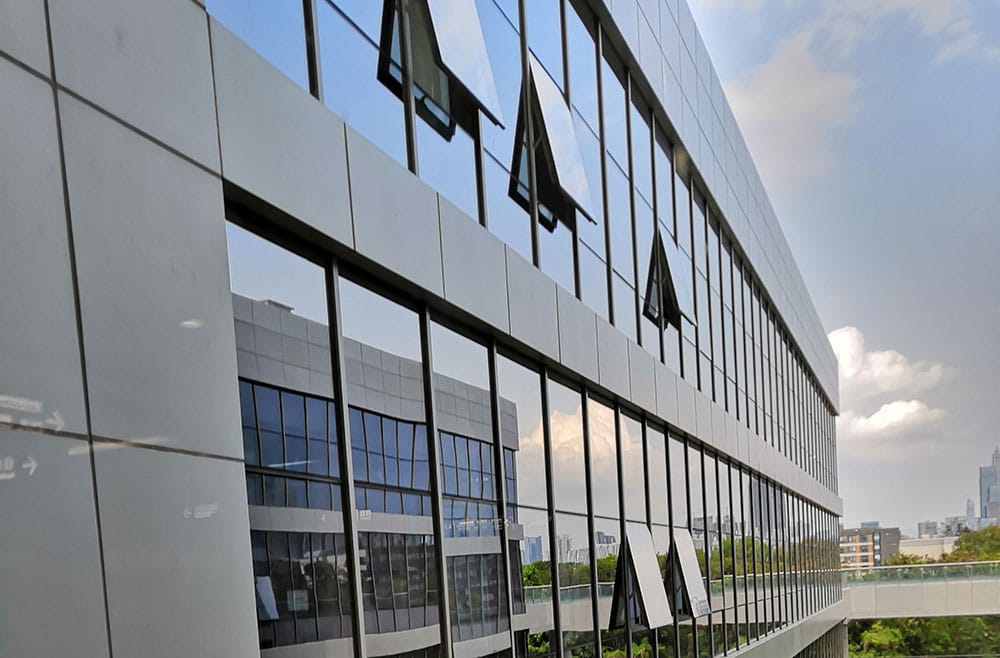
A frame curtain wall system is a type of façade structure that uses a metal frame to secure glass, metal panels, stone, or other decorative materials to the exterior of a building. Its core structure consists of vertical mullions and horizontal transoms, forming a solid “grid skeleton” upon which the panels are mounted.
Compared to point-supported curtain walls, the frame curtain wall system has a more straightforward and stable structure. Its installation method makes it highly adaptable in façade construction. Because the frame curtain wall system allows flexible adjustment of frame dimensions and panel types, it can balance architectural creativity with engineering feasibility right from the design stage.
Whether on the exterior of towering office buildings or large-scale commercial façades, the frame curtain wall system can shape the appearance and character of a building with stable structure and elegant lines.
Core Functions of the Frame Curtain Wall System
Architectural Aesthetic Creation
The frame curtain wall system is not only a protective layer for the façade but also a crucial medium for expressing the building’s visual identity. By combining different colors, materials, and reflective effects of glass, it can give a building a distinct personality. Through the grid design of vertical mullions and horizontal transoms, it can make a building appear tall, steady, or rhythmically dynamic, meeting the needs of various architectural styles.
Structural Safety
The frame curtain wall system’s skeleton bears the weight of the panels and resists wind loads. With precise structural engineering, it can remain stable under strong winds, earthquakes, and other external forces. The secure connections between vertical and horizontal frames, along with the sealed fixation of panels to the frame, make the curtain wall a critical barrier protecting the building from environmental factors.
Functionality and Comfort
In addition to providing basic protection against wind, rain, and dust, the frame curtain wall system can work with insulated glass, Low-E glass, and other materials to achieve excellent thermal and acoustic performance. For high-rise offices and hotels, this significantly improves indoor comfort and energy efficiency.
Easy Maintenance and Replacement
Because the panels of a frame curtain wall system are mechanically fixed to the frame, replacing a single panel during maintenance is relatively easy and does not require dismantling large sections of the structure. This reduces maintenance costs and minimizes disruption for commercial buildings in continuous operation.
Application Fields of the Frame Curtain Wall System
High-Rise Office Buildings
In urban centers, the frame curtain wall system is almost standard for high-rise office buildings. It meets modern aesthetic demands while controlling indoor lighting and temperature, providing a comfortable working environment.
Large Commercial Complexes
The frame curtain wall system supports large glass façades, giving malls, exhibition centers, hotels, and similar buildings an open and transparent visual effect, integrating the building space with the urban landscape.
Public Buildings and Landmark Projects
Many municipal buildings, convention centers, and airport terminals widely use the frame curtain wall system. It ensures structural safety while creating grand, imposing exteriors that enhance the city’s image.
High-End Residential and Apartments
In some premium residential projects, the frame curtain wall system is used for floor-to-ceiling windows and panoramic balconies, giving residents expansive views and natural light while maintaining insulation and privacy.
Advantages of the Frame Curtain Wall System
Flexible Design Space
The frame curtain wall system allows free adjustment of mullion and transom spacing and layout to suit different façade designs. Whether it’s a regular rectangular grid or an irregular creative pattern, it can be realized through this system.
High Installation and Construction Efficiency
Its modular installation approach shortens construction periods. Frames and panels can be installed in phases, greatly improving site flexibility.
Excellent Cost-Performance Ratio
Compared with more complex curtain wall structures, the frame curtain wall system balances cost and performance. It offers excellent thermal, acoustic, and waterproofing performance while keeping the budget under control, making it suitable for most commercial and public projects.
Strong Durability
Using corrosion-resistant materials such as aluminum alloy and stainless steel, the frame curtain wall system can withstand various climate conditions for long periods without fading or deforming.
Perspective on the Frame Curtain Wall System
From an industry perspective, the frame curtain wall system is a mature, well-recognized curtain wall type. It meets diverse façade design requirements while providing reliable structural safety and functional performance. For owners, developers, architects, and contractors, it offers a balanced solution combining aesthetics and practicality.
The frame curtain wall system is no longer just a decorative outer layer—it is a comprehensive solution for a building’s exterior envelope. Whether on towering urban skyscrapers or artistic landmark buildings, the frame curtain wall system will continue to play an irreplaceable role for a long time to come.

