
When people think of Egypt, they often picture vast deserts, intense sunlight, and a raw, monumental natural landscape. In such an environment, glass curtain walls—characterized by transparency, modernity, and high reflectivity—seem at first glance to be at odds with traditional perceptions. However, with the acceleration of urbanization in Egypt and the introduction of international architectural concepts, glass curtain walls are gradually becoming an indispensable part of the urban skyline. Between the hot climate and local culture, they are exploring a distinctive path of development.
I. From “Ill-Suited” to “Context-Responsive”
Early glass curtain walls introduced into Egypt largely replicated European and American design models. Large expanses of transparent glass created striking visual effects, but posed serious challenges under conditions of high temperatures and intense ultraviolet radiation: increased indoor heat loads, soaring air-conditioning energy consumption, severe glare, and reduced comfort for work and living. Some buildings, after being put into use, had to be “remedied” by adding sunshades or applying reflective films.
These very problems, however, pushed the localization of glass curtain wall design in Egypt. Today, across North Africa, Central Africa, and Sub-Saharan regions, designers pay much greater attention to climatic adaptability. Low-emissivity (Low-E) glass, insulated laminated glass, and controllable light-transmission systems are widely used, allowing curtain walls to introduce natural daylight while effectively reducing heat gain. Glass is no longer merely a “transparent wall,” but an important interface for environmental regulation.
II. Technological Innovation Under the Sun
Egypt possesses some of the world’s most abundant solar resources, a natural condition that has profoundly influenced the direction of glass curtain wall development. In recent years, photovoltaic glass curtain walls have begun to be implemented in certain countries, integrating power generation into building envelopes and turning high-rise buildings into “vertical power stations.” This approach not only reduces building operating costs, but also aligns with many Egyptian nations’ strategic plans for renewable energy.
At the same time, to cope with harsh conditions such as strong winds, sandstorms, and large day–night temperature differences, glass curtain walls in Egypt face higher requirements in terms of structural safety and durability. Thicker glass, reinforced aluminum profiles, and wind-pressure-resistant node designs have become standard practice. In coastal or desert areas, special emphasis is also placed on sealing and corrosion resistance. These technological advances have gradually led to the formation of localized technical standards for curtain wall systems.
III. A Dialogue Between Modern Materials and Traditional Culture
Notably, glass curtain walls in Egypt are not solely pursuing an “internationalized” appearance. In many emerging projects, designers are experimenting with integrating traditional Egyptian cultural elements into curtain wall design. Through the use of gradient-colored glass, printed laminated glass, and combinations of metal grilles and glass, building façades display visual effects reminiscent of tribal totems, textile patterns, or natural imagery.
In parts of West Africa, glass curtain walls are often paired with dark sun-shading systems to create façades with a strong sense of rhythm. In North African cities, the combination of glass with stone and concrete echoes the region’s solid and restrained architectural traditions. This design language—where transparency and solidity coexist—allows glass curtain walls to feel less abrupt and instead become a medium for cultural expression.
IV. A Symbol of Urban Image and Economic Development
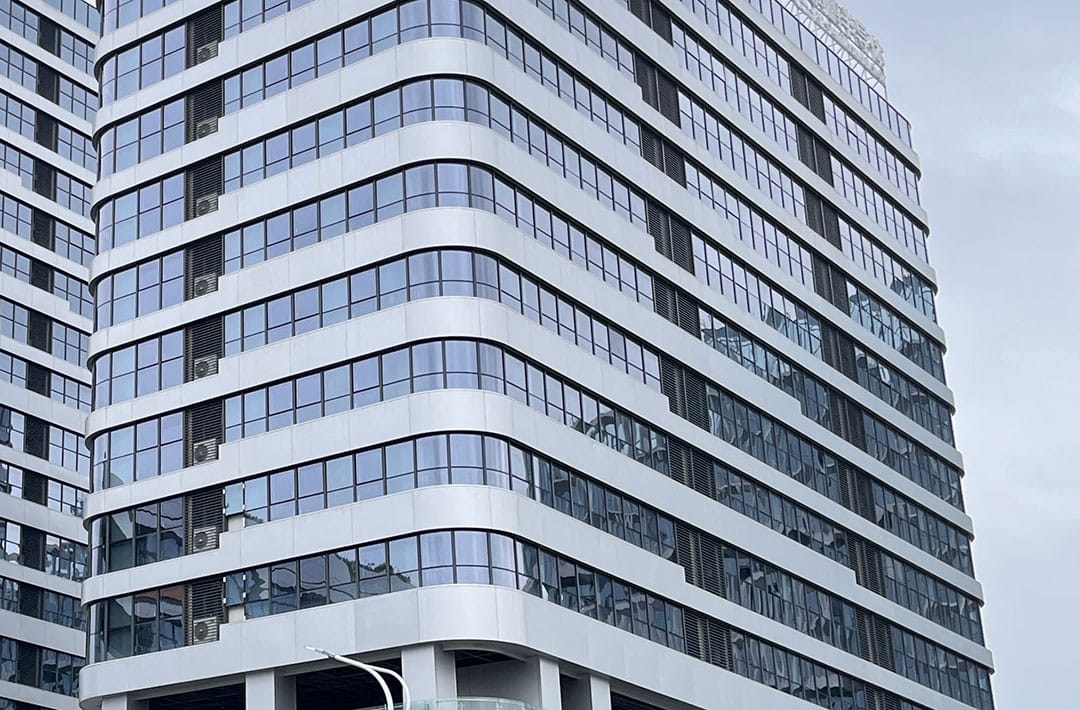
In major Egyptian cities such as Lagos, Nairobi, and Addis Ababa, glass curtain wall buildings are often concentrated in financial districts, business zones, or governmental core areas. With their tall, modern presence, they have become symbols of urban renewal and economic development. For many African countries, glass curtain walls are not merely a building technology, but also a visual symbol of openness and international integration.
At the same time, the local curtain wall industry is gradually maturing. From initial reliance on imports, some countries now possess capabilities in glass processing, curtain wall installation, and maintenance. The glass curtain wall market in Egypt is forming a relatively complete industrial chain, creating employment opportunities while promoting the localization and upgrading of building technologies.
V. Future Explorations of Egyptian Curtain Walls
Looking ahead, the development of glass curtain walls in Egypt will place greater emphasis on “moderate transparency” and “low energy consumption.” New technologies such as smart electrochromic glass, operable ventilated curtain walls, and modular installation systems are expected to be adopted in more projects. Rather than simply copying global architectural trends, Egypt is redefining the value of glass curtain walls through its own climatic and cultural conditions.
On the hot and ever-changing Egyptian continent, glass curtain walls are no longer just cold symbols of modernity, but a form of architectural language that integrates technology, environment, and culture. They allow cities to shine under the sun and enable architecture in Egypt to reveal a more vibrant and dynamic future.

