
In modern architectural design and construction, the facade is no longer just the “outer shell” of a building. It is not only about aesthetics but also involves energy efficiency, safety, comfort, and the long-term value of the property. As a result, more and more developers, designers, and property owners are paying close attention to facade solutions. However, how to strike a balance among materials, techniques, and budget has become one of the most common pain points in many projects.
Why Scientific facade Solutions Are Necessary
The facade is the most visually perceptible part of a building and directly determines the first impression it makes. Whether it’s an office tower, a commercial complex, or a residential community, a well-designed facade solution can provide several key benefits:
Enhancing Overall Image
In first-tier cities, the facade almost defines the quality level of a project. For example, the skyscraper cluster in Shanghai’s Lujiazui features unified and modern facade designs, not only increasing the value of each building but also shaping the city’s skyline.
Improving Energy Efficiency
Studies show that buildings account for over 30% of total energy consumption, and the facade plays a crucial role. A reasonable facade solution can reduce energy consumption by 15%–30% through technologies such as insulated glass, Low-E coatings, and thermal break aluminum panels.
Extending Service Life
An effective facade solution considers more than just aesthetics—it also accounts for waterproofing, wind resistance, and weather durability. For instance, in coastal cities, corrosion-resistant facade systems can prevent damage caused by salt spray.
Meeting Functional Needs
A commercial complex may prioritize facade transparency and display, while hospitals or schools may focus more on safety and comfort. Different scenarios call for tailored facade solutions.
Common Types of facade Solutions
In practice, there are many options for facade solutions. Different materials, processes, and designs produce distinct results and costs.
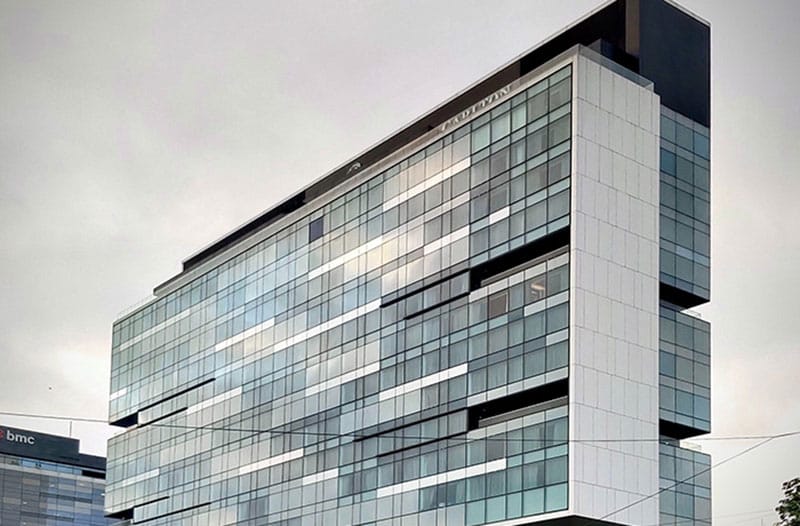
Glass Curtain Wall Systems
Applications: Office buildings, commercial complexes, landmark structures
Advantages: Transparency, modern appeal, enhanced daylighting
Case Study: A large financial tower in Shenzhen adopted a full glass curtain wall. With its clean and modern appearance combined with double-glazed units, it reduced annual energy costs by around 3 million RMB.
Metal Curtain Wall Systems
Applications: Airports, stadiums, government buildings
Advantages: High strength, weather resistance, flexible design
Case Study: Guangzhou Baiyun Airport’s Terminal 2 used large aluminum panels with fluorocarbon coatings, ensuring color stability for up to 20 years.
Stone Curtain Walls
Applications: High-end residences, hotels, banks
Advantages: Luxurious and durable
Case Study: A five-star hotel in Beijing used granite stone cladding, significantly improving both aesthetics and durability.
Hybrid Solutions
Many projects combine materials such as glass, aluminum, and stone for better performance and visual effect. For instance, in some complexes, glass façades are used on the lower levels for commercial visibility, while upper floors utilize aluminum and stone for energy efficiency and durability.
How to Choose the Right facade Solution
Many property owners ask: Which facade solution should I choose? The answer depends on several dimensions:
Project Positioning
A high-end office tower may require a modern, stylish façade, while a residential development needs a balance between cost and comfort.
Budget
Costs vary significantly. Standard aluminum panel façades may cost 800–1200 RMB per square meter, while full glass curtain walls can reach 2000–3000 RMB. Clarifying the budget is the first step.
Climate and Geography
Cold regions benefit from insulated glass façades, while coastal areas need waterproofing and corrosion resistance.
Maintenance Costs
Long-term upkeep must be considered. Glass curtain walls, though visually appealing, require frequent cleaning.
A few years ago, I worked on a coastal commercial complex in eastern China. The client initially wanted a full glass facade for a sleek look. However, the budget exceeded expectations by 30%, and maintenance and energy costs posed long-term concerns. After rounds of discussion, we proposed a hybrid façade: point-supported glass walls for the lower commercial levels and aluminum panels with insulated glass for the upper floors. The result was not only an impressive appearance but also a 20% increase in foot traffic compared to nearby projects, while energy costs dropped by around 15%. This case illustrates the importance of tailoring facade solutions to specific conditions.
Common Questions About facade Solutions
Q1: Do effective facade solutions always require high costs?
Not necessarily. Smart design and execution often matter more than cost alone. Many mid-range housing projects achieve good insulation and aesthetics with optimized aluminum window systems.
Q2: How can facade safety be ensured?
Choosing reputable manufacturers and experienced contractors is key. For example, glass façades must use tempered or laminated glass that meets national wind and seismic resistance standards.
Q3: Is facade maintenance troublesome?
It depends on materials. Metal and stone façades are relatively easy to maintain, while glass requires regular cleaning. Owners should consider future upkeep when deciding.
Q4: Does the facade impact property value?
Yes. Façades affect aesthetics, energy use, and comfort. A well-designed facade solution significantly boosts both market value and rental appeal.
Conclusion
facade solutions are not just about design aesthetics—they are comprehensive systems that balance image, function, energy use, safety, and cost. A good solution can make a building a city landmark while saving long-term expenses.
For developers, facade planning should begin early in the project, not as an afterthought. For property owners, understanding the pros and cons of different systems allows for smarter decisions. With the rise of green and smart building technologies, facade solutions will continue to evolve toward more sustainable, efficient, and intelligent systems.
If you are currently looking for the right facade solution for your project, consider your needs, budget, and environment carefully, and work with a capable design and construction team. A scientific facade solution is not just the “face” of a building but also a guarantee of long-term value.

