
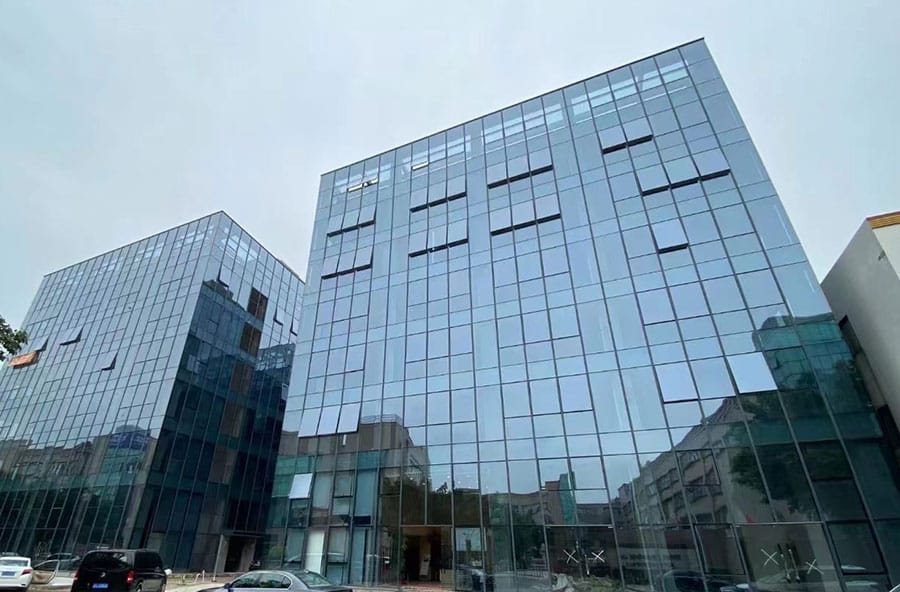
The skyline of modern cities is defined by glass curtain walls, which stand out for their transparency and contemporary appeal. Behind this minimalist exterior, however, exposed-frame and hidden-frame glass curtain walls differ significantly—from structural safety and aesthetic performance to long-term maintenance costs. Understanding these core differences is crucial for any construction project.
The Debate Over Visible vs. Hidden Structures: How Are Skeletons Presented?
Exposed-Frame Glass Curtain Walls: Frank Geometric Aesthetics
The most distinctive feature of exposed-frame glass curtain walls is their visible aluminum frames, which clearly divide the glass into individual units. The glass panels fit into pre-designed grooves and are securely fixed to the frames using pressure plates. This mechanical fastening method has a clear structure and explicit force transmission. The frames form the “skeleton” and grid of the curtain wall, creating a regular, robust industrial aesthetic. Installation is relatively manageable, and replacing individual glass panels later is straightforward.
Hidden-Frame Glass Curtain Walls: Seamless Transparency Wonders
Hidden-frame glass curtain walls pursue a “borderless” pure visual effect. Glass panels are bonded and fixed to aluminum sub-frames (hidden indoors) using high-strength, high-performance structural silicone sealants. The main load-bearing frames are completely covered by the glass, leaving almost no obstructions when viewed from the outside. This delivers exceptional visual penetration and enables large-scale continuous glass facades—ideal for buildings aiming for a modern, tech-savvy look. However, this “floating” effect imposes extremely strict requirements on the quality of structural sealants, precision of construction techniques, and environmental controls (e.g., temperature, humidity, cleanliness).
In-Depth Differences in Performance and Maintenance
Load-Bearing and Force Transmission
Exposed-frame type: Loads are evenly borne and transmitted by the frames through mechanical fastening. The load-bearing capacity and stability of the frames are decisive factors.
Hidden-frame type: The dead weight of glass panels and external loads (e.g., wind pressure) rely almost entirely on the bonding strength between the edge of the glass panels and the structural sealant to transmit force to the internal sub-frames and the main building structure. The structural sealant is thus the “lifeline” of the system.
Complexity of Construction Techniques
Exposed-frame type: Relies primarily on the precise processing of metal components and on-site installation. The workflow is relatively standardized, and quality control points are intuitive.
Hidden-frame type: The bonding process is the core challenge. Substrate preparation must meet the Sa2.5 cleanliness standard, and the sealing environment must be strictly controlled within a range of 5°C–40°C (temperature) and <80% (humidity). Additionally, the thickness, width, and continuity of the sealant joints require millimeter-level precision. Poor control over any single step can lead to major safety hazards—making this a key technical difficulty in curtain wall engineering.
Ease of Maintenance
Exposed-frame type: When a single glass panel is damaged, it can be easily replaced by removing the pressure plate on the outdoor side. No large-scale damage to surrounding structures is needed, resulting in low maintenance costs—especially suitable for high-rise buildings.
Hidden-frame type: Glass replacement involves removing old sealant, thoroughly cleaning the bonding surface, and reapplying new sealant. The process is time-consuming and requires specialized tools. Comprehensive protective measures must be put in place during the work, and any carelessness may damage the sealing or bonding of adjacent units. Overall, maintenance costs are high and risks are significant.
Targeted Selection for Applicable Scenarios
Exposed-Frame Glass Curtain Walls
They emphasize the expression of regular lines and building structures. Their cost-effectiveness, controllable safety performance, and easy operation and maintenance make them the mainstream choice for conventional projects such as large office buildings, public facilities (hospitals, schools), and industrial plants.
Hidden-Frame Glass Curtain Walls
They maximize transparency to convey a sense of spatial extension. They are the top choice for high-end commercial centers, lobbies of five-star hotels, corporate headquarters (for iconic facades), and art exhibition spaces—all of which pursue top-tier visual impact. However, their high costs and strict construction/maintenance requirements mean they are more suitable for projects with sufficient budgets and meticulous management.
Regardless of the type chosen, adhering to the national standard GB 50176 Technical Code for Glass Curtain Wall Engineering, certifying structural sealants (e.g., to ASTM C1184 standards), conducting on-site pull-out tests, ensuring the tightness and reliability of the sealing system, and performing regular professional inspections and maintenance are prerequisites for avoiding high-altitude falling risks and extending the building’s service life.
When facing the complex choice brought by the differences between exposed-frame and hidden-frame glass curtain walls, in-depth technical expertise and extensive project experience are the keys to success. Collaborating with a professional glass curtain wall company is the best approach to creating a curtain wall system that balances aesthetics and safety.
Whether you prefer the structural rigor of exposed-frame glass curtain walls or are impressed by the boundless visibility of hidden-frame ones, professional curtain wall companies offer in-depth project consulting and specialized design solutions. Through precise demand analysis, structural calculations, and detailed design, they can tailor the most optimized and safe glass curtain wall implementation plan for your project.
A curtain wall is not just a “coat” for a building—safety is its foundation. With 12 years of focus on core curtain wall technologies and proven reliable solutions across over 500 projects, we provide dual protection for your building’s aesthetics and engineering safety, all integrated into the planning process.

