
As the global construction industry continues to evolve, decorative curtain wall engineering in Africa has emerged as a new focal point for international architects, contractors, and developers. With the continent’s rapid economic growth, accelerating urbanization, and increasing public and private investment, more and more international projects are being developed across Africa.
Curtain wall systems—particularly decorative facades—are now recognized not only for their protective function but also as defining aesthetic and cultural elements of modern African architecture.
This article explores the full landscape of Africa’s decorative curtain wall engineering across seven dimensions: market background, design trends, technical implementation, regional challenges and opportunities, material applications, construction management, and future development—offering global construction professionals a comprehensive understanding of this promising market.
1. Market Background and Opportunities in Africa’s Curtain Wall Sector
In recent years, Africa’s infrastructure and real estate industries have experienced explosive growth. According to United Nations data, Africa’s urbanization rate has surpassed 45% and is projected to reach 60% by 2050. Major economies such as Nigeria, Kenya, Egypt, South Africa, Ghana, and Morocco are seeing rapid increases in commercial complexes, hotels, airports, hospitals, and residential projects—driving massive demand for curtain wall systems.
Decorative curtain walls in Africa are not only protective facades but also symbols of urban identity. With modern design concepts becoming more widespread, developers are now emphasizing functionality, aesthetics, and energy efficiency together rather than functionality alone.
Currently, the most in-demand systems include:
Hybrid facades combining glass and aluminum panels
Culturally inspired metal grille facades
Solar-integrated facades (BIPV systems)
Prefabricated modular decorative facades
For international contractors, this represents a golden growth phase in the African decorative curtain wall market—offering both expansion potential and long-term partnership opportunities.
2. The Role and Value of Decorative Curtain Walls in African Architecture
Africa’s diverse climates—from the hot arid north to the humid equatorial belt—make decorative curtain walls essential not just for aesthetics but also for thermal performance, comfort, and energy efficiency.
1. Thermal Performance and Energy Savings
Many African regions experience intense solar radiation. A well-designed curtain wall system can significantly reduce cooling loads. For instance, using high-reflectivity aluminum panels, Low-E glass, and double-layer shading systems can lower indoor cooling demand by up to 25%.
2. Aesthetic and Cultural Integration
Architects across Africa often incorporate local cultural motifs into facade designs, such as geometric perforated metal panels, tribal patterns, or stone mosaics. Decorative curtain walls thus become a medium where modern engineering meets cultural expression.
3. Durability and Maintenance
In coastal or desert regions, materials face harsh weather conditions. High-quality surface treatments—such as PVDF coating and anodizing—ensure corrosion resistance and UV stability, maintaining color and gloss over time.
3. Technical Trends in African Decorative Curtain Wall Engineering
1. Modular and Prefabricated Systems
Due to logistical challenges and limited on-site resources, modular prefabricated curtain walls are increasingly preferred. Factory-assembled panels enable faster installation, higher precision, and better quality control, which are crucial for international project management.
2. Integration with Smart and Green Building Technologies
As African cities adopt green building standards, decorative curtain wall systems now often integrate automated shading, photovoltaic glass, rainwater collection, and natural ventilation systems. These intelligent facades enhance performance while complying with LEED and EDGE certifications.
3. Application of New Materials
Materials such as aluminum composite panels, ceramic panels, aluminum honeycomb panels, tempered glass, and GFRC (Glass Fiber Reinforced Concrete) are becoming mainstream. In premium projects, combinations of solid aluminum panels and glass curtain walls achieve both visual lightness and structural strength.
4. Regional Challenges and Practical Solutions
While the market potential is immense, Africa’s decorative curtain wall sector faces several challenges, particularly in supply chains, technical capacity, and quality control.
1. Supply Chain and Material Logistics
Many African countries rely on imported materials, leading to high costs and long lead times. Solutions include establishing local fabrication hubs near port cities or partnering with domestic building material suppliers to reduce logistics risks.
2. Differences in Technical Standards
Building codes vary widely across Africa, and some countries lack comprehensive facade standards. International contractors often apply European EN or Chinese GB standards while adapting them to local regulations.
3. Shortage of Skilled Labor
The scarcity of skilled facade installers remains a key issue. Experienced international firms typically send training teams to project sites, providing technical guidance and skill transfer to build local expertise.
4. Climate-Responsive Design
From strong winds and sandstorms in the north to heavy rainfall in tropical regions, climate factors demand adaptive design strategies. Regionalized engineering ensures long lifespan and low maintenance for curtain wall systems.
5. Implementation Process of Decorative Curtain Wall Projects in Africa
To deliver high-quality facades, contractors must follow a structured project workflow:
1. Concept Design Stage
Define facade concepts that balance cultural aesthetics, function, and cost.
Conduct feasibility studies covering budget, logistics, and local codes.
2. Design Development Stage
Select appropriate facade systems and optimize joint details.
Perform tests for wind load, air tightness, and water resistance.
3. Manufacturing and Fabrication Stage
Use CNC precision machining and modular pre-assembly.
Apply strict quality control and surface treatment standards.
4. Installation Stage
Conduct on-site layout planning, lifting, and glass assembly.
Complete sealing, waterproofing, and final cleaning.
5. Inspection and Maintenance Stage
Perform final testing according to ISO or local standards.
Provide maintenance manuals and establish regular inspection schedules.
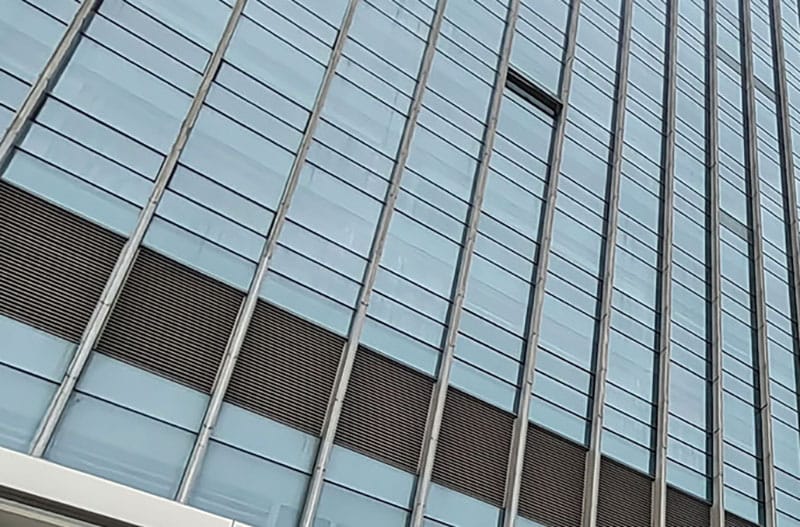
Through rigorous project management, international contractors can ensure quality, safety, schedule, and cost control across all African decorative curtain wall projects.6. Future Development Trends
1. Local Manufacturing and Industry Upgrading
With improved investment environments, local curtain wall factories and aluminum extrusion plants are expected to grow rapidly. Collaboration between international and local enterprises will become the dominant model.
2. Green and Low-Carbon Construction
Energy-efficient facades, solar-integrated systems, and recyclable materials will become industry priorities. Within five years, green buildings are expected to account for over 30% of new projects in Africa.
3. Digitalization and BIM Technology
Building Information Modeling (BIM) will be widely used throughout design, construction, and maintenance, improving coordination and project transparency.
4. Regional Integration and Market Expansion
The African Continental Free Trade Area (AfCFTA) will promote cross-border trade of materials and engineering services, driving the regionalization of the curtain wall industry.
Decorative curtain wall engineering in Africa represents more than construction technology—it is a bridge connecting culture, aesthetics, and sustainability. In this rapidly growing and uniquely challenging market, success depends on professional design, advanced manufacturing, and strong local partnerships.
Over the next decade, Africa is poised to become one of the most dynamic regions for curtain wall development. From commercial complexes and five-star hotels to international airports and landmark buildings, decorative facades will define the skylines of Africa’s new cities.
For global clients, choosing a reliable African decorative curtain wall partner means securing both the quality and the lasting beauty of their projects.

