
In Ghana’s emerging construction market, more modern high-rise buildings and stylish residential projects are appearing every year. Aluminum materials are now widely used in exterior façades and door and window designs. Many property owners and contractors often face the same question when choosing materials: What exactly is the difference between aluminum curtain walls and aluminum doors & windows?
Although both use aluminum profiles, they differ greatly in terms of function, structure, installation methods, cost, and maintenance.
What Is an Aluminum Curtain Wall?
An aluminum curtain wall is a façade system made up of an aluminum alloy frame combined with glass, stone, or metal panels, covering the exterior surface of a building. Its primary role is not only to enhance the building’s appearance but also to provide insulation, waterproofing, wind resistance, and soundproofing.
In Ghana’s capital, Accra, many modern office towers and shopping centers feature aluminum curtain wall designs. For example, a high-end commercial complex in the city center has a glass curtain wall that reflects a blue sheen under the sun, elevating the skyline while delivering excellent energy efficiency.

What Are Aluminum Doors & Windows?
Aluminum doors & windows are part of the building’s enclosure system, mainly designed for opening, ventilation, and daylight. Compared to curtain walls, they have a simpler structure, commonly seen in sliding windows, casement windows, folding doors, and more.
In Ghana’s residential projects, aluminum doors & windows are widely used in upscale apartments, villas, and hotel rooms because of their durability, corrosion resistance, and ease of maintenance. Unlike traditional wooden or steel frames, aluminum frames are better suited for coastal climates, where they resist rust and deformation.
Structural Differences Between Aluminum Curtain Walls and Doors & Windows
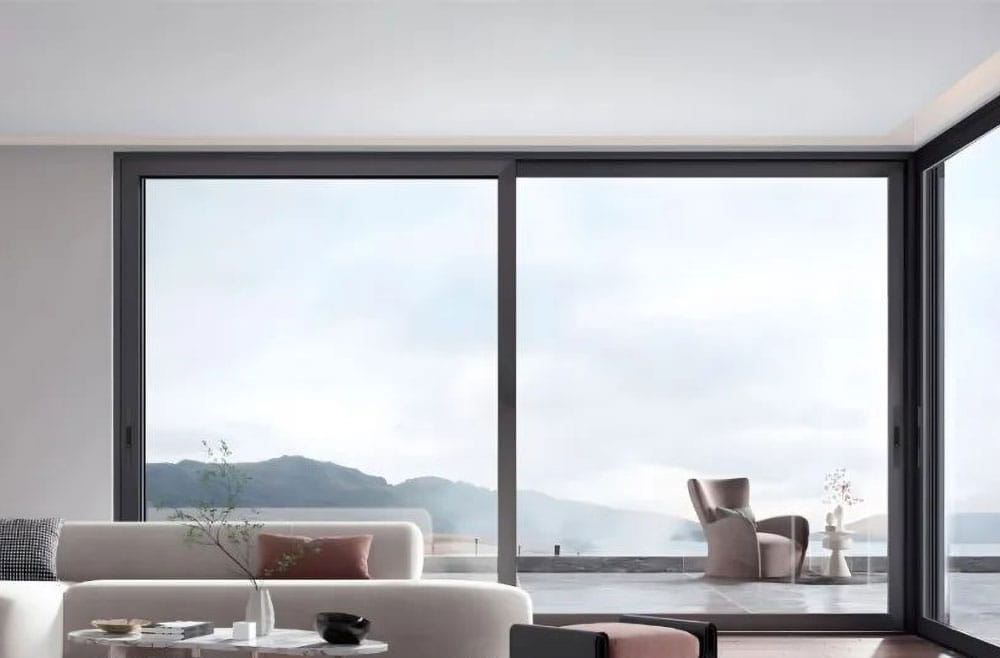
3.1 Frame Design
An aluminum curtain wall’s frame typically consists of vertical mullions and horizontal beams, connected to the main building structure via brackets or connectors, forming an integrated exterior façade. In contrast, aluminum door and window frames are more compact and are usually fixed directly into wall openings.
3.2 Material Thickness
The aluminum profiles used in curtain walls are generally thicker than those used in doors & windows to withstand higher wind loads and external forces. This high-strength design is especially important in Ghana’s coastal areas, which often experience strong winds.
Functional Differences
4.1 Curtain Walls – The “Outer Skin” of a Building
Aluminum curtain walls are more than decorative; they act as a protective shield against wind and rain. They can incorporate double-glazed insulated glass for improved thermal and acoustic performance—ideal for keeping interiors cool during Ghana’s hot seasons.
4.2 Doors & Windows – The “Breathing Points” of a Building
The main role of aluminum doors & windows is to provide ventilation and natural light. While they also offer some insulation, waterproofing, and noise control, their focus is on daily usability and comfort.
Cost Comparison
In the Ghanaian market, aluminum curtain walls are usually much more expensive than aluminum doors & windows. Curtain wall costs include not only materials but also structural calculations, installation equipment, lifting operations, and waterproof sealing.
According to data from a local engineering company, standard aluminum curtain walls may cost between USD 350–550 per square meter, while high-performance double-glazed curtain walls can reach USD 600/m² or more. In contrast, aluminum doors & windows typically cost USD 80–200/m² and take less time to install.
Installation & Maintenance Differences
6.1 Installation Difficulty
Installing aluminum curtain walls requires professional teams, lifting equipment, and high-altitude construction skills, resulting in longer project timelines. Aluminum doors & windows are easier to install—trained workers can usually complete the job without specialized machinery.
6.2 Maintenance Frequency
Curtain walls need periodic checks of sealant strips, waterproofing details, and glass fixings to ensure long-term performance. Doors & windows mainly require hardware lubrication, track cleaning, and occasional glass replacement.
Frequently Asked Questions (FAQ)
Q1: Can I use both curtain walls and doors & windows in the same commercial project in Ghana?
Yes. Many buildings use aluminum curtain walls for the main façade while opting for aluminum doors & windows on the rear or interior-facing sides to balance aesthetics and cost.
Q2: Are curtain walls more durable than doors & windows?
Durability depends on material quality and workmanship. High-quality aluminum curtain walls often outperform standard doors & windows in corrosion resistance, waterproofing, and wind resistance. However, well-made doors & windows can also last over 20 years.
Q3: What should I consider for curtain walls in coastal areas?
In Ghana’s coastal cities with high humidity and salt-laden air, choose anodized or fluorocarbon-coated aluminum profiles paired with insulated tempered glass to enhance corrosion resistance and thermal performance.
Recommendations
High-rise commercial buildings or government facilities: Aluminum curtain walls offer a premium appearance and greater structural safety.
Residential buildings, apartments, and small shops: Aluminum doors & windows are more cost-effective and practical.
Mixed approach: For projects requiring both aesthetics and cost control, use curtain walls on the main façade and doors & windows elsewhere.
Although aluminum curtain walls and aluminum doors & windows are both made from aluminum alloys, they differ significantly in structure, function, cost, and application scenarios. Curtain walls focus on appearance and full-building protection, while doors & windows emphasize usability and localized functions.
In Ghana’s fast-growing construction sector, choosing the right aluminum solution can improve quality while keeping budgets in check. Whether you’re a developer, contractor, or homeowner, understanding these differences is key to maximizing your investment.
If you’re deciding on materials for your next project, consult with experienced suppliers who understand both curtain wall and door & window systems, and tailor your choice to local climate, budget, and design needs.

