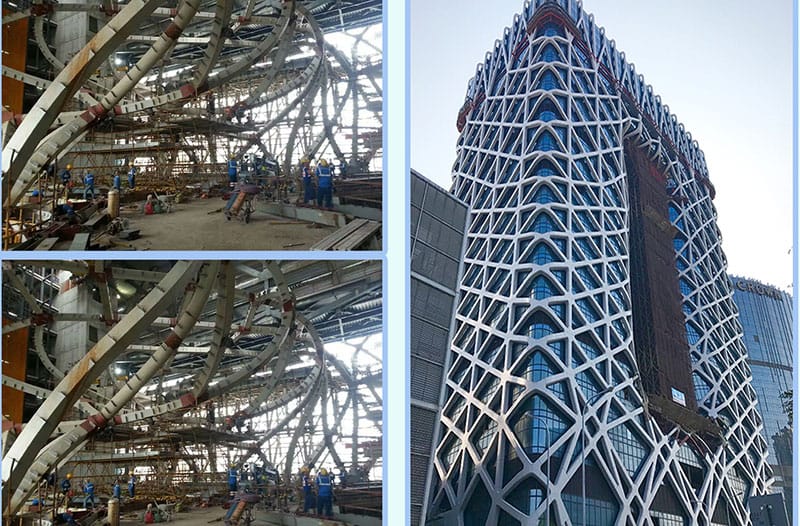
As a glass curtain wall manufacturer that has been engaged in glass curtain wall for more than 30 years, it is necessary to talk to you today about the advantages and disadvantages of glass curtain wall, so that you can have a deeper understanding of glass curtain wall. The architectural glass curtain wall is mainly based on the combination of mirror glass and ordinary glass, and is designed with hollow glass filled with dry air or inert gas in the interlayer. This kind of hollow glass can be divided into two types: two-layer and three-layer. The two-layer hollow glass forms a closed interlayer space by combining two layers of glass with a sealed frame; while the three-layer glass cleverly constructs two interlayer spaces. Hollow glass not only has excellent sound insulation and heat insulation performance, but also can effectively prevent frost and moisture intrusion, while increasing the lighting of the building and improving its wind pressure resistance. Of course, glass curtain walls also have certain shortcomings, such as possible light pollution problems and high energy consumption.
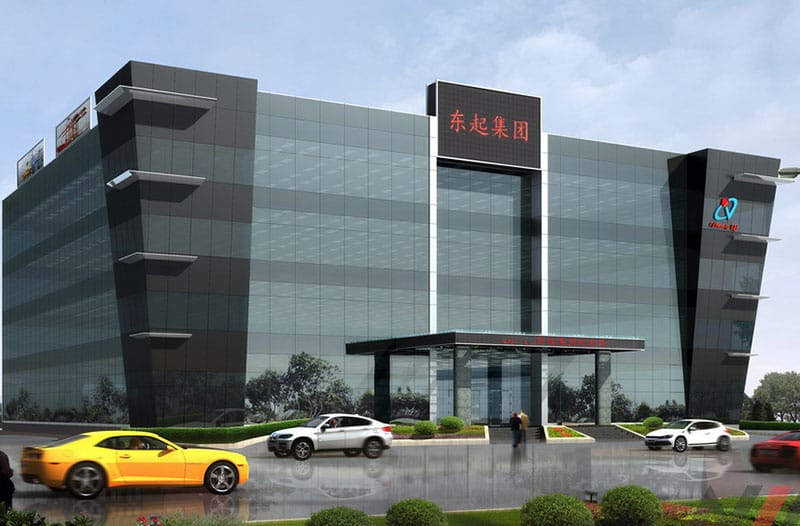
Advantages of glass curtain wall 1
Glass curtain wall has occupied a place in modern architecture with its unique charm. The reflective insulating glass used is only 6 mm thick and the wall weight is about 50 kg/㎡. It is light and beautiful, and has many advantages such as low pollution and energy saving. Based on float glass, this glass is tempered by adding trace metal elements to form a transparent and hard plate glass. It can effectively absorb infrared rays, thereby reducing solar radiation entering the room and lowering the indoor temperature. In addition, this glass also has the dual functions of reflection and transmission. The inner side of the outer glass of the curtain wall is also coated with a colored metal coating, making the entire exterior wall like a huge mirror. Under the irradiation of light, it can not only reflect the bright light, but also ensure the soft light in the room, with excellent visual effects.
Advantages of glass curtain wall 2
The glass curtain wall cleverly integrates architectural aesthetics, practical functions, energy-saving effects and structural stability. This design allows the building to show unpredictable tones at different angles and light conditions, bringing people a dynamic aesthetic experience.
Insufficients of glass curtain walls
Glass curtain walls may produce specular reflection, i.e. positive reflection, under direct sunlight and sky light, thus forming reflected glare, which has a certain impact on the surrounding environment and residents’ lives. In summer, a large amount of solar radiation will enter the room, increase the load of air conditioning, and cause energy waste.
However, with the continuous advancement of glass curtain wall technology and the continuous innovation of new material technology, the glass curtain wall materials used in current buildings can effectively deal with light pollution and energy consumption problems.
Basic types of glass curtain walls
1. Exposed frame glass curtain wall
The exposed frame glass curtain wall has a clearly visible metal frame component. This curtain wall uses aluminum alloy profiles with special cross-sections as the main frame, and the glass panel is completely embedded in the groove of the profile. This design makes the aluminum alloy profile play the role of supporting the skeleton and fixing the glass. The exposed frame glass curtain wall is the oldest curtain wall form with wide application and stable performance. Compared with the hidden frame glass curtain wall, its construction process requirements are more direct and clear.
2. Hidden frame glass curtain wall
The design of the hidden frame glass curtain wall is unique. Its metal frame is completely hidden behind the glass and cannot be seen from the outside. There are also two types of this curtain wall: full hidden frame glass curtain wall and semi-hidden frame glass curtain wall. The latter can be further divided into horizontal and vertical hidden and vertical and horizontal hidden. In terms of structure, the hidden frame glass curtain wall is characterized by the glass being located outside the aluminum frame, and the glass and the aluminum frame are tightly bonded by silicone structural sealant to form a stable curtain wall structure. It is worth noting that the load of this curtain wall is mainly borne by the sealant, ensuring its stability and safety.