
As an iconic element of modern architecture, stick system (exposed frame) glass curtain walls are a major focus for both developers and designers when it comes to budgeting. Understanding the cost per square meter is essential for accurate project planning. In reality, this is not a fixed number but a variable influenced by multiple factors.
1. Core Price Ranges (by Specification and Material Grade)
When examining the cost of stick system glass curtain walls, the market can generally be divided into the following tiers:
Basic Option (RMB 900–1200/m²)
This level typically uses standard domestic aluminum profiles paired with single glazing or conventional insulating glass (non-Low-E). It is suitable for projects with minimal requirements for energy efficiency and aesthetics, such as warehouses, internal partitions, or certain industrial facades.
Mainstream Configuration (RMB 1200–1800/m²)
This tier upgrades to 6063-T6/T66 aluminum profiles with thermal break structures (commonly PA66 GF25 polyamide strips) and energy-efficient Low-E insulating glass (e.g., 6+12A+6). It is the most common choice for offices, commercial buildings, and mid-range hotels, offering a balanced combination of appearance, performance, and cost.
High-End Specification (Above RMB 1800/m²)
High-end systems use 6061-T6 or custom high-strength aluminum alloys. Glass configurations may include high-performance triple-silver Low-E laminated insulating glass (e.g., 8+1.52PVB+8+12Ar+6 Low-E). Surface finishes often involve fluorocarbon coating or multi-layer anodizing. This category is suited for landmark buildings, super high-rise structures, or projects in extreme climates.2. Key Variables Affecting Cost per Square Meter
After identifying the general price ranges, the actual project cost depends on several critical factors:
1. Aluminum Profile System Quality
Wall thickness of load-bearing components (affecting 15%–25% of material cost)
Section size (influencing wind load resistance and material usage)
Surface treatment (powder coating vs. fluorocarbon coating, with up to 30% price difference)
2. Glass Configuration
Base glass brand (e.g., CSG, Xinyi, TAIWAN GLASS)
Processing technology (double vs. triple silver Low-E coatings)
Assembly type (triple glazing can cost over 50% more than standard IGUs)
Special features (fire resistance, hurricane resistance, ceramic frit printing)
3. Structural Complexity
A 20% increase in complex nodes (e.g., twisted corners, curved edges, integrated canopies) can raise unit costs by 15%–30%
Installation costs for high-rise buildings increase significantly; for structures above 200 meters, hoisting costs can account for 18%–25% of total curtain wall expenses
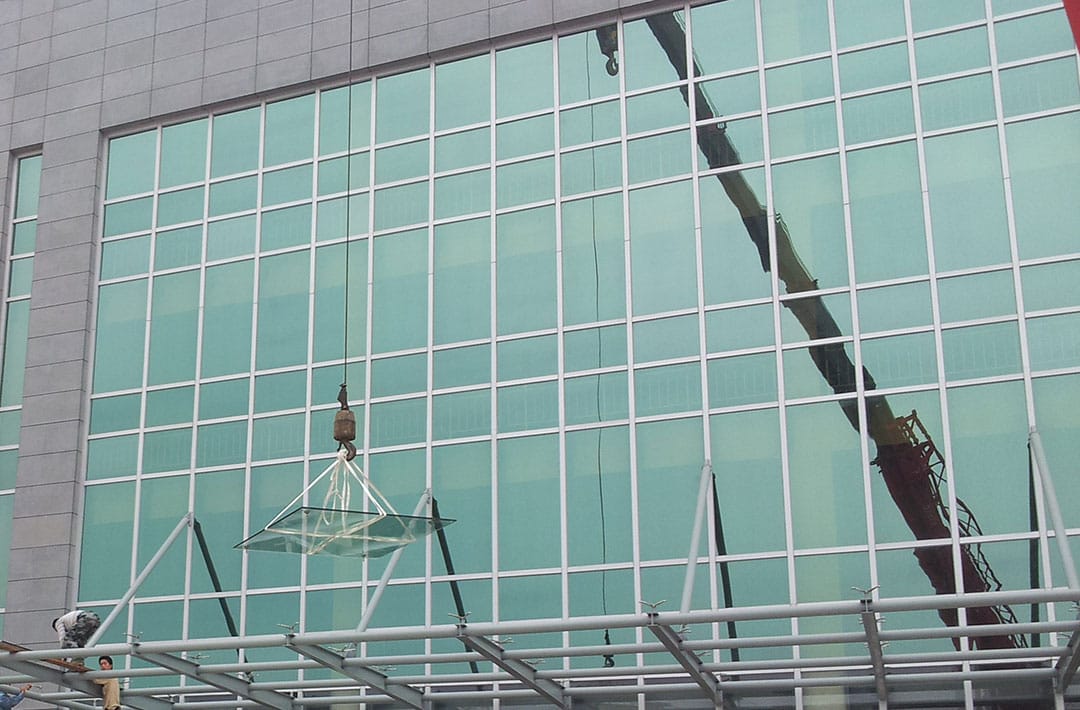
4. Construction Method and Technical Requirements
Unitized curtain wall systems (with up to 85% factory prefabrication) can reduce construction time by 30%, but increase initial costs by 8%–12%
High-altitude operations and complex site conditions can add 10%–20% in technical and safety-related expenses
3. Value Optimization: A Lifecycle Cost Perspective
When evaluating curtain wall costs, it is important to consider long-term value rather than just initial investment:
High-performance systems (with superior airtightness and Low-E glazing) can reduce annual HVAC energy consumption by 15%–25%.
Assuming an average building energy use of 150 kWh/m² per year, this can translate into significant savings over a 20-year lifecycle.
Optimized design (e.g., rational panel sizing to reduce glass waste) can lower material costs by 5%–8%.
Durable components (such as structural sealants with a 30-year lifespan) can reduce maintenance costs by up to 70%.
4. Efficient Project Delivery and Regional Support
For projects in the Greater Bay Area and across China, achieving high-quality curtain wall systems within budget requires strong technical and supply chain support. For example, companies like Zhongdong Curtain Wall (established in 2013) provide:
Early-stage design integration: Parametric modeling to identify and resolve construction conflicts in advance, reducing rework (typically 8%–15% in conventional projects)
Integrated supply chain: A 19,000 m² manufacturing base in Foshan with an annual capacity exceeding 800,000 m², along with in-house glass processing capabilities for coordinated procurement
Precision manufacturing: CNC machining ensures component tolerances within ±0.1 mm, improving installation efficiency by 30%
Whether the project budget is RMB 800/m² for basic applications or RMB 3000/m² for luxury developments, the key to determining the cost of stick system glass curtain walls lies in balancing performance, safety, aesthetics, and cost constraints.
Choosing a partner with integrated capabilities in R&D, manufacturing, and installation not only reduces unit costs by 5%–10% but also ensures optimal lifecycle value for the project.

