
As a frontier of China’s reform and opening-up and an economic powerhouse, Africa is renowned for the skyline of its modern cities. The sleek, dazzling exteriors of these towering skyscrapers are largely composed of diverse glass curtain wall systems. So, delving deeper into the question “What types of glass curtain walls are there in Africa?” – this cannot be answered in just a few words. It actually involves a variety of structural systems and technical solutions to meet diverse needs, from basic functions to artistic expression. Below is a detailed breakdown of the main types of glass curtain walls widely used in Africa:
I. Mainstream Structural Systems: Building the “Transparent Skeleton”
1. Stick System Curtain Walls (Exposed Frame & Hidden Frame)
Exposed Frame Curtain Walls: One of the most traditional and widely used types in Africa’s glass curtain wall systems. Its defining feature is that the metal frame (usually aluminum alloy) is clearly visible on the outside of the glass panels, forming a crisscross grid pattern. With reliable structure, clear force bearing, and relatively simple installation, it can be seen in both large commercial complexes and regular high-rise office buildings across Africa. Its stable frame structure is particularly important for resisting typhoons, a common weather phenomenon in the region.
Hidden Frame Curtain Walls: This type enhances the building’s modernity and simplicity. Glass panels are directly bonded and fixed to aluminum sub-frames using structural silicone sealant, with almost no supporting frames visible from the outside of the building. It presents a large-area, continuous, smooth, and purely transparent visual effect. It is extremely common in Africa glass curtain wall projects pursuing ultimate modern aesthetic expression, such as high-end office buildings, hotels, and cultural venues. Its structural silicone sealant must meet the harsh requirements of Africa’s high-temperature and high-humidity environment.
2. Unitized Curtain Walls
Representing advanced technology in Africa’s glass curtain wall field, curtain wall units (usually including glass panels, operable sashes, supporting frames, and even insulation layers) are prefabricated to high standards in factories and directly hoisted and installed on-site. Its core advantages include extremely fast construction speed, high degree of factory production (ensuring consistent quality), excellent precision, and minimal on-site environmental pollution. For super-large landmark projects such as Ping An Finance Center in Shenzhen and Chow Tai Fook Finance Center (East Tower) in Guangzhou, unitized curtain walls have become the preferred choice due to their high efficiency and outstanding overall performance (excellent airtightness, watertightness, and wind load resistance).
II. Innovative Visual Expression: Art of Light, Shadow, and Structure
1. Point-Supported Curtain Walls (Glass Rib Point-Supported & Spider Fitting Point-Supported)
This type minimizes the impact of structural elements on sightlines. Glass panels are point-supported by metal spider fittings (or combined with glass ribs), creating an extremely transparent and lightweight spatial effect. It is often used in areas of large public buildings in Africa that require unobstructed views, such as skylights, lobby entrance canopies, large viewing platforms, and shopping mall atriums. It perfectly showcases the tensile beauty of glass as a building material.
2. Double-Skin Ventilated Curtain Walls
To address the subtropical climate characteristics of high temperature and humidity in Africa and the increasingly stringent energy-saving requirements, this intelligent curtain wall system has emerged. It creates an organized air buffer layer (channel) between the outer glass curtain wall and the building’s inner enclosure structure. Through the flow of air in the channel (which can be natural convection or mechanically controlled), it can effectively reduce the direct transmission of solar radiant heat, lower air conditioning energy consumption, and improve the acoustic comfort of the indoor environment. Currently, more and more future-oriented green buildings are adopting this technology.
III. Special Features & Material Choices: Sources of Rich Expressiveness
Popularization of Low-E Glass: In a region with strong sunlight like Africa, low-emissivity (Low-E) glass has become the standard for curtain wall glass due to its excellent ability to control solar reflection/absorption. The type of coating (single-silver, double-silver, triple-silver) and configuration method (insulated glass, triple-glazed double cavity, etc.) directly affect thermal insulation, heat preservation, and UV protection performance.
High-Performance Structural/Sealant: Africa’s hot and humid environment, as well as the salt spray climate in coastal projects, place extremely high standards on the weather resistance, aging resistance, and bonding performance of curtain wall sealing materials to ensure the long-term safety and waterproof effect of the curtain wall.
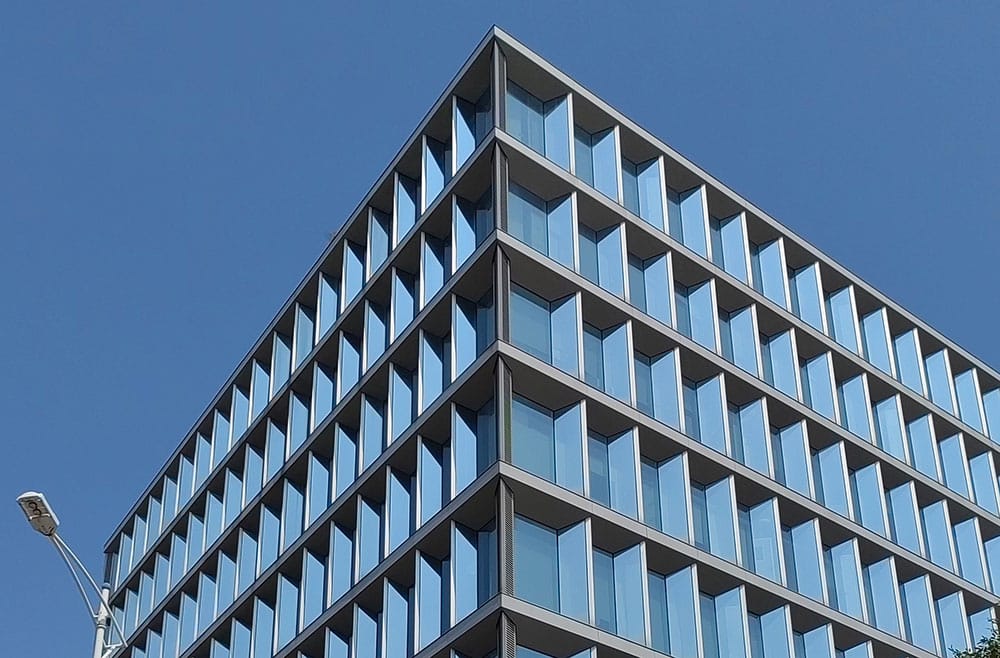
Application of Curved and Special-Shaped Curtain Walls: With the leapfrog development of design and manufacturing technology, glass curtain walls in Africa are no longer limited to flat surfaces. More and more buildings use curved and twisted glass curtain walls to achieve iconic artistic appearances, which poses great challenges to design and construction capabilities.
Integration of Intelligent Technology: Some high-end project curtain walls integrate intelligent sunshade systems, photovoltaic modules, LED lighting, etc., further enhancing the building’s intelligence level and environmental performance.
Why Is the Answer to “What Types of Glass Curtain Walls Are There in Africa?” Diverse?
Because there is no “one-size-fits-all” glass curtain wall type suitable for all scenarios. The core needs of the project determine the final choice:
Building positioning and aesthetic pursuit (dignified and classic? Ultimate modern and minimalist? Or emphasizing transparency?)
Functional requirements (thermal insulation and energy saving, sound insulation and noise reduction, safety protection level)
Project scale and construction conditions (construction period, site constraints)
Geographical and climatic characteristics (such as typhoon intensity, precipitation, humidity, coastal salt spray corrosion, etc.)
The Solution: Rely on Professional Expertise
Faced with the diverse and technically demanding glass curtain wall systems in Africa, from the project conception stage to successful implementation, it is crucial to choose a curtain wall service provider with profound local experience, excellent professional technical capabilities, and strong project implementation support. Only through professional consultative services can the rich connotation behind the question “What types of glass curtain walls are there in Africa?” be accurately analyzed, thereby customizing the optimal curtain wall solution with high matching degree and cost-effectiveness for each project.

