
As a defining element of modern architecture, glass curtain walls create light, transparent, and contemporary facades that shape the skyline of cities around the world. Glass—often described as the “skin” of the curtain wall—directly determines the project’s safety, appearance, energy efficiency, and environmental performance. So, what type of glass is typically used in glass curtain walls? What are the key considerations and industry trends?
1. Tempered Glass – The Fundamental Safety Choice
In curtain wall systems, safety is the top priority. For this reason, tempered glass (also known as safety glass) is the most widely used and essential option.
When subjected to strong impact, tempered glass breaks into small, blunt particles, significantly reducing the risk of injury. However, it does have a small probability of spontaneous breakage, and appropriate safety measures should be included in the design.
2. Laminated Glass – Preventing Falling Hazards
To meet higher safety requirements and avoid falling glass incidents, laminated glass is often used. Laminated glass consists of two or more layers of glass bonded with a tough PVB (polyvinyl butyral) interlayer.
Even if broken, the glass fragments remain adhered to the interlayer instead of falling and causing secondary damage.
This makes laminated or laminated-combined glass the preferred choice in:
High-rise buildings
Areas with heavy foot traffic (airports, malls)
Facilities with enhanced security requirements
3. Insulated (Double-Glazed) Glass – The Core of Energy Efficiency
As a building envelope, a curtain wall must also contribute to energy savings. For this reason, insulated glass units (IGUs) have become the mainstream configuration for energy-efficient facades.
IGUs consist of two or more glass panes sealed around the edges, with dry air or argon gas in the cavity. This design significantly reduces heat transfer and improves acoustic insulation, lowering overall energy consumption.
When modern architects ask, “What glass should be used in a curtain wall to meet strict energy requirements?”
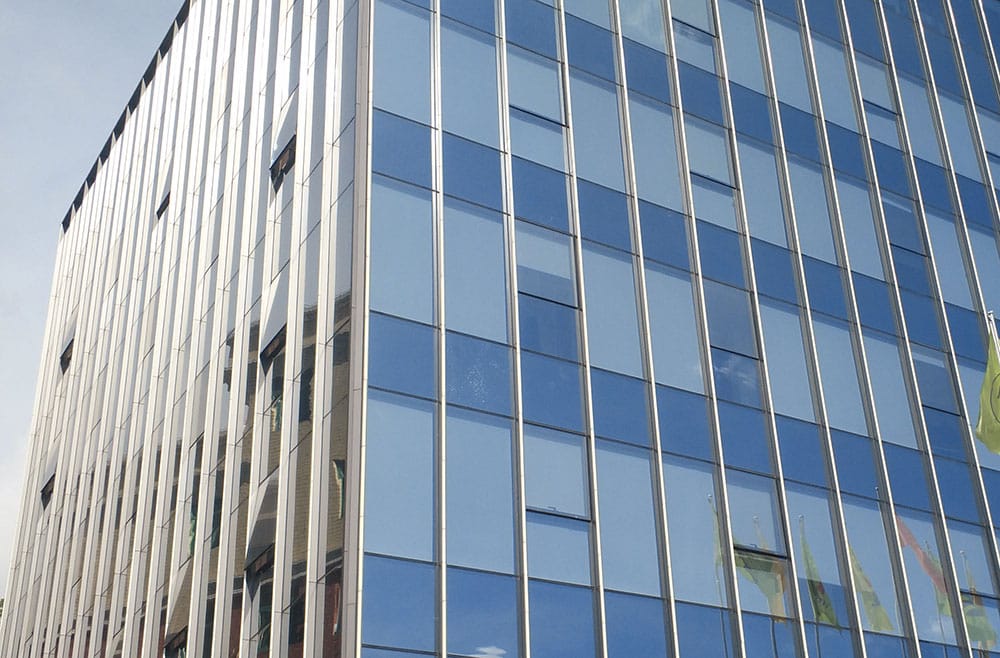
Insulated glass is the standard answer.
4. Low-E Glass – Advanced Thermal Performance
For even higher-level energy control, Low-E (low-emissivity) coated glass plays a crucial role. Its microscopically thin coating reflects indoor heat back into the building during winter and blocks solar heat from entering during summer.
A building using Low-E insulated glass can typically reduce heating and cooling energy consumption by more than 30% compared to ordinary glass.
5. Other Glass Types Used in Curtain Walls
Depending on location and performance requirements, curtain wall designs may also incorporate:
Ceramic Frit (Silk-Screen) Glass
Printed with durable enamel to achieve shading, decorative patterns, or branding elements. Enhances architectural identity.
Fire-Resistant Glass
Maintains integrity and insulation for a designated fire rating period. Used in areas requiring compartmentalization and safe evacuation routes.
Ultra-Clear (Low-Iron) Glass
With extremely low iron content, it eliminates the green tint found in standard glass and provides crystal-clear transparency—ideal for premium façade designs.
6. Key Considerations When Selecting Curtain Wall Glass
Glass selection must comply with local building codes (such as glass safety and application standards) and should be based on:
1. Safety requirements (impact resistance, anti-fall performance, fire resistance)
2. Climate zone and energy-efficiency standards (U-value, shading coefficient)
3. Acoustic performance needs (especially for street-facing buildings)
4. Architectural aesthetics and functional design
color
light transmittance
privacy or shading needs
decorative patterns
5. Overall project budget
7. Potential Risks of Incorrect Glass Application
Improper glass selection or poor maintenance can lead to serious problems, such as:
Large-scale spontaneous breakage of tempered glass, leading to costly replacements
Insulated glass seal failure causing fogging and loss of insulation
Low-quality glass causing glare or reduced energy performance
Delayed maintenance increasing safety hazards or resulting in damage to property and people
When determining what type of glass is commonly used in glass curtain walls, a professional design solution and reliable implementation are essential.
If you are planning a curtain wall project or troubleshooting existing façade issues, consulting an experienced curtain wall engineering company will help you select the right glass—ensuring your building is not only safe and durable but also energy-efficient and visually striking.
With the right choice, your building can achieve long-lasting performance and become a project that truly stands the test of time.

