
I. Introduction
In recent years, glass curtain walls have become a common sight in modern cities. From towering office buildings and landmark complexes to large shopping centers, these transparent facades embody a sense of modernity and technological sophistication.
As a result, many residential developers and homeowners have begun to ask: Can glass curtain walls be used in residential buildings? Are they both aesthetically pleasing and practical?
As an engineer with over twenty years of experience in curtain wall systems, I will analyze this question from multiple perspectives — including structural performance, safety, energy efficiency, comfort, maintenance, cost, and policy trends — to provide practical insights for renovation firms, contractors, and developers.
II. Definition and Types of Glass Curtain Walls
A glass curtain wall is an exterior enclosure system composed of a supporting structure and glass panels. It is non-load-bearing, serving primarily as a barrier for weather protection, insulation, soundproofing, and aesthetics.
According to its construction method, curtain walls can be classified as follows:
1. Exposed-frame (stick) curtain wall: Aluminum frames are visible; economical and easy to install.
2. Concealed-frame curtain wall: Sleek and modern appearance with hidden frames.
3. All-glass curtain wall: Offers maximum transparency; commonly used in showrooms and high-end commercial spaces.
4. Point-supported curtain wall: Glass is supported by metal fittings or cable systems, giving a lightweight appearance.
5. Unitized curtain wall: Factory-fabricated panels assembled on site; ideal for high-rise applications.
These systems are well-established in commercial architecture. However, since residential buildings prioritize comfort and livability, we must re-evaluate their suitability from that perspective.
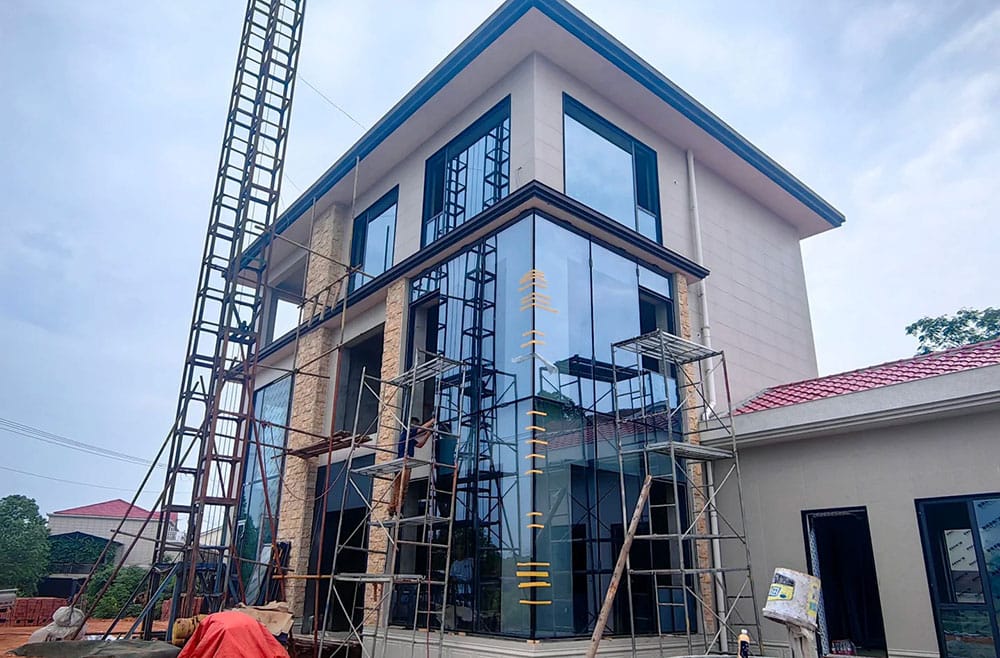
III. Advantages of Using Glass Curtain Walls in Residential Buildings
1. Modern Appearance and Enhanced Project Image
Glass curtain walls give buildings a sleek, high-end look. For luxury residences or landmark developments, a glass façade can significantly enhance the project’s visual identity. Many developers adopt a partial curtain wall design — for example, at balconies or corners — to balance aesthetics and functionality.
2. Excellent Natural Lighting and Spacious Feel
Compared with traditional concrete walls and small windows, large glass facades allow more daylight and create a greater sense of openness. In high-rise apartments, this also enhances the view and overall living experience.
3. Fast Construction and High Industrialization
Unitized systems are prefabricated in factories and installed on site, reducing wet trades and construction time — a major advantage for projects with tight schedules.
4. Energy Efficiency and Environmental Potential
When equipped with Low-E or double-silver insulated glass, curtain walls can minimize solar heat gain in summer and heat loss in winter. Combined with shading devices or smart glass technologies, they can achieve excellent energy performance.
IV. Main Challenges in Residential Applications
Despite their advantages, glass curtain walls are not universally suitable. Residential buildings emphasize comfort, privacy, and safety, which can conflict with the openness of glass facades.
1. Thermal Performance and Energy Efficiency
Even with high-performance insulated glass, curtain walls generally have lower insulation values than solid walls.
Winter: Indoor heat escapes easily, increasing heating demand.
Summer: Solar radiation raises cooling loads.
South- and west-facing facades: May cause “greenhouse” effects without proper shading.
Therefore, detailed thermal calculations and effective shading designs (such as louvers or operable vents) are essential.
2. Safety and Fire Protection Risks
Residential buildings have higher safety requirements due to frequent use and dense occupancy. Common risks include:
Glass breakage or falling due to nickel sulfide inclusion in tempered glass.
Insufficient fire separation if proper fire-stopping and fire-resistant materials are not used.
Unsafe operable windows in high-rise settings without limiters or fall protection.
Curtain walls must comply with relevant codes such as JGJ 102: Technical Code for Glass Curtain Wall Engineering and GB 50016: Fire Protection Code for High-Rise Civil Buildings.
3. Privacy and Noise Control Issues
While transparency looks attractive, it may compromise privacy — especially for bedrooms and bathrooms.
Moreover, noise from traffic or nearby activities can easily transmit through glass. To meet residential sound insulation standards (≥35 dB), laminated and double-glazed units with optimized sealing systems are recommended.
4. Maintenance and Cost Concerns
Curtain walls require regular inspections of sealants, hardware, and drainage systems. Maintenance costs are relatively high and require professional access.
If water leakage or glass aging occurs, repair or replacement can be complicated and expensive.
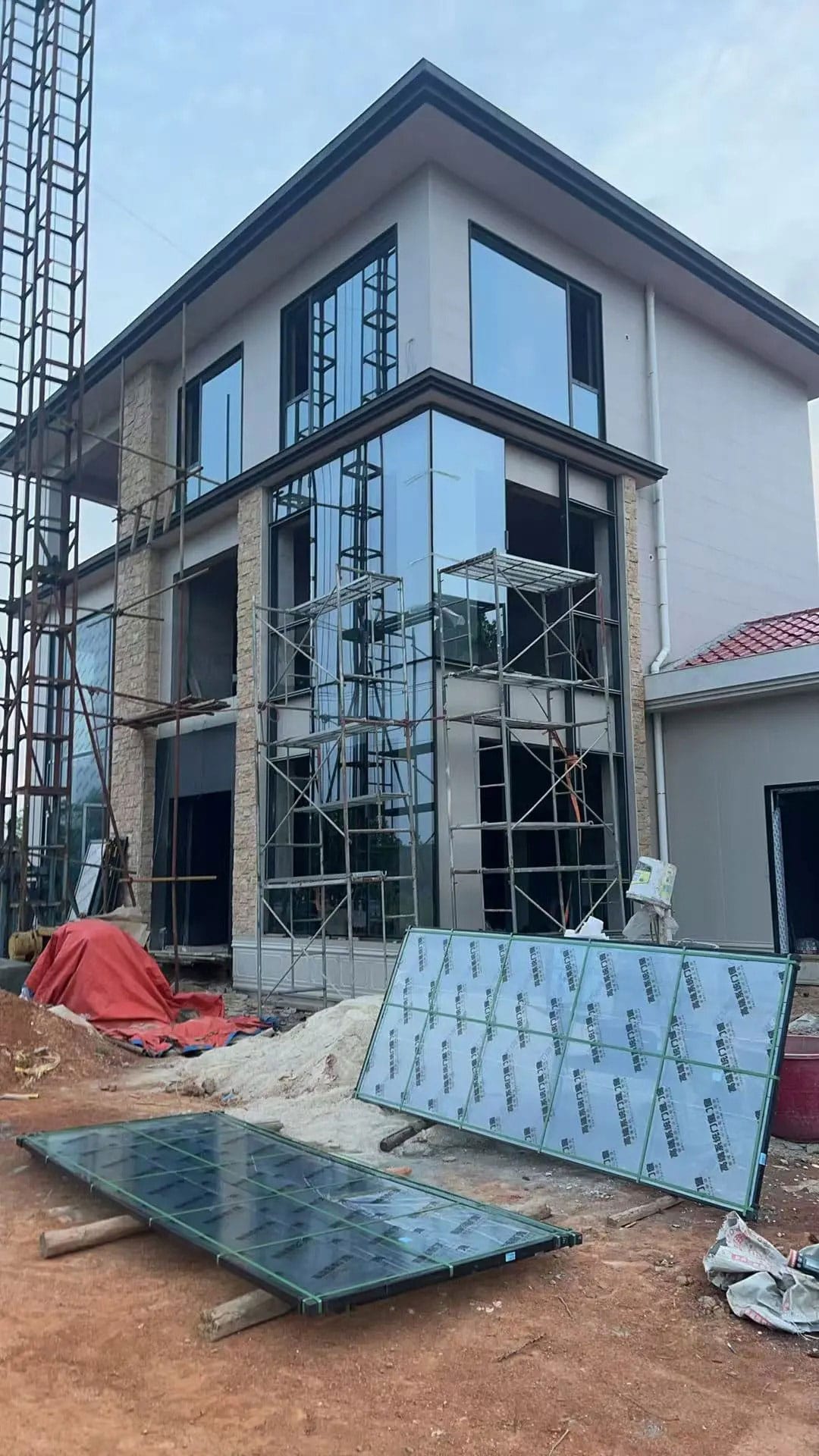
V. Design and Construction Recommendations
To ensure suitability for residential use, the following design principles are advised:
1. Façade Zoning
Avoid using glass curtain walls across the entire façade. Instead, apply them selectively — for instance, at living rooms or scenic corners — while keeping solid walls elsewhere.
This hybrid design (“solid wall + partial curtain wall”) achieves both comfort and energy efficiency.
2. Use High-Performance Glass
Recommended types include:
Triple-silver Low-E insulated glass
Vacuum or electrochromic (smart) glass
Laminated glass with solar control film
3. Enhance Safety and Fire Protection
Use tempered + laminated glass combinations.
Ensure proper fire-stopping between floors and walls.
Install window limiters and anti-fall systems.
Control spontaneous breakage rates below 0.3%.
4. Optimize Façade Orientation and Proportion
South facades should have adjustable shading; west facades should minimize glass area. North facades can allow more glazing due to softer daylight.
5. Design for Drainage and Maintenance
Incorporate accessible drainage channels, replaceable glass systems, and cleaning-friendly façade details.
VI. Conclusion
Glass curtain walls are not inherently unsuitable for residential buildings — but they must be applied selectively and intelligently.
Low-rise or mass housing: Large-scale glass facades are not cost-effective.
Mid- to high-end apartments: Partial use can enhance appearance and comfort.
Luxury or landmark residences: High-performance unitized curtain walls can showcase sophistication and technology.
The key lies in balancing comfort, safety, aesthetics, and economy.
When designed and constructed with precision — and maintained properly — a residential curtain wall can be both beautiful and livable, turning modern architecture into a genuine home rather than a mere glass box.

