
In modern architectural design, “what are the types of building exterior wall styles” has always been a topic of great concern to architects, developers, contractors, and owners. The exterior wall is not only the “outer garment” of a building but also a comprehensive reflection of architectural technology, culture, and aesthetics. Different exterior wall styles determine a building’s image characteristics, energy consumption performance, construction costs, and maintenance methods. This article will systematically introduce the main types, material characteristics, and applicable scenarios of building exterior walls to help professionals better understand and select suitable exterior wall systems.
I. The Significance of Understanding Building Exterior Wall Styles
Before exploring “what are the types of building exterior wall styles,” it is first necessary to clarify the role of exterior walls in the building system. Building exterior walls not only perform enclosure and protection functions but also determine the interactive relationship between the building and the environment. They affect performance such as lighting, ventilation, thermal insulation, sound insulation, and fire resistance, while also serving as an important medium for expressing architectural culture and style.
Therefore, the choice of exterior wall style is not just an aesthetic issue but a comprehensive decision-making process involving structural logic, material science, and sustainability.
II. What Are the Types of Building Exterior Wall Styles: Classified by Structural Form
From the perspective of structural systems, building exterior walls can be divided into the following main styles:
1. Load-Bearing Exterior Walls
This is the most traditional type of exterior wall, where the wall itself bears the load of the upper structure. It is commonly used in brick-concrete or stone-masonry buildings. Load-bearing exterior walls are thick and stable, with excellent thermal insulation and sound insulation performance.
Advantages: Simple structure and strong durability.
Disadvantages: Thick walls limit building height and window-to-wall ratio.
2. Non-Load-Bearing Curtain Walls
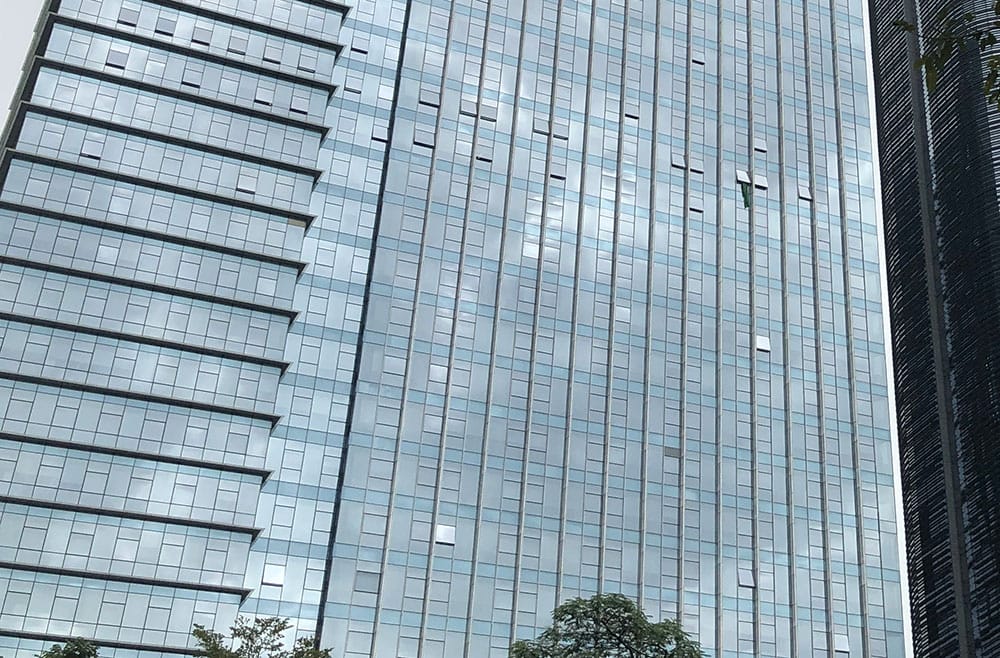
In modern high-rise buildings, curtain walls are the most representative exterior wall style. A curtain wall system consists of a metal frame and panels (glass, aluminum panels, stone, etc.), which do not bear the load of the main structure but only serve as an enclosure and decorative layer.
Advantages: Lightweight, easy to install, and modern in appearance.
Disadvantages: High initial investment and relatively high maintenance costs.
3. Composite Exterior Walls
Composite walls combine different materials to achieve multiple functions such as thermal insulation, waterproofing, and aesthetics. They are commonly used in energy-efficient buildings, such as external insulation systems, sandwich wall panels, and prefabricated curtain walls.
Advantages: Excellent comprehensive performance and high customization.
Disadvantages: High construction requirements and complex joint design.
Analyzing the question of “what are the types of building exterior wall styles” from a structural perspective reflects the development trend of buildings from “load-bearing integration” to “separation of enclosure and structure,” which is also an important feature of modern architectural industrialization.
III. What Are the Types of Building Exterior Wall Styles: Classified by Material Type
Different materials endow buildings with different textures and performances. The following are the most common exterior wall material styles internationally:
1. Glass Curtain Walls
Glass curtain walls are the most iconic exterior wall style of contemporary urban buildings. They achieve visual transparency through transparent or translucent glass panels, integrating the building with the environment.
Characteristics: Good lighting, strong modern sense, and can be paired with LOW-E energy-saving glass to improve energy efficiency.
Application scenarios: Office buildings, commercial complexes, and high-end hotels.
2. Metal Curtain Walls
Metal exterior walls, mainly made of aluminum panels, stainless steel panels, copper panels, or titanium-zinc panels, are known for their light weight, weather resistance, and plasticity.
Characteristics: Easy to process and capable of forming complex facade shapes.
Application scenarios: High-tech parks, transportation hubs, and exhibition centers.
3. Stone Exterior Walls
Natural stones such as granite, marble, and sandstone are often used to express solemn and timeless architectural images.
Characteristics: Strong texture and high durability, but heavy weight and high cost.
Application scenarios: Government buildings, financial institutions, and cultural centers.
4. Brick Walls
As a traditional exterior wall form, brick walls have a strong regional and historical sense.
Characteristics: Natural texture, good air permeability, and excellent thermal and sound insulation performance.
Application scenarios: Residential areas, campus buildings, and cultural preservation projects.
5. Concrete Exterior Walls
Exposed concrete (Fair-faced Concrete) is favored by modernist architecture for its simplicity and structural beauty.
Characteristics: Strong sense of integrity, expressing the authenticity and power of the building.
Application scenarios: Museums, art galleries, and minimalist-style buildings.
6. Wooden Exterior Walls
With its warm texture and sustainability, wood has become an important material for ecological buildings.
Characteristics: Renewable, environmentally friendly, and aesthetically pleasing, but requires fire and corrosion protection treatment.
Application scenarios: Resort buildings, ecological residences, and mountain villas.
Through the analysis of material classification, we can clearly see that “what are the types of building exterior wall styles” not only determines the appearance style but also relates to the building’s environmental adaptability and sustainable development goals.
IV. What Are the Types of Building Exterior Wall Styles: Classified by Visual Style and Design Language
The exterior wall is a window for expressing architectural personality. According to different design styles, common exterior wall styles can be divided into the following categories:
1. Modern Minimalist Style
Mainly featuring flat glass, metal, or concrete surfaces, with simple lines and neutral colors, emphasizing functionality and purity.
2. Traditional Classic Style
Adopting detailed designs such as masonry, carvings, and moldings, emphasizing symmetry and proportion, commonly used in high-end residences and public buildings.
3. Industrial Style
Exposing structures and pipelines, combined with metal and concrete, to show primitive texture and sense of power.
4. Green Ecological Style
Emphasizing sustainability, using green plant walls, ventilation louvers, photovoltaic panels, etc., to achieve energy conservation and ecological integration.
5. Regional Cultural Style
Integrating local climate, materials, and traditional crafts, such as Chinese gray bricks, Mediterranean white walls, and Nordic wood finishes.
From a design style perspective, “what are the types of building exterior wall styles” depends not only on material selection but also on how architects express culture and the spirit of the place through exterior walls.
V. Considerations from the Perspective of Construction and Maintenance
In the selection of exterior wall styles, construction and maintenance are important practical factors.
Construction efficiency: Curtain wall systems and prefabricated exterior walls can significantly shorten the construction period, suitable for high-rise and large-scale projects; brick walls and stone exterior walls have a longer construction cycle.
Maintenance difficulty: Glass and metal curtain walls require regular cleaning and seal inspection; brick walls and concrete exterior walls have low maintenance costs.
Durability: Stone and concrete have a long service life; wooden exterior walls require periodic protective treatment.
From the perspective of life cycle management, understanding “what are the types of building exterior wall styles” helps balance investment costs and long-term benefits in the design stage.
VI. Energy Efficiency and Sustainability
Against the background of global sustainable development, exterior wall styles directly affect building energy consumption.
Passive energy-saving exterior walls: Such as brick walls and stone exterior walls, relying on thick walls to achieve thermal insulation.
Active energy-saving exterior walls: Such as double-skin curtain walls, photovoltaic curtain walls, and dynamic sunshade systems, which can adjust energy consumption according to climate conditions.
The future trend is intelligent and composite exterior wall systems, which achieve dynamic balance between buildings and the environment by integrating sensing, sunshade, ventilation, and power generation functions.
VII. Conclusion: Looking at Future Architectural Trends from Exterior Walls
In summary, exploring “what are the types of building exterior wall styles” is essentially studying the relationship between buildings and the environment, technology and aesthetics, tradition and innovation.
From a structural perspective, exterior walls are evolving from load-bearing systems to independent enclosure systems;
From a material perspective, exterior walls are moving from single materials to composite and intelligent ones;
From an aesthetic perspective, exterior walls are no longer just decorations but important carriers for expressing architectural concepts.
Future building exterior walls will be lighter, more efficient, more energy-saving, and equipped with environmental perception and intelligent adjustment functions. For architects, contractors, and developers, a deep understanding of “what are the types of building exterior wall styles” not only helps improve design and construction quality but also promotes the development of buildings towards high performance and sustainability.

