
In the field of modern architecture, glass curtain walls have evolved from mere building exterior protection structures into core elements that shape a building’s essence. From the high-rise complexes at Tokyo’s Shibuya Crossing to the modern architectural clusters in Paris’s La Défense, glass curtain walls are reshaping urban skylines with their unique charm. For international architects, decoration companies, property owners, contractors, and developers, a deep understanding of the “advantages and applications of glass curtain walls” is key to driving project innovation and value enhancement. Starting with its definition, this article systematically analyzes the core advantages, diverse application scenarios, and future development trends of glass curtain walls, providing professional references for global construction practitioners.
1. Definition of Glass Curtain Walls: A Modern Innovation in Building Envelopes
A glass curtain wall is an exterior protection structure composed of a supporting framework and glass panels. It does not bear the load of the main structure but integrates multiple functions, including wind and rain protection, lighting, ventilation, and thermal insulation. Compared with traditional walls, it breaks the boundary between “walls” and “windows.” Through the combination of large-area glass panels and metal supporting frames, it achieves a transparent and lightweight building envelope.
Modern glass curtain walls have formed a mature technical system, covering various structural forms such as frame-supported, point-supported, and all-glass curtain walls. Combined with specialized materials like tempered glass, Low-E glass, and laminated glass, they can realize diverse design expressions according to architectural needs. This makes them a crucial support for the development of modern buildings toward higher altitudes and greater artistic appeal.
2. Core Advantages of Glass Curtain Walls: Dual Empowerment of Function and Value
The sustained dominance of glass curtain walls in the global construction market stems from their significant advantages in aesthetics, functionality, economy, and sustainability. These advantages collectively form their core appeal for various construction projects.
(1) Outstanding Architectural Aesthetic Expression
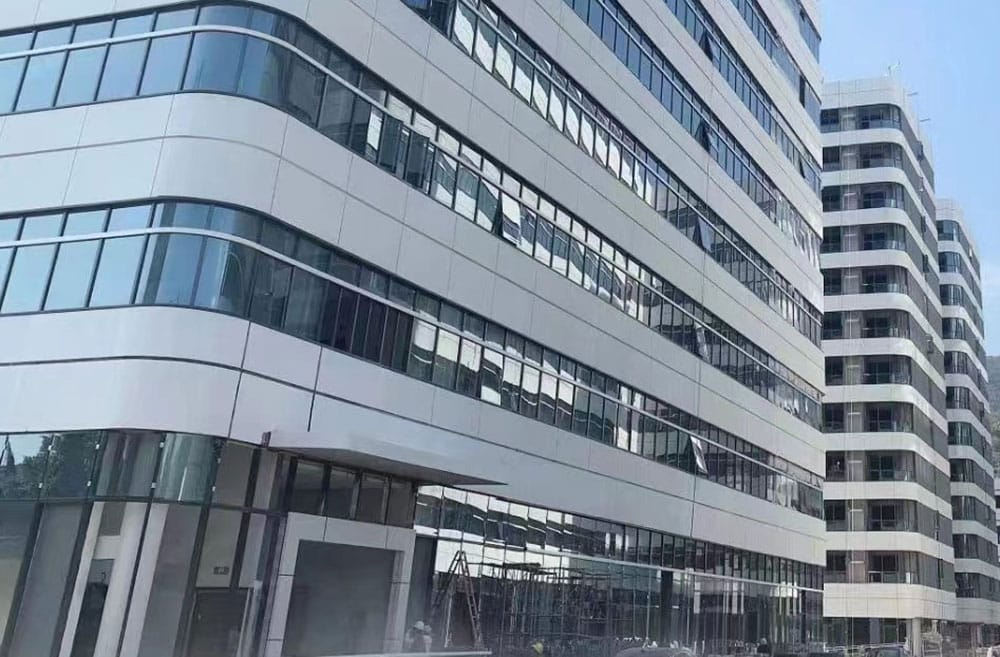
Transparency and dynamic visual effects are the most prominent aesthetic advantages of glass curtain walls. They maximize the introduction of natural light, creating visual connectivity between the building’s interior space and the external environment, and fostering an open, lightweight spatial atmosphere.
Meanwhile, the appearance of glass curtain walls presents dynamic changes with light, viewing angles, and the surrounding environment: the morning glow coats them in warm gold, midday sunlight highlights their sleek modernity, and indoor lights shining through at night create a warm urban night scene. This “breathable building envelope” allows architects to freely shape unique architectural forms. Examples include the curved glass curtain wall of Dubai’s Burj Al Arab and the “steel starfish” glass dome of Beijing Daxing International Airport—both have become world-renowned landmarks thanks to the aesthetic advantages of glass curtain walls, significantly enhancing the project’s brand value and recognition.
(2) Efficient Energy and Space Utilization
In terms of functionality, glass curtain walls offer excellent energy efficiency and space optimization capabilities.
1.Optimized natural lighting: Large-area glass panels provide sufficient natural light indoors, reducing energy consumption for artificial lighting during the day. Data shows that buildings with glass curtain walls can reduce lighting energy consumption by 30%-40%. Additionally, natural lighting improves the comfort and work efficiency of indoor occupants.
2. Thermal insulation performance: Modern glass curtain walls widely use double-pane insulated Low-E glass. Its low-emissivity coating effectively blocks infrared and ultraviolet rays, reducing indoor heat loss in winter and preventing external heat from entering in summer. The heat transfer coefficient can be as low as 1.5 W/(㎡·K), saving over 25% more energy than traditional walls. This makes them particularly suitable for construction projects in regions with extreme climates.
3. Space expansion effect: The lightweight nature of glass curtain walls reduces the space occupied by walls indoors. Combined with frameless designs, they enable larger bays and depths, providing greater flexibility for interior layout. This advantage is especially important in commercial and office buildings.
(3) Convenient Construction and Long-Term Economy
From a project implementation perspective, glass curtain walls offer dual advantages of efficient construction and long-term economy.
Their main components (such as glass panels and metal frames) are produced in a standardized manner in factories, with only on-site assembly required. This shortens the construction period by 20%-30% compared to traditional curtain walls, effectively reducing the project’s time costs.
Factory production ensures component precision, reduces on-site construction errors, and improves the stability of project quality.
In terms of long-term maintenance, the sealants and hardware of high-quality glass curtain wall systems have a service life of 15-20 years. Cleaning and inspection can be efficiently completed using professional high-altitude operation equipment, keeping long-term maintenance costs relatively manageable. These advantages are highly attractive to developers and contractors seeking project efficiency and return on investment.
(4) Green and Sustainable Environmental Features
Amid the global trend of sustainable architecture, the environmental advantages of glass curtain walls are becoming increasingly prominent.
On one hand, glass materials have a high recyclability rate, aligning with the concept of a circular economy.
On the other hand, when combined with photovoltaic modules, glass curtain walls can be transformed into “power-generating curtain walls” to provide clean electricity for buildings. For example, the photovoltaic glass curtain wall of Shenzhen Hanking Financial Center generates approximately 1.2 million kWh of electricity annually, reducing carbon emissions by about 800 tons.
Furthermore, the natural ventilation design and lighting optimization of glass curtain walls further reduce the building’s reliance on fossil energy. This helps projects obtain international green building certifications such as LEED and BREEAM, enhancing the project’s social value and market competitiveness.
3. Diverse Application Scenarios of Glass Curtain Walls: Comprehensive Coverage from Commercial to Public Sectors
The advantages of glass curtain walls allow them to adapt to different types of construction projects. From commercial complexes to public facilities, high-end residences to transportation hubs, their application scenarios continue to expand, making them an indispensable element in architectural design.
(1) Commercial Buildings: Visual Engines for Attracting Customers
Commercial buildings such as shopping malls, hotels, and retail centers have high requirements for exterior appeal and spatial experience—glass curtain walls perfectly meet these needs.
For instance, Hong Kong Causeway Bay Times Square adopts an all-glass curtain wall design. Its transparent display surface makes store windows and interior spaces clearly visible, effectively attracting passersby.
The curved glass curtain wall of Dubai’s Atlantis Hotel, combined with an ocean-themed design, creates a dreamy resort atmosphere, making it a world-renowned tourist destination.
The natural lighting and broad views of glass curtain walls also improve the comfort of commercial spaces, extending customer stay time and indirectly boosting consumption conversion.
(2) Office Buildings: Shaping Modern Corporate Image
Office buildings are one of the core application scenarios for glass curtain walls. Transparent glass curtain walls not only provide a bright, comfortable working environment for employees but also showcase a company’s open and professional image.
Super high-rise office buildings such as London’s The Shard and Shanghai Tower use glass curtain walls as their main exterior material. This not only meets the structural safety and energy-saving needs of high-altitude buildings but also turns them into urban business landmarks, attracting many international multinational enterprises to settle in. For architects, the flexibility of glass curtain walls allows them to design diverse office space forms, such as open-plan offices and landscape offices, enhancing the quality and competitiveness of office spaces.
(3) Public Buildings and Transportation Hubs: Integration of Function and Aesthetics
Public buildings such as exhibition halls, libraries, and museums need to balance lighting, spatial openness, and cultural expression—glass curtain walls perfectly balance these needs.
The “pearl on the water” design of Beijing National Centre for the Performing Arts combines translucent glass curtain walls with metal meshes, ensuring natural lighting in the exhibition halls while creating a hazy artistic atmosphere.
Guangzhou Baiyun International Airport Terminal T2 uses large-area glass curtain walls, allowing passengers to enjoy outdoor views during their wait and alleviating waiting fatigue.
Additionally, the lightweight nature of glass curtain walls makes them suitable for large-span public buildings, such as the roof and facade design of stadiums and convention centers, achieving the unity of architectural function and aesthetics.
(4) High-End Residences: A New Choice for Enhancing Living Quality
In the high-end residential sector, glass curtain walls are becoming an important element for improving living quality. Especially in areas with superior landscapes such as coastal regions and mountainous areas, glass curtain walls provide residents with broad views, bringing natural landscapes indoors and creating a living experience of “seeing scenery at a glance through the window.”
High-end residential projects such as Shenzhen Bay One and Shanghai Tomson Riviera all adopt glass curtain wall designs. Combined with French windows and balconies, they create transparent, luxurious living spaces. At the same time, the sound insulation and thermal insulation performance of modern glass curtain walls can meet the comfort needs of residences, providing owners with a living environment that combines aesthetics and practicality.
4. Future Development Trends of Glass Curtain Walls: Innovation Driven by Technology
With the continuous advancement of construction technology and the in-depth development of sustainable concepts, glass curtain walls are evolving toward greater intelligence, greener performance, and more personalized designs. These trends will bring more innovative possibilities for future construction projects.
(1) Integration of Intelligence and Digitalization
Future glass curtain walls will be deeply integrated with the Internet of Things (IoT) and artificial intelligence (AI) technologies to achieve intelligent control.
For example, sensors will real-time monitor environmental parameters such as light intensity, temperature, and wind force, automatically adjusting the glass’s light transmittance and sunshade systems to optimize indoor comfort and energy consumption.
Combined with BIM (Building Information Modeling) technology, full-lifecycle digital management of curtain wall design, construction, and operation and maintenance will be realized, improving project management efficiency and accuracy.
In addition, innovative forms such as transparent display glass curtain walls and interactive glass curtain walls will be gradually applied, endowing buildings with more technological sense and interactivity.
(2) Deepening of Green Energy-Saving Technologies
Energy-saving performance will become the core direction of glass curtain wall technology research and development.
On one hand, high-performance materials such as new-type Low-E glass and vacuum glass will further improve the thermal insulation effect of curtain walls.
On the other hand, the efficiency of photovoltaic glass curtain walls will continue to improve, and costs will decrease, enabling their large-scale application in more construction projects.
At the same time, the concept of passive design will be deeply integrated with glass curtain walls. By optimizing the orientation, inclination, and ventilation design of curtain walls, natural energy will be maximized, achieving the goal of near-zero energy consumption for buildings.
(3) Personalized and Customized Design
With the development of diversified architectural design trends, glass curtain walls will pay more attention to personalization and customization.
Through technologies such as 3D printing and curved steel glass, precise processing of complex curved surfaces and special-shaped curtain walls will be realized, meeting the creative design needs of architects.
Digital printing and texture processing on glass surfaces will enable curtain walls to present rich colors and patterns, enhancing the artistic expression of buildings.
In the future, glass curtain walls will no longer be standardized building components but will become “artistic canvases” that showcase the unique personality of buildings.
The advantages and application scenarios of glass curtain walls continue to expand, and their future development is full of innovative possibilities. As a professional team with 20 years of experience in global curtain wall projects, we deeply understand the needs and challenges of the international construction market. We can provide architects, decoration companies, property owners, contractors, and developers with full-process customized services, from scheme design and material selection to construction management and post-operation maintenance. We are committed to combining the most advanced glass curtain wall technology with the actual needs of projects to create safe, energy-saving, and aesthetically pleasing curtain wall systems, helping your project maximize its value. Whether you are planning a commercial complex, a high-end office building, or a public facility, contact us now and let our professional team provide you with one-on-one technical consultation and solutions to jointly drive innovation and development in the construction field.

