
In modern architectural design, the building facade is not only its “skin” but also a complex system that integrates function, aesthetics, and performance. With the rise of high-rise and super high-rise buildings, curtain walls and window walls have become two dominant facade systems. Although they appear similar in that both use glass as the primary material, they differ significantly in structural logic, installation methods, performance, and cost. Understanding the distinction between curtain walls and window walls is essential for architects, contractors, and developers to ensure project success and optimal performance.
1. Definition and Basic Principles
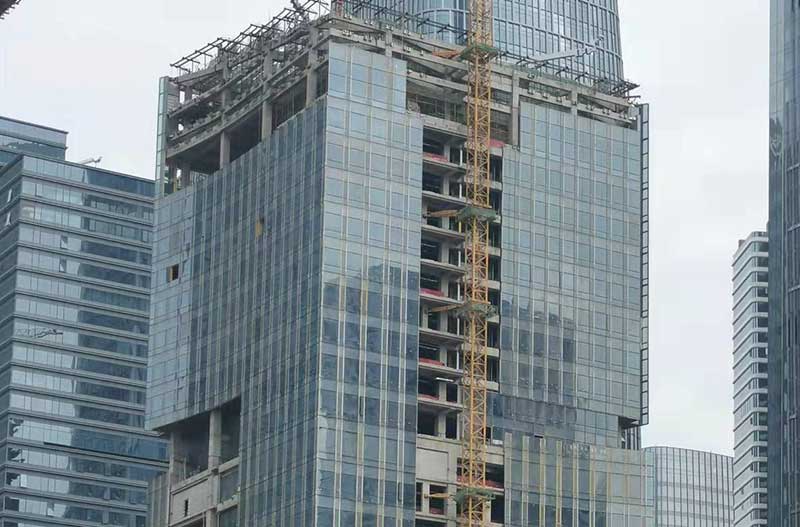
A curtain wall is a non-load-bearing exterior enclosure system that is completely independent of the main structure. It“hangs” from the building’s frame, typically attached to floor slabs or columns via connection brackets. The curtain wall’s weight and external loads—such as wind pressure, seismic movement, and thermal expansion—are transferred to the building structure, while the wall itself does not bear structural loads.
Curtain walls are typically composed of aluminum framing, glass panels, sealants, and connection components. They can be categorized as stick-built (exposed frame or concealed frame) or unitized systems. Known for their high air and water tightness as well as superior thermal performance, curtain walls are the preferred choice for high-rise buildings.
In contrast, a window wall is installed between floor slabs. It attaches directly to the building’s concrete structure, supported by slab edges or recesses. A window wall can be seen as an extended window system that creates the appearance of a continuous glass facade, though each floor is separated by structural beams or spandrel panels.
The fundamental difference is that a curtain wall is suspended outside the structure and operates independently, whereas a window wall is installed between floors and is more structurally integrated with the building.
2. Structural and Construction Differences
Installation Method:
Curtain walls are usually mounted externally, with brackets anchored to floor edges using embedded inserts or post-installed anchors. Unitized curtain walls are prefabricated in factories and hoisted into place, offering high precision and rapid installation.
Window walls, on the other hand, are assembled on-site between slabs. Mullions and base frames are fixed first, and glass panels are inserted afterward. The process is similar to conventional window installation and is well suited for mid- and high-rise residential projects.
Structural Behavior and Movement:
Because curtain walls are independent of the main structure, they can accommodate building movements and thermal expansion effectively. Window walls, being directly fixed between slabs, are more sensitive to structural movement, which can reduce sealing performance over time. Designers must therefore account for movement joints and flexible seals.
Water and Air Tightness:
Curtain walls typically use pressure-equalized or dual-seal systems, providing superior waterproofing compared to window walls. The latter relies on gaskets and drainage channels between floors, which can be prone to leakage if not properly installed or maintained.
From a cost standpoint, window walls are generally more economical, making them popular for residential and mid-rise developments. Curtain walls, however, offer better performance and aesthetics, especially for projects requiring high transparency, seamless appearance, and energy control.
3. Application Scenarios
Curtain walls are widely used in office towers, hotels, commercial complexes, airports, and exhibition centers. Their excellent air tightness, thermal insulation, and design flexibility allow architects to realize complex geometries and expressive facades.
Window walls are commonly found in residential buildings, mixed-use developments, hospitals, and mid-rise offices. Their modular structure allows for efficient floor-by-floor installation, maintaining natural daylight while controlling costs. For instance, most residential high-rises in cities like Toronto and Vancouver utilize window wall systems.
In practice, developers often combine both systems—using curtain walls in public or prominent areas for visual impact, and window walls in residential zones to manage budgets effectively.
4. Sustainability and Energy Performance
With the growing emphasis on sustainable architecture, both curtain and window wall systems are evolving toward higher energy efficiency, easier maintenance, and recyclability.
High-Performance Glass and Shading:
Curtain walls can integrate Low-E glazing, double or triple glazing, and external shading systems or smart glass to enhance energy performance. Window walls are increasingly adopting thermally broken frames and insulation designs to minimize thermal bridging.
Digital Design and Manufacturing:
Modern curtain wall projects often use BIM (Building Information Modeling) for facade design and coordination. Similarly, window wall systems are incorporating factory prefabrication and digital quality inspection for consistency and precision.
Modular and Recyclable Design:
Both systems are trending toward modular, demountable designs that facilitate maintenance, replacement, and material recycling, reducing carbon emissions and waste.
5. Future Trends: Smart and Integrated facade Systems
In the coming decade, the boundary between curtain walls and window walls will continue to blur. With advances in building technology, facades are evolving from static enclosures into intelligent, interactive building interfaces.
Smart curtain wall systems may incorporate building-integrated photovoltaics (BIPV), automated ventilation, and environmental sensors to achieve energy self-sufficiency and adaptive performance.
Hybrid facade systems combining curtain wall and window wall features will allow different zones to serve distinct functional needs within a single facade.
Prefabricated and robotic installation methods will further enhance safety, efficiency, and precision.
These developments suggest that the choice between curtain wall and window wall is no longer binary. Instead, the optimal facade strategy should be determined by the building’s function, cost constraints, energy goals, and design intent.
6. Professional Insights and Recommendations
For architects and developers, understanding the structural logic and performance differences between curtain walls and window walls is essential to project success. When designing a facade system, it is important to:
1. Select the system type based on building height and structure.
2. Balance aesthetic goals, energy performance, and maintenance requirements.
3. Engage facade consultants early in the design phase for system optimization and cost evaluation.
4. Partner with reputable suppliers and contractors to ensure quality and long-term reliability.
Whether it is the soaring transparency of a curtain wall or the practical efficiency of a window wall, both are indispensable elements of modern architecture. Proper understanding and application of these systems can not only enhance a building’s performance but also elevate its market value and brand image.
If you are planning a new project or seeking to improve the performance of your building facade, now is the ideal time to collaborate with a professional facade consultant—to make your building more efficient, beautiful, and enduring.

