
A glass curtain wall not only gives a building a clean, modern appearance but also enhances natural lighting and improves energy efficiency. However, installing a glass curtain wall is a highly technical process that involves structural design, material selection, construction management, and safety control. This article explains how to properly and scientifically install a glass curtain wall, covering system types, preparation, installation steps, quality control, and safety considerations.
Before installation, it is essential to understand the main types and structural principles of curtain wall systems. Based on load-bearing and connection methods, glass curtain walls are generally divided into the following types:
Framed glass curtain wall (exposed or concealed frame):
Exposed frame systems have visible mullions and transoms, making installation and maintenance easier.
Concealed frame systems hide the aluminum frame behind the glass for a sleek, modern appearance.
Semi-concealed frame systems combine both approaches and are often used in mid- to high-end office buildings.
Point-supported glass curtain wall:
This system uses metal fittings, such as spider connectors, to attach the glass to the supporting structure. It offers a high level of transparency and a light visual effect, suitable for large façades or atrium spaces.
Unitized curtain wall:
These systems are prefabricated into modular units in a factory and then lifted into place on-site. They provide better quality control and faster installation and are widely used in high-rise buildings.
Before installation begins, careful preparation ensures efficiency and quality. Preparation work includes:
Reviewing and refining drawings to confirm embedded part locations and ensure structural loads are properly distributed.
Preparing materials and equipment, ensuring all aluminum profiles, glass panels, and sealants meet required standards and certifications.
Conducting measurement and layout using total stations or laser levels to determine the centerlines and elevations of mullions and key control points.
Inspecting embedded parts to ensure alignment accuracy within design tolerances.
The main installation steps are as follows:
Install mullions and transoms according to layout lines. Mullions are fixed using pre-embedded anchors and checked for vertical alignment. Transoms are then connected horizontally, ensuring bolts are tight and stable.
Clean glass and frame surfaces to remove dust and oil. Lift the glass into position using vacuum lifters, keeping uniform gaps of about 8–12 mm. Fix with setting blocks and seal the edges using pressure plates or structural silicone.
Apply sealant for waterproofing. Structural silicone is used for concealed frame systems, and weatherproof sealant is applied to external joints at 15°C–35°C. Ensure smooth, continuous, and bubble-free seams.
Check the drainage system to ensure each level has proper drainage channels or holes. Conduct water spray tests to verify waterproofing.
Clean the surface after installation and inspect structural integrity, glass condition, sealant continuity, and overall alignment.
Quality control is crucial throughout the process. Key points include:
Sealant application must follow compatibility testing, and surfaces must be clean and dry before sealing.
Glass edges must be polished to prevent stress concentration, and installation tolerances should not exceed ±2 mm.
Drainage holes must remain clear to prevent water leakage, and regular rain simulation tests should be performed.
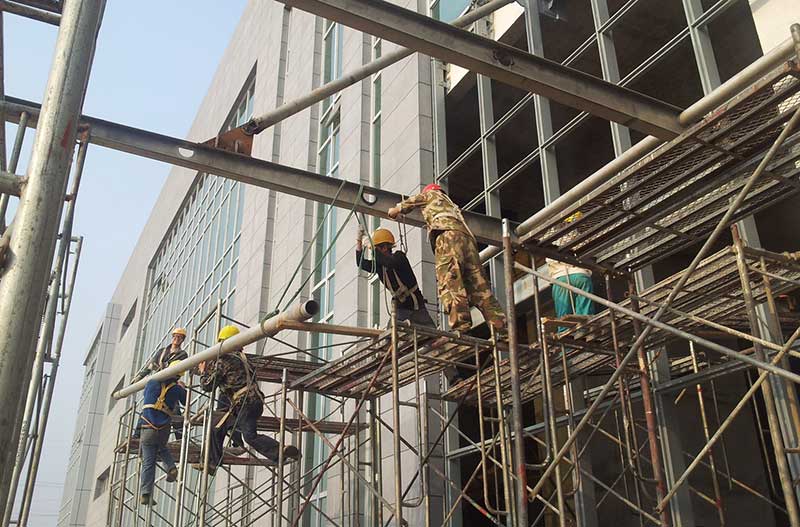
All high-altitude operations must comply with safety standards, with workers wearing harnesses and safety helmets, and lifting zones clearly marked.
Common issues include:
Glass breakage due to uneven stress or incorrect setting block placement, which can be resolved by adjusting gaps and ensuring even load distribution.
Sealant aging or detachment due to improper temperature or surface cleaning, requiring reapplication under controlled conditions.
Water leakage caused by poor sealing or blocked drainage, resolved by resealing joints or cleaning drainage paths.
Safety management is essential during installation. Each project must have a detailed safety plan approved by experts. Lifting operations must be inspected, workers must use safety lines, and emergency equipment should be available on-site.
After installation, regular maintenance extends service life and preserves appearance. The façade should be cleaned every six months, and sealants, hardware, and drainage systems should be inspected regularly. After storms or strong winds, a full inspection should be carried out, and any cracked glass or loose fittings replaced immediately.
Installing a glass curtain wall is not merely a construction task but a complex engineering process that integrates design, structure, materials, and safety. Only by strictly controlling each stage and paying attention to detail can the curtain wall achieve both structural reliability and aesthetic excellence. A well-installed glass curtain wall is a symbol of architectural technology and modern design.

