
As a signature facade solution in modern architecture, glass curtain walls are widely used in projects around the world for their aesthetics, energy efficiency, and design flexibility. For developers, contractors, and international clients, understanding the methods of installation is fundamental to ensuring smooth project execution and long-term value.
Drawing on 20 years of curtain wall engineering experience, this article provides a systematic overview of installation procedures, technical requirements, quality control, and real-world cases to guide global construction projects.
1. Preparations for Glass Curtain Wall Installation
1. Detailed Design and Drawing Confirmation
Before construction, the curtain wall system must undergo detailed design to define glass dimensions, mullion layouts, and connection nodes. 3D modeling and structural analysis help prevent conflicts and errors during installation.
2. Material Preparation and Inspection
Glass: Commonly used types include Low-E, tempered, and insulated glass, all of which must pass strength and performance tests.
Profiles: Aluminum or steel frames must meet mechanical standards and feature corrosion-resistant finishes.
Accessories: Sealants, fireproof insulation, and rubber pads must be weather-resistant and environmentally safe.
All materials must be re-inspected on site to ensure compliance with international and local standards.
3. Site Condition Checks
Construction sites should be equipped with gondolas, tower cranes, or temporary supports. Transport routes must remain clear, and comprehensive safety measures must be in place.
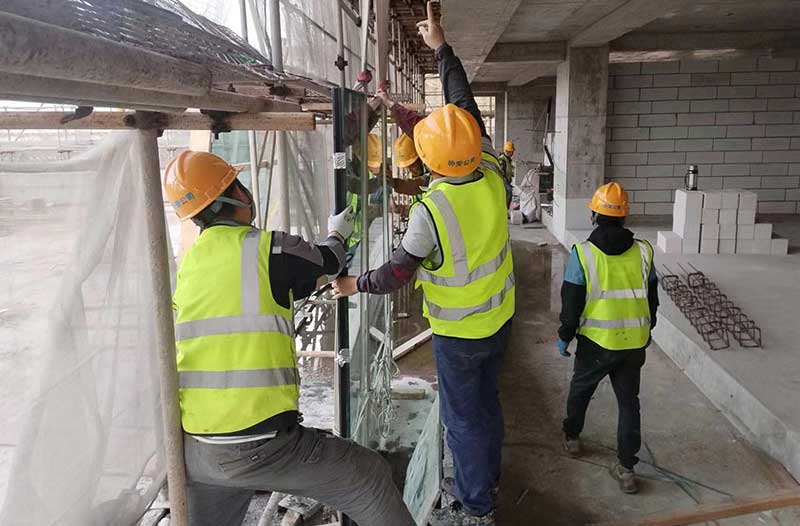
2. Main Methods of Glass Curtain Wall Installation
1. Unitized Curtain Wall Installation
Unitized curtain walls are prefabricated in the factory, with glass and framing assembled into modules that are lifted and fixed directly onto the main structure on site.
Features:
Stable quality from factory prefabrication
Fast installation, ideal for high-rise buildings
Shorter on-site construction time and less environmental disruption
Installation Steps:
1. Measure and mark module positions precisely
2. Hoist unit panels into place
3. Connect to the main structure using embedded fittings
4. Apply sealants and finish connections at joints
2. Stick-Built Curtain Wall Installation
Stick-built systems involve assembling mullions and transoms on site, followed by sequential glass installation. This method is highly adaptable, making it suitable for complex architectural forms.
Installation Steps:
1. Mark reference lines and install vertical mullions
2. Install horizontal transoms to form the framework
3. Place glass panels one by one within the frame
4. Apply sealants and waterproofing at joints
3. Point-Supported Glass Curtain Wall Installation
This system uses metal fittings to fix the glass, creating a highly transparent facade often seen in airports, exhibition halls, and other public buildings.
Installation Steps:
1. Install steel structural supports on the main building
2. Attach spider fittings or point connectors
3. Hoist and secure glass panels to fittings
4. Apply sealants, edge treatments, and conduct safety checks
3. Key Technical Requirements
1. Precision Control: Maintain verticality, horizontality, and consistent alignment, with tolerances within ±0.1 mm.
2. Waterproofing: Use dual-seal systems to ensure air and water tightness, preventing leaks.
3. Safety Measures: Workers at height must use harnesses, lifelines, and fall-arrest devices.
4. Glass Protection: Use suction tools during hoisting and installation to avoid stress damage.
5. Weather Resistance: Select glass thickness and sealant types suited to local climate conditions.
4. Quality Testing After Installation
Once installation is complete, comprehensive system testing is required:
Wind Load Resistance: Simulate extreme wind conditions to check deformation.
Air Tightness Test: Identify any air leakage.
Water Tightness Test: Simulate heavy rain to confirm no water infiltration.
Structural Safety Test: Verify load-bearing capacity of connections, mullions, and glass.
These tests ensure that both safety and aesthetics meet design standards.
5. Common Issues and Solutions
1. Leakage: Often caused by poor sealing or drainage design—resolved with durable sealants and improved detailing.
2. Glass Breakage: May result from stress concentration or material defects—prevented by using high-quality tempered glass and avoiding hard contacts.
3. Installation Errors: Corrected through precision instruments such as laser levels and total stations.
4. Poor Insulation: Addressed with Low-E glass and thermally broken aluminum profiles.
6. International Project Case Studies
High-Rise Office Tower, Middle East: Adopted unitized curtain walls, completed on schedule, and withstood harsh climate conditions.
Green Residential Project, Europe: Used stick-built curtain walls with Low-E glass to achieve energy efficiency goals.
Commercial Complex, Southeast Asia: Installed point-supported curtain walls for a transparent, modern look that attracted strong commercial interest.
These cases demonstrate how professional installation methods not only ensure successful delivery but also enhance a building’s value and competitiveness.
Installing glass curtain walls is a highly precise and safety-critical engineering process. Whether unitized, stick-built, or point-supported, selecting experienced teams and reliable methods is essential for achieving long-lasting aesthetics, safety, and energy performance.
If you are planning or implementing a curtain wall project, we recommend working with seasoned experts who can provide end-to-end support from design and manufacturing to installation. Contact us today to make your project stand out globally with enduring value and exceptional quality.

