
In today’s rapidly urbanizing world, building façades are no longer just structures that provide shelter—they have become vital expressions of a city’s image and a company’s brand. More and more developers, architects, and property owners are pursuing clean, transparent, and modern exteriors, which is exactly where frameless glass curtain walls come into play.
Traditional curtain walls, while functional, are often limited by visible metal frames. Frameless glass curtain walls, through clever structural design, conceal the supporting components behind the glass, creating the pure impression of a seamless glass surface. This not only aligns with the trend of minimalist architecture but also enhances the user experience.
As a consultant with over 20 years of experience in the curtain wall industry, I have worked on projects ranging from five-star hotels to premium office towers, from shopping complexes to art museums. Frameless glass curtain walls are increasingly becoming the design preference. Below, I will break down their advantages, applications, and key selection points.
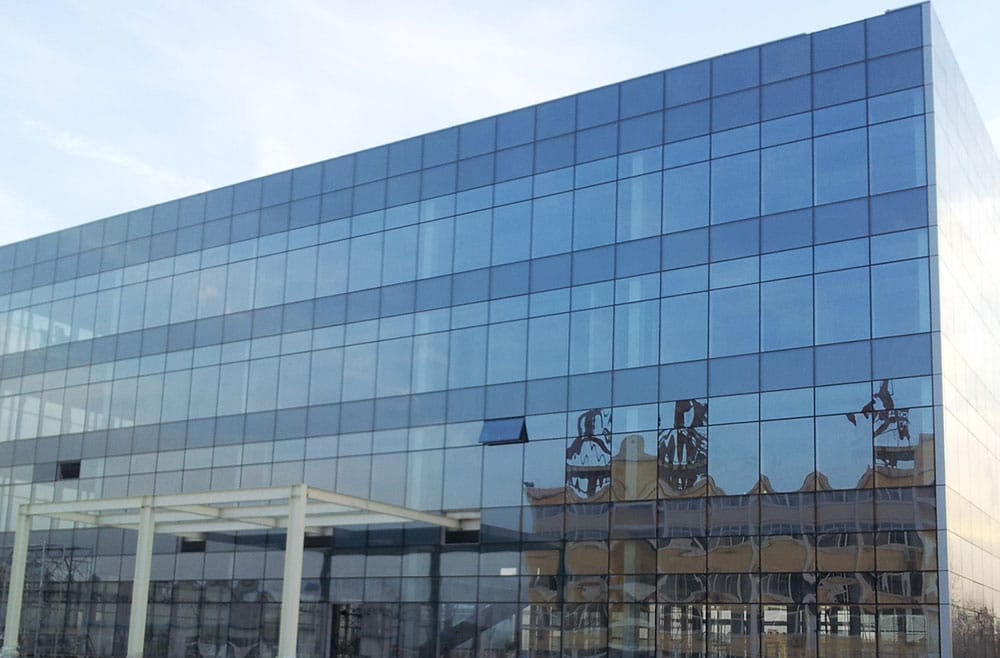
1. Basic Concept of Frameless Glass Curtain Walls
As the name suggests, frameless glass curtain walls use large expanses of glass fixed to the building structure with specialized fittings, while the framing is not visible from the outside.
Common forms include:
1. Point-supported glass curtain walls – Glass is secured to the substructure using stainless steel spider fittings.
2. Full hidden-frame systems – Glass panels are bonded with structural silicone, concealing all aluminum frames.
3. Semi-hidden-frame systems – Either horizontal or vertical members are concealed, while the other remains visible.
The central goal of all these designs is to create a clean, uninterrupted glass façade.
2. Key Advantages of Frameless Glass Curtain Walls
From years of working with developers and design teams, I have summarized six major advantages:
1. Minimalist Aesthetics with Strong Visual Impact
Frameless design allows the façade to resemble a crystal-clear surface, eliminating the segmented look of conventional frames.
In shopping centers, this conveys openness and modernity.
In hotel lobbies, it creates a sense of luxury and spatial extension.
2. Enhanced Natural Lighting for Greater Comfort
With minimal obstruction, frameless walls maximize daylight penetration.
Office buildings benefit from reduced daytime lighting costs.
Exhibition halls enjoy a brighter, more transparent display environment.
3. Reliable Energy Efficiency
Contrary to the perception that frameless systems are about looks alone, they can also deliver excellent performance.
Double-glazed Low-E glass reduces heat transfer.
In cold regions, double-skin frameless walls improve insulation.
4. High Strength and Safety
Frameless systems typically use tempered laminated glass, four to five times stronger than ordinary glass. Even when damaged, it breaks into blunt fragments, minimizing injury risks.
In coastal cities prone to typhoons, properly engineered frameless walls can withstand strong winds.
5. Flexible Design for Diverse Architecture
Frameless systems allow curved, angled, and irregular geometries.
A museum in Shenzhen used a point-supported curved façade, becoming a city landmark.
A U.S. office tower applied a full hidden-frame design to stand out from traditional neighbors.
6. Increased Property Value
Beyond decoration, frameless façades are assets. Their premium look raises market competitiveness.
Office rents increase by 10–15%.
Shopping centers attract international tenants more easily.
3. Ideal Applications
Based on project experience, the following building types particularly benefit from frameless curtain walls:
High-end office towers: Showcase corporate image and enhance comfort.
Hotels and convention centers: Convey grandeur and luxury.
Shopping complexes: Strengthen brand presence and foot traffic.
Museums and cultural venues: Highlight artistic and design qualities.
4. Comparison with Traditional Curtain Walls
A common client question is whether frameless glass curtain walls are worth the investment compared to conventional systems. An office tower project in Shenzhen provides a clear example:
Appearance: After switching to a frameless system, the building façade became more transparent and iconic.
Cost: Initial investment rose by about 15%, but rental income increased by 20%.
Energy use: With double-silver Low-E glass, HVAC energy consumption dropped by 12%.
The takeaway: while upfront costs are higher, the long-term return far outweighs them.
5. Key Considerations When Choosing Frameless Systems
Over the years, I have identified three critical factors:
1. Material Selection – Use tempered laminated glass and certified structural sealants that meet international standards.
2. Design Expertise – Engage qualified curtain wall design firms to ensure structural integrity and safety.
3. Construction & Maintenance – Choose experienced installers and schedule routine inspections and cleaning.
Neglecting any step can compromise both performance and longevity.
6. Frequently Asked Questions (FAQ)
Q1: Are frameless glass curtain walls safe?
A1: Yes. They use tempered laminated glass and high-strength fittings, with wind load and seismic calculations. With reputable suppliers and professional installation, safety is fully assured.
Q2: How much more expensive are they compared to standard curtain walls?
A2: Typically 10–20% higher, depending on glass specs and design complexity. However, the long-term benefits in value and lower operating costs make them cost-effective.
Q3: Are they suitable for residential buildings?
A3: Rare in standard residences due to cost and construction demands, but ideal for luxury homes and villas seeking unique aesthetics and lighting.
Q4: Do they leak easily?
A4: No. Modern frameless systems use structural silicone, waterproof seals, and drainage designs to achieve high levels of watertightness.
Q5: Are they difficult to clean and maintain?
A5: High-rise cleaning requires professionals, but the smooth surface minimizes dust buildup. Overall maintenance costs are lower than stone cladding.
Frameless glass curtain walls are not just a façade solution—they enhance design, comfort, and long-term value. With minimalist aesthetics, excellent lighting, reliable performance, and strong safety, they are becoming a preferred choice in modern architecture.
For developers, they strengthen competitiveness; for architects, they serve as a creative canvas; and for end-users, they ensure comfort and elegance.
Looking ahead, as new materials and smart technologies evolve, frameless curtain walls will continue to expand their applications and remain integral to iconic buildings worldwide.

