
What Are the Functions of Glass Curtain Walls?
In modern cities, whether it’s towering office buildings or uniquely designed commercial complexes, gleaming glass façades are everywhere. These façades are not just about “looking good”—they integrate aesthetics, functionality, and safety. Many owners, developers, or designers often ask: What functions do glass curtain walls actually provide? How do they compare with traditional walls?
Over the past two decades, I have worked on hundreds of glass curtain wall projects. Clients’ most common questions include:
Are glass curtain walls safe?
Are they energy efficient in hot or cold climates?
Are they easy to maintain long term?
Compared with stone or aluminum panels, where does their value lie?
Today, ZDMQ will share practical insights and summarize the main functions and advantages of glass curtain walls to help you fully understand why they are indispensable in modern architecture.
I. Main Functions and Advantages of Glass Curtain Walls
1. Elegant Appearance, Enhancing Building Image
The most obvious function of glass curtain walls is their visual impact. Transparent, bright, and open, they allow buildings to stand out in the city skyline.
Application scenarios: premium office towers, five-star hotels, large shopping malls.
Example: Several landmark buildings in Shanghai’s Lujiazui district feature large glass curtain walls. At night, when the lights shine through, they have become iconic symbols of the city.
2. Abundant Daylight, Improving Indoor Environment
Traditional brick or stone façades often result in insufficient natural light indoors. Glass curtain walls maximize daylight entry.
Advantages: reduce daytime lighting needs and energy costs while improving comfort for occupants.
Applications: schools, libraries, open-plan offices.
3. Energy Efficiency and Thermal Insulation
Modern glass curtain walls often use insulated glass, Low-E coated glass, or laminated glass, which effectively block outdoor heat or cold.
Example: A shopping center in Dubai used double-silver Low-E insulated glass curtain walls, cutting air-conditioning energy use by about 25% compared to conventional designs.
Key benefit: Over the life cycle, such systems save owners significant operating expenses.
4. Sound Insulation, Creating Quiet Spaces
In busy cities, noise reduction is a major concern.
Advantage: double-glazed or laminated glass curtain walls effectively reduce noise, creating a quiet and comfortable environment for work or living.
5. Safety and Protection
Many clients worry that glass curtain walls are “fragile.” In fact, modern systems are highly engineered for safety.
Laminated glass holds fragments together after breaking, preventing them from falling.
Insulated glass combined with strong frames offers excellent wind resistance and seismic performance.
Example: High-rise buildings in Tokyo use tempered laminated glass curtain walls, which remain stable even during earthquakes.
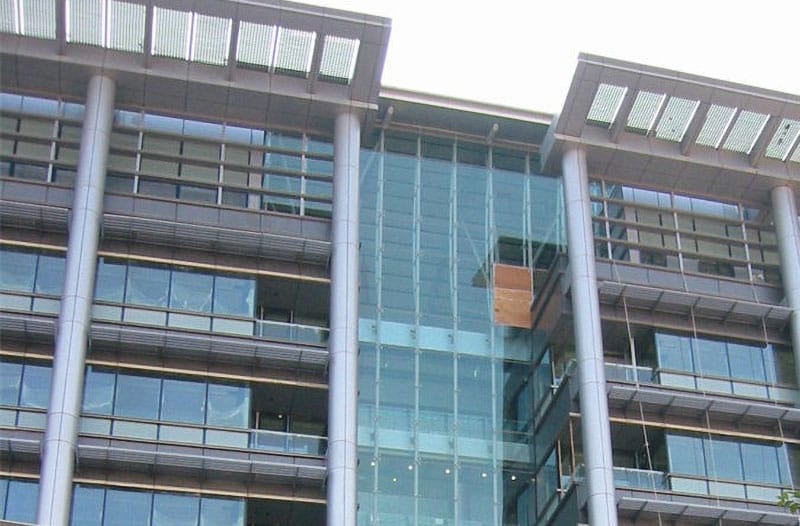
6. Reducing Structural Load
Glass curtain walls weigh far less than stone or concrete walls, meaning the building’s structural load is reduced.
Benefit: saves on steel and concrete in the structure and shortens construction timelines.
7. Sustainability and Environmental Benefits
Most materials used in glass curtain walls are recyclable and comply with green building standards. With thoughtful design, they can even integrate photovoltaic glass, allowing the façade itself to generate energy for the building.
II. Client Cases and Applications
Case 1: Nairobi Financial Center Office Tower
The client initially considered stone curtain walls but was concerned about cost and heavy appearance. After comparing options, they chose glass curtain walls.
Result: the building achieved a more modern look, attracting international tenants.
The energy-efficient design cut operating costs by 20% compared to similar nearby buildings.
Case 2: Hotel in Guangzhou
The hotel owner wanted both “luxury” and “comfort.” After adopting large insulated glass curtain walls:
The lobby had abundant natural light during the day, reducing artificial lighting.
At night, the lighting and glass created a high-end atmosphere.
Guest rooms offered superior sound insulation, boosting customer satisfaction.
Case 3: Shopping Mall in Cairo, Egypt
In the hot climate, air-conditioning was a major cost. The design team used a double-skin curtain wall system: the outer layer provided shading while the inner layer used insulated glass.
Result: annual air-conditioning bills were reduced by nearly one million USD.
III. Comparison with Other Façade Options
1. Compared with Stone Curtain Walls
Aesthetics: glass is modern and transparent; stone is heavy and traditional.
Weight: glass is lightweight and less demanding on the structure; stone is heavy.
Maintenance: glass is easy to clean; stone requires regular upkeep.
Cost: stone often has higher upfront costs; glass offers better long-term value.
2. Compared with Aluminum Panel Curtain Walls
Transparency: glass allows natural light; aluminum panels are opaque.
Energy efficiency: glass with Low-E coatings offers better insulation; aluminum panels insulate poorly.
Visual effect: glass is light and dynamic; aluminum panels look more solid.
Common Concerns About Glass Curtain Walls
1. Are glass curtain walls safe?
Yes. Modern systems use tempered, laminated, and insulated glass with engineered frameworks, offering wind resistance, seismic performance, and even blast resistance. Broken glass will not fall in large pieces.
2. Will glass curtain walls make the building hot?
No. With Low-E coatings and insulated glass, they actually block solar radiation effectively, making them more energy efficient than ordinary windows.
3. Are they expensive?
Initial investment may be slightly higher than paint or basic finishes, but considering energy savings, reduced electricity use, easy maintenance, and long lifespan, overall costs are lower.
4. Is maintenance difficult?
Routine cleaning is simple. Professional teams can use suspended platforms for façade washing, at far lower cost than maintaining stone façades.
5. What climates and buildings are they suitable for?
Almost all. From cold Northern Europe to hot Middle Eastern climates, glass curtain walls can be adapted with the right glass and system design.
Glass curtain walls combine aesthetics and practicality. They deliver a modern and elegant look while offering daylight, insulation, soundproofing, safety, and sustainability. Whether for high-end office towers, commercial complexes, hotels, or residential projects, glass curtain walls help buildings achieve the perfect balance between beauty and performance.
If you are considering a façade system for your project, our professional team is here to help. With extensive experience in design, manufacturing, and installation, we provide customized glass curtain wall solutions tailored to your needs—ensuring your project stands out competitively.
Contact us today and make your building shine!

