
In today’s urban architecture, glass curtain walls have become an iconic design feature. Whether on towering office buildings, modern commercial complexes, or striking exhibition centres, their presence is almost everywhere. Many people wonder: why do so many developers and architects favour glass curtain walls? The answer lies in their wide-ranging advantages, meeting aesthetic, functional and environmental demands. Below, we explore their top ten benefits.
- Bright and Transparent – Enhancing Architectural Aesthetics
One of the greatest strengths of glass curtain walls is their ability to create a bright, spacious atmosphere. Unlike traditional walls, they allow abundant natural light indoors, reducing dark corners and giving buildings a modern, high-end appeal.
Visual impact: From near or far, the whole structure appears taller, lighter and more refined.
Upgraded image: For businesses, a glass façade helps project a modern and open identity.
- Superior Daylight – Reducing Lighting Costs
By maximising natural light, curtain walls reduce the need for artificial lighting during the day.
Energy savings: Less reliance on electric lighting cuts energy use.
Healthy and comfortable: Sunlight indoors creates a more natural environment, benefiting well-being.
This daylighting advantage is often one of the most valued features of glass curtain walls.
- Excellent Sound Insulation – Creating Peaceful Interiors
Despite their extensive glazing, modern systems often use double-glazed or laminated units, providing effective noise reduction. Even in busy city centres, office towers with curtain walls can maintain calm and quiet interiors – a vital advantage for hotels, schools and workplaces.
- Energy-Efficient and Eco-Friendly
In line with the global move towards low-carbon, sustainable buildings, curtain walls offer strong energy-saving potential.
Thermal control: Insulating glazing reduces winter heat loss and summer heat gain.
Solar management: Low-E coatings minimise solar radiation, lowering cooling loads.
Green certification: Properly designed systems can help buildings achieve standards such as LEED.
- Safe and Reliable – Strong Wind and Fire Resistance
Modern curtain walls combine style with safety.
Wind resistance: In coastal cities prone to typhoons, systems are engineered to withstand extreme pressure.
Fire protection: Fire-rated glass can delay the spread of flames, buying time for safe evacuation.
- Flexible and Versatile Design
Architects value curtain walls for their creative potential.
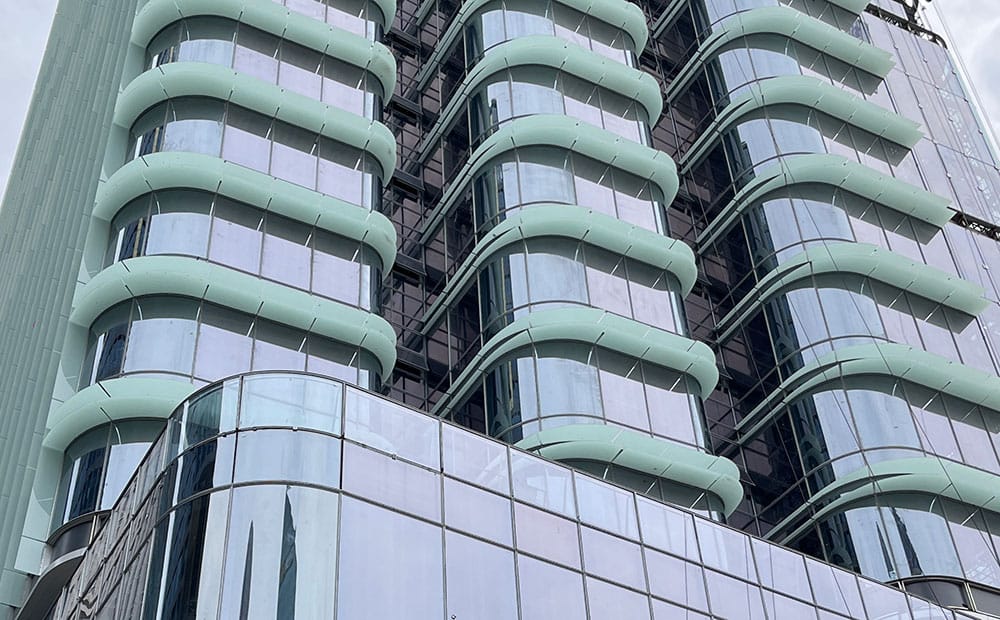
Shapes and forms: Options include flat, curved or irregular geometries.
Variety of finishes: Transparent, translucent or coloured glazing enables distinctive effects.
From sleek minimalism to futuristic expression, curtain walls can support almost any design language.
- Durable and Easy to Maintain
Unlike traditional façades that may crack, fade or leak over time, glass curtain walls are highly weather-resistant.
Corrosion-resistant: Aluminium frames and glass are long-lasting.
Low upkeep: Routine cleaning is usually enough to keep them pristine.
Cost-effective: Though initial costs may be higher, long-term maintenance is simpler and more economical.
- Comfort and Indoor Climate Control
Glass curtain walls directly improve the user experience.
Thermal comfort: Warm in winter, cool in summer.
Moisture control: Proper systems reduce condensation and damp.
Air quality: By bringing in more natural light and reducing enclosure, interiors feel fresher and less oppressive.
- Better Use of Space
Because curtain walls are slim and lightweight compared with conventional walls, they help maximise usable floor area. In dense urban settings, this added space translates into tangible economic benefits – an often overlooked but critical advantage.
- Increased Value and Competitiveness
Beyond function and appearance, curtain walls enhance long-term property value.
Higher returns: Office towers with glass façades often command premium rents and sales prices.
Market appeal: Commercial schemes using curtain walls are more likely to attract prestigious tenants.
This is why curtain walls have become standard for high-end developments worldwide.
Doesn’t all that glass increase energy use?
Not with modern systems. Insulating and Low-E glazing significantly reduce energy demand compared to single-pane glass.
Aren’t they fragile?
No. Most curtain walls use tempered or laminated glass, which is several times stronger than ordinary glazing. If broken, they crumble safely without sharp shards.
Are maintenance costs very high?
While professional equipment may be required for cleaning, curtain walls are long-lasting and resistant to ageing, meaning overall costs are reasonable.
What is their lifespan?
High-quality curtain walls typically last 25–50 years, depending on materials, design and workmanship.
Can they be used on homes?
Yes, particularly in luxury houses or villas. However, in mainstream housing, windows remain more cost-effective.
The advantages of glass curtain walls go far beyond appearance. They offer daylight, sound insulation, energy efficiency, safety, comfort and durability – while also increasing property value. For developers, architects and owners alike, they represent a smart, long-term investment.
Looking ahead, as technology advances, glass curtain walls will continue to evolve towards smarter, greener solutions, securing their place as the defining feature of tomorrow’s landmark buildings.

