
In modern cities, whether in towering office buildings, bright commercial complexes, or comfortable residential communities, glass is almost everywhere. When people talk about facades, the first material that often comes to mind is glass. Its transparency, modern feel, and aesthetics make it a top choice for architects in their design plans. At the same time, the advantages and disadvantages of architectural glass have always been a recurring topic of discussion among owners, designers, and construction teams.
Advantages of Architectural Glass
- Outstanding Visual Effect
Architectural glass immediately conveys a sense of modernity and openness. Large glass curtain walls make buildings appear lighter, stylish, and more spacious.
- Excellent Natural Lighting
According to the Journal of Building and Environment, proper glass design can increase indoor daylighting by more than 30%, reducing the need for artificial lighting during the day.
This not only improves living and working comfort but also directly lowers electricity costs.
- Great Energy-Saving Potential
With technological advancements, architectural glass is no longer just a “transparent material” but also a key tool for energy control.
Low-E glass can effectively block infrared radiation, reducing summer cooling costs by 15%–25%.
Insulating glass improves thermal performance and can reduce heating loss by around 20% during winter in northern regions.
- Diverse Design Possibilities
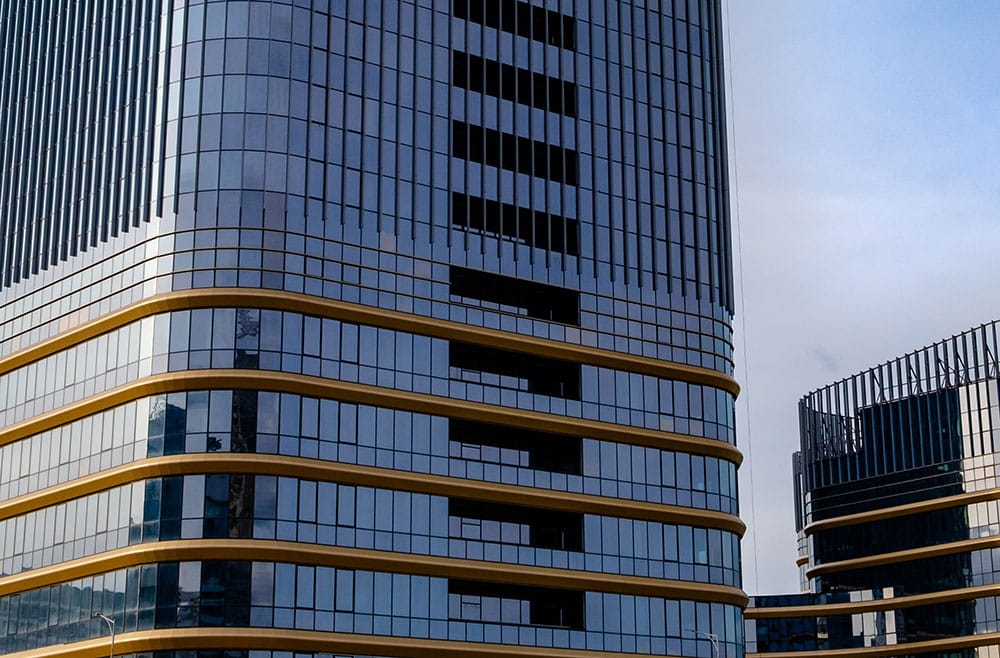
Glass is not limited to transparency. Through coating, printing, or lamination processes, it can achieve various colors and functions.
For example, hospitals and schools often prefer soundproof glass to meet noise reduction requirements.
- Increases Property Value
High-quality glass facades often make office buildings more attractive to tenants. Research shows that office towers with double-glass curtain walls typically achieve rental rates 10%–15% higher than those with conventional facades in the same area.
Disadvantages of Architectural Glass
- Ongoing Energy Consumption
Despite improvements in high-performance glass, compared to stone or metal facades, glass still facilitates more heat exchange.
- Light Pollution and Glare
Large glass facades can cause significant light pollution under direct sunlight.
- Safety Risks
Glass is a brittle material. If not properly designed or installed, it may break or even fall.
National standards require tempered or laminated glass for public buildings, yet smaller projects sometimes ignore this due to cost concerns.
- High Maintenance and Cleaning Costs
To remain visually appealing, glass facades require regular cleaning, especially for high-rise buildings.
According to a property management company in Shenzhen, annual cleaning and maintenance costs for a 50-story glass tower can reach up to RMB 800,000.
- Limited Sound Insulation
Although double-glass or laminated glass can improve soundproofing, poor sealing still results in noticeable noise issues.
In residential projects near highways or airports, glass facades are often the top complaint from owners.
Case Study: Real Project Experience
A few years ago, I participated in a mixed-use development project in Zhuhai. The client initially wanted a full glass façade for a modern look. However, after conducting an energy simulation, we found:
The all-glass scheme consumed about 28% more annual energy compared to a mixed stone-and-glass façade.
Cooling loads were significantly higher during summer, leading to long-term operating cost increases.
In the end, we designed a hybrid façade: the commercial podium used glass curtain walls for visual appeal, while the residential towers adopted a combination of stone cladding and double-glass systems.
The result was a stylish appearance with reduced overall energy consumption. During the sales phase, the “energy-efficient and comfortable” positioning became a strong selling point, leading to faster sales than comparable nearby projects.
Common Questions You May Have
Q1: Does architectural glass always lead to high energy consumption?
Not necessarily. Using insulated glass, Low-E coated glass, and shading systems can significantly reduce energy use. The key lies in selecting the right solution.
Q2: How can light pollution from glass facades be prevented?
This can be solved by adjusting façade angles, using low-reflection glass, or installing external shading systems such as louvers.
Q3: What is the lifespan of architectural glass?
High-quality curtain wall glass typically lasts 30–50 years, provided it is regularly maintained and sealing materials are not neglected.
Q4: Does architectural glass affect property value?
Yes. Premium glass facades generally enhance the overall grade and competitiveness of a building. However, poor design leading to high energy use or excessive maintenance can become a drawback.
Final Thoughts
When discussing the advantages and disadvantages of architectural glass, it is not as simple as labeling it “good” or “bad.” Glass is a double-edged sword: used properly, it can greatly enhance both visual appeal and functionality; used carelessly, it can become a burden.
As one of the most representative materials in modern architecture, its strengths lie in aesthetics, lighting, energy-saving potential, and design flexibility, while its drawbacks include energy concerns, glare, safety risks, and high maintenance costs.
In practice, the key is to balance these advantages and disadvantages, and to choose the right glass solution based on project positioning, budget, climate, and long-term maintenance. Only then can buildings achieve both beauty and lasting value.
If you are selecting façade materials for your project, consider these factors carefully—so your building will not only look impressive but also deliver enduring performance and value.

