
In modern architectural energy-saving design, Low-e glass has become a highly discussed topic. Whether you are a developer, architect, or a homeowner renovating your house, the question often arises: “Should we use Low-e glass?”
At first glance, Low-e glass seems to be just an energy-efficient glass coated with a “metallic film,” but the performance parameters, costs, and actual effects behind it often cause hesitation. This article will examine the advantages and disadvantages of Low-e glass, backed with real data, case studies, and FAQs, to help you make an informed choice.
- What is Low-e Glass?
The full name of Low-e glass is Low Emissivity Glass.
Its core principle is that a thin layer of metal or metal oxide (such as silver, tin, or zinc oxide) is coated on the glass surface. This “invisible film” can significantly reduce infrared heat transfer while maintaining high light transmittance.
In other words, it blocks solar heat from entering the interior while preventing indoor heating from escaping, thus achieving energy savings.
Common performance parameters of Low-e glass are:
Visible Light Transmittance (VLT): ≥60%
Shading Coefficient (SC): 0.25–0.35
Thermal Transmittance (U-value): 1.4–1.8 W/㎡·K (lower for double- or triple-silver coatings)
These figures mean Low-e glass can keep interiors bright while significantly reducing cooling and heating energy consumption.
- Main Advantages of Low-e Glass
(1) Significant Energy Savings
According to the China Academy of Building Research, in northern cold regions, the U-value of ordinary insulating glass is about 2.8 W/㎡·K, while that of double-silver Low-e glass can be reduced to 1.6 W/㎡·K, lowering heating energy use by over 30%.
In hot southern regions, Low-e glass can block over 70% of solar radiation heat, effectively reducing air-conditioning load.
For instance, after a five-star hotel in Guangzhou replaced its façade with Low-e glass, annual air-conditioning consumption dropped by about 18%, saving nearly one million yuan in electricity bills.
(2) Better Indoor Comfort
Low-e glass stabilizes indoor temperature, preventing overheating from strong sunlight in summer and excessive cooling in winter.
It also reduces condensation. In winter, ordinary glass surfaces often fog up, while Low-e glass surfaces remain warmer, minimizing condensation.
(3) Light and Aesthetics Combined
Unlike tinted or film-coated glass, the Low-e coating is nearly invisible, with visible light transmittance above 60%. This ensures interiors remain bright without the heavy, oppressive look of reflective dark glass.
Landmark buildings like Shanghai Tower and Beijing Daxing International Airport use large areas of Low-e curtain walls, combining modern aesthetics with green building standards.
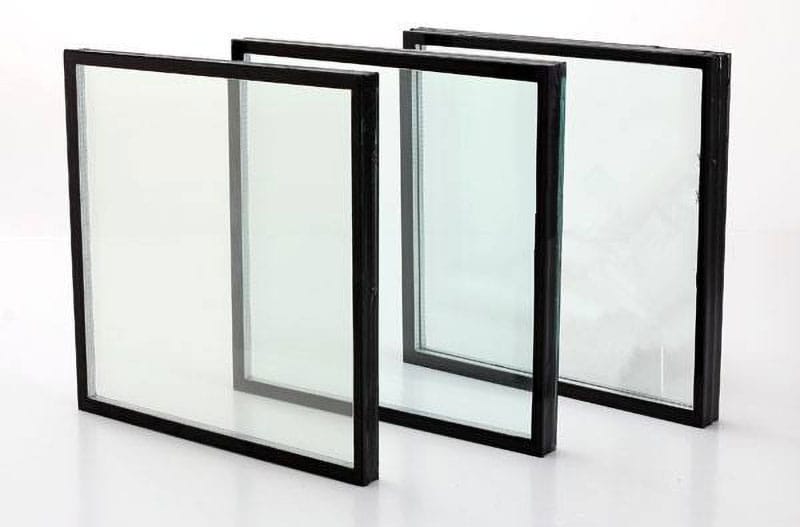
(4) Flexible Combinations
Low-e glass is not a single product but can be combined with toughened, laminated, or insulating glass forms.
Common configurations include:
6+12A+6 Low-e insulating glass (residential use)
8+1.14PVB+8 Low-e laminated glass (curtain walls)
Triple-glazed double-cavity Low-e glass (cold regions)
This flexibility allows it to meet diverse architectural needs.
- Disadvantages of Low-e Glass
(1) Higher Cost
Low-e glass generally costs 30%–60% more than ordinary insulating glass.
For example, in the domestic market:
Ordinary insulating glass: 550–800 RMB/㎡
Single-silver Low-e insulating glass: 800–1100 RMB/㎡
Double- or triple-silver Low-e insulating glass: 1200–1800 RMB/㎡
For projects with large glass façades or residential areas, this cost difference is significant.
(2) Higher Processing and Installation Demands
The Low-e coating is sensitive to environmental conditions. Improper handling during transportation, cutting, or installation can cause scratches, peeling, or oxidation, compromising both performance and appearance.
In particular, differences between hard coat (on-line) and soft coat (off-line) processes require specialized experience during construction.
(3) Light Reflection Issues
Some Low-e glass products, especially double- and triple-silver types, produce strong reflections.
While this looks sleek on office façades, it may cause “light pollution” or reduce neighbors’ daylight access in residential settings.
(4) Regional Suitability Differences
Low-e glass is not universally applicable.
In northern cold regions, triple-glazed Low-e provides significant benefits.
But in moderate climates where summers and winters are not extreme, the savings may not justify the higher costs.
- Case Studies
Case 1: Residential Project in Beijing
Beijing experiences hot summers and cold winters. A housing community adopted 8+12A+8 double-silver Low-e insulating glass. Compared with ordinary insulating glass in a neighboring community, winter indoor temperatures were 3–5°C higher, and heating costs dropped by 20%.
Case 2: Office Building in Shenzhen
Shenzhen has very hot summers. A project used 6+12A+6 single-silver Low-e insulating glass. Although costs were about 15% higher than standard glass, cooling energy consumption fell by 12%, with payback expected within five years.
- Frequently Asked Questions (FAQ)
Is the most expensive Low-e glass always the best?
Not necessarily. Triple-silver Low-e offers the best performance, but not all regions need it. In mild coastal cities, single- or double-silver products are more cost-effective.
Will Low-e glass change color?
No significant discoloration occurs. Quality Low-e coatings are uniform, appearing as a faint blue-gray or silver, with minimal difference indoors.
Is Low-e glass worth it for home use?
If you live in northern cold or southern hot regions and value comfort and energy savings, it’s worth considering. For budget-conscious homeowners, partial use (e.g., on large sun-facing windows) may be a good compromise.
How long does Low-e glass last?
High-quality products can last over 20 years, but longevity depends on sealing and installation. Seal failure may degrade performance.
Does Low-e glass affect wireless signals?
Hardly. The coating is only nanometers thick and has little effect on mobile or Wi-Fi signals.
The introduction of Low-e glass has opened new possibilities for modern architecture. It improves energy efficiency, enhances comfort, and adds modern aesthetics. However, its higher cost, installation demands, and regional applicability are real considerations.
For developers and designers, balancing cost and energy efficiency while referencing local green building standards is crucial.
For homeowners, the choice depends on climate, budget, and long-term energy savings.
In summary, Low-e glass has both advantages and disadvantages:
Advantages: Energy efficiency, comfort, aesthetics, versatile combinations
Disadvantages: Higher cost, strict processing requirements, possible reflection issues
Whether to use it depends on climate, budget, and building type. When applied appropriately, Low-e glass is not just a material but an upgrade in quality of life.

