
In Africa, many developers and property owners share the same frustration when it comes to exterior wall finishes:
Traditional brick walls are inexpensive, but their appearance is too plain to reflect a modern look.
Painted finishes tend to fade and crack, often requiring major repairs within three to five years, which means the longterm cost is not low.
Luxurious unitized curtain walls look impressive, but their price is high and installation is complex, making them unaffordable for many midsized projects.
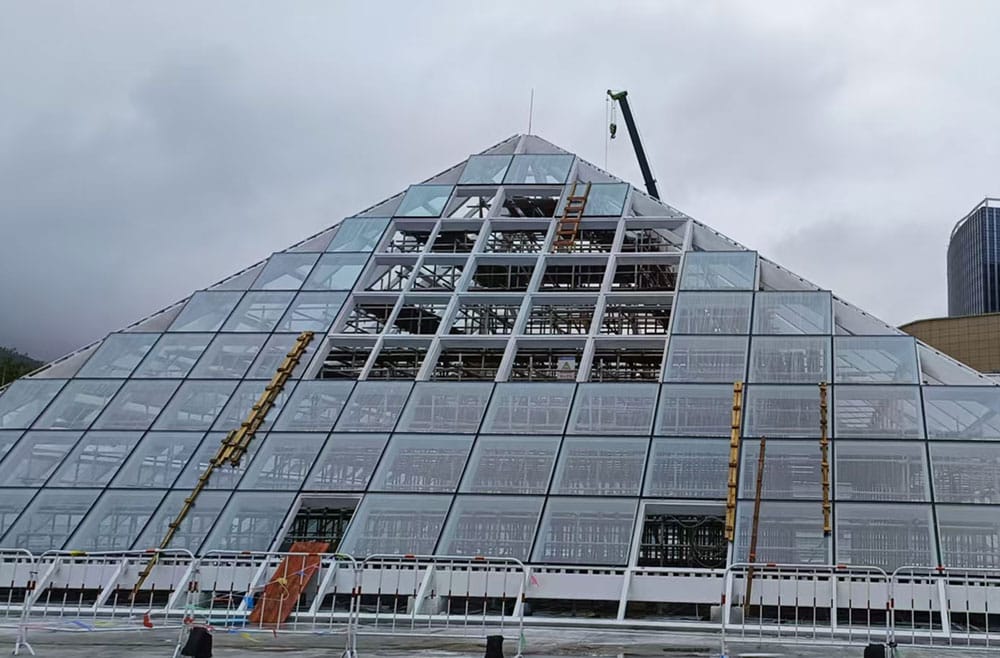
If you are facing the same challenges, it’s worth asking: is there a way to achieve a modern and elegant façade while keeping both budget and maintenance under control? The answer is — the Frame-type curtain wall system.
Why Choose the Frame-type curtain wall system?
1. Balance Between Cost and Aesthetics
The Frame-type curtain wall system is typically 20%–30% less expensive than unitized systems, yet it delivers a similarly modern appearance. In Nigeria, market prices usually range from 80–120 USD/m², which is well within the budget of most mid to highrise office buildings, hotels, and shopping malls. Compared to painted façades that require frequent refurbishments, the Frame-type curtain wall system is clearly more costeffective and durable.
2. Flexible Design, Cultural Integration
This system works not only with glass but can also be combined with aluminum panels, stone, or even woodgrain finishes. For example, in a new shopping mall in Accra, Ghana, the design team used glass together with locally sourced red granite, achieving a façade that looks both modern and deeply rooted in African cultural expression.
3. Easy to Install and Maintain
Unitized systems demand extremely high construction precision, which can be challenging for many local teams in Africa. By contrast, the Frame-type curtain wall system is assembled onsite, requiring only basic training for local workers to install efficiently, thus reducing labor costs significantly. In case a glass panel breaks, only the affected section needs to be replaced, making maintenance simple and affordable.
4. EnergyEfficient and ClimateFriendly
In Africa’s hot climate, air conditioning often accounts for more than 40% of a building’s operating costs. The Frame-type curtain wall system can be paired with insulated Low-E glass, which blocks heat and UV rays effectively. For instance, after adopting this system, an office building in Cape Town, South Africa, reduced its air conditioning energy consumption by 15%, saving the owner a substantial amount in electricity bills.
Frequently Asked Questions
Q1: Is the Frame-type curtain wall system expensive?
Prices typically range from 80–120 USD/m². It is more affordable than unitized systems and more durable than traditional finishes, making it a highly costeffective option.
Q2: Can local construction teams handle the installation?
Absolutely. The Frame-type curtain wall system does not require extreme precision. With minimal training, local teams can carry out the installation effectively.
Q3: How long does it last?
With highquality aluminum profiles and structural sealant, the system can last for over 25 years, requiring only routine inspections and minor maintenance.
Q4: Is it suitable for Africa’s hot climate?
Yes. When paired with insulated Low-E glass, the system significantly reduces indoor temperatures, cutting down on air conditioning expenses.
My Perspective
In a conversation with a contractor in Ghana, he remarked: “We used to think curtain walls were a luxury, but now the Frame-type curtain wall system makes them affordable for many more projects.” This reflects exactly why the system fits Africa’s market needs so well.
As China–Africa cooperation deepens, Chinese curtain wall companies bring technical expertise, while young African designers add local cultural elements. This collaboration gives the Frame-type curtain wall system even greater potential for development across the continent.
Future Trends
1. Energy Efficiency – More highperformance glass and ecofriendly materials will be integrated into Frame-type curtain wall systems.
2. Localized Construction – Training local workers reduces costs and strengthens the supply chain.
3. Cultural Expression – Façades will increasingly reflect African art and traditional motifs, becoming new cultural landmarks.
4. Digital Design – BIM technology will gradually be applied in curtain wall design, improving efficiency and accuracy.
If you are struggling with exterior wall design and want to balance aesthetics, cost, and performance, the Frame-type curtain wall system is the ideal choice. It overcomes the plain look and high maintenance of traditional finishes, while avoiding the high cost and complex installation of unitized systems — making it truly suitable for the African market.
Whether for office buildings, shopping malls, hospitals, or cultural centers, the Frame-type curtain wall system delivers higher value and longterm benefits. Let’s embrace this modern and practical building solution to brighten the skyline of African cities.

