
A framed curtain wall is one of the most widely used curtain wall systems in modern building façades. It relies on aluminum alloy mullions and transoms to form a solid structural frame attached to the main building, onto which glass, stone, or aluminum panels are installed. This system combines both aesthetics and functionality for exterior walls. Because of its structural stability and flexible installation, the framed curtain wall has been adopted worldwide, particularly in Africa’s rapidly growing urban architecture.
Over the past decade, Africa’s urbanization rate has steadily increased. According to the United Nations African Urbanization Report, Africa’s urban population is expected to exceed 600 million by 2030. With the rise of modern commercial complexes, office towers, and high-end residential projects, the demand for exterior wall systems has surged. The framed curtain wall perfectly meets local developers’ requirements for beauty, durability, and cost-effectiveness.
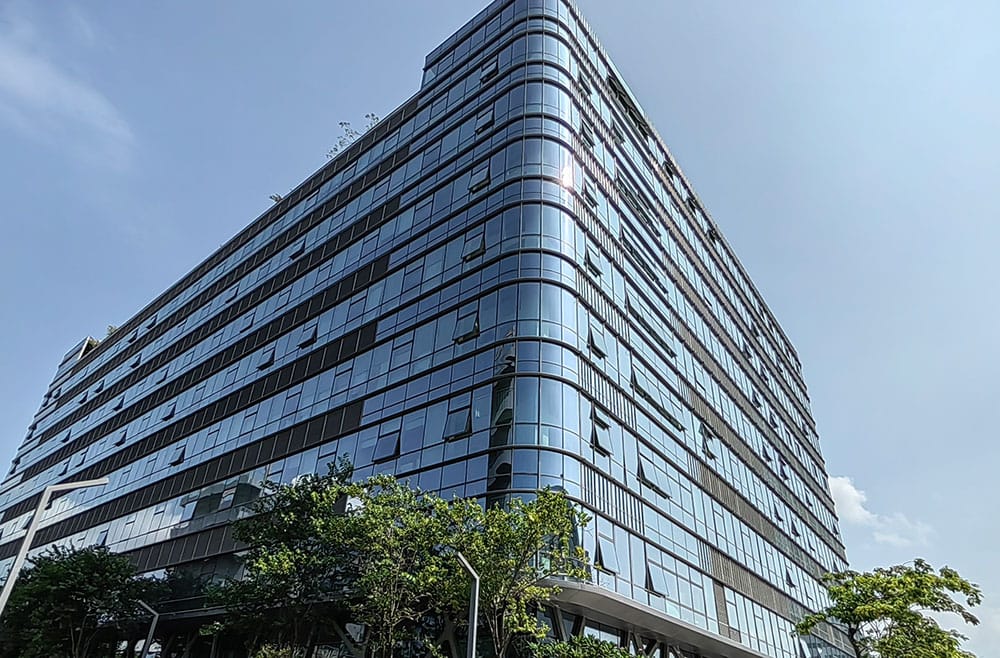
Main Advantages of Framed Curtain Walls
Structural Safety and Reliability
The core of a framed curtain wall lies in the load-bearing frame formed by mullions and transoms. This design effectively distributes wind loads, seismic forces, and self-weight, ensuring safety even in coastal regions or areas with strong winds. For instance, in a waterfront office tower project in Lagos, Nigeria, where strong sea winds are common, the framed curtain wall system provided building owners with great confidence in long-term stability.
Flexible Design and Strong Adaptability
Africa has diverse architectural styles, ranging from Morocco’s modern Moorish-inspired designs to Johannesburg’s glass skyscrapers. The framed curtain wall can adapt to all these styles. It can be designed as a fully transparent glass façade or combined with stone and metal panels to achieve a mix of traditional and contemporary appearances. This adaptability aligns well with Africa’s “diversified + modernized” construction trend.
Energy Efficiency and Environmental Benefits
In Africa’s hot climate, reducing energy consumption is a top concern for developers. Framed curtain walls can be paired with insulated glass or Low-E coated glass, significantly lowering indoor cooling loads. For example, in a business center in Nairobi, Kenya, the use of a framed curtain wall reduced the building’s overall energy consumption by about 18%. This not only saved operational costs but also helped the project achieve a higher green building certification.
Common Applications of Framed Curtain Walls
Commercial Complexes
In emerging African commercial hubs, framed curtain walls are widely applied in shopping centers and office buildings because of their high transparency and modern appearance. For example, a large shopping mall in Addis Ababa, Ethiopia, adopted a full-glass framed curtain wall design, attracting numerous international brands and increasing its overall commercial value.
Government and Educational Buildings
Framed curtain walls are also popular in government offices and university campuses. They not only showcase a modern image but also meet energy-saving and environmental requirements for public buildings. In Accra, Ghana, a government office building incorporated framed curtain walls with external louvers, achieving a balance between natural lighting and sun shading.
High-End Residential Projects
With the rapid growth of Africa’s middle class, demand for high-end housing has increased. Framed curtain walls are often used in villas and apartment buildings, enhancing both the aesthetic value and comfort of living spaces. In Abuja, Nigeria, a luxury residential development used a combination of stone and glass framed curtain walls to create a grand and elegant appearance, which was highly appreciated by buyers.
Challenges and Solutions in the African Market
Cost and Budget Concerns
Many African developers often wonder: Is a framed curtain wall too expensive? In fact, compared to stone cladding or full steel façades, framed curtain walls are more cost-effective in both materials and construction. By sourcing aluminum profiles and glass from China and combining them with local assembly, overall costs can be significantly reduced.
Construction Technology and Workforce Training
Installing framed curtain walls requires a certain level of technical expertise. In countries with weaker construction capacity, poor installation may cause water leakage or loose glass panels. The solution is to engage experienced curtain wall contractors from China or local markets at the project’s early stage, while also providing short-term training for construction teams. For example, in a university building project in Zambia, cooperation between Chinese and local teams ensured high-quality curtain wall installation.
Climate Adaptability
Africa’s climate varies widely: North Africa is hot and dry, West Africa is humid and rainy, while East Africa has cooler highland conditions. Without localized design considerations, issues such as thermal expansion, contraction, or sealant failure may occur. Therefore, during the design stage, it is crucial to select appropriate glass, sealants, and drainage systems based on local climate conditions.
Frequently Asked Questions (FAQ)
Q1: What is the lifespan of a framed curtain wall?
A: Typically, over 25 years. With high-quality aluminum, weather-resistant sealants, and regular maintenance, the lifespan can even exceed 30 years.
Q2: Is the framed curtain wall suitable for African construction conditions?
A: Yes, it is. Thanks to its segmented installation process, it can be assembled step by step on-site, making it feasible for local workers with proper guidance.
Q3: How much does a framed curtain wall cost?
A: Depending on materials and design, the price usually ranges between USD 80 and USD 150 per square meter. With localized construction strategies, overall costs become even more competitive.
Case Study
In Dar es Salaam, Tanzania, a newly built international trade center chose a framed curtain wall system. Although the project team initially worried about costs, by sourcing materials from China and carrying out local installation, the total cost was about 20% lower than traditional stone cladding. After completion, the building not only became a local landmark but also earned a “Green Building Certification” due to its superior energy performance.
Similarly, in Cairo, Egypt, a residential high-rise combined framed curtain walls with traditional Arabic geometric patterns. This design respected local culture while presenting a modern look, attracting significant attention from homebuyers.
Future Development Trends
With the advancement of the Belt and Road Initiative across Africa, more infrastructure and commercial complexes are expected to adopt framed curtain walls. Key future trends include:
Greater use of eco-friendly glass and recyclable aluminum;
Integration of intelligent louvers and photovoltaic power systems for energy self-sufficiency;
Incorporation of local cultural elements into façade designs, creating modern buildings with regional identity.
Framed curtain walls are not just building façade systems; they are key contributors to Africa’s modern urbanization process. Combining safety, flexibility, and energy efficiency, they meet the diverse needs of commercial, government, and residential projects. While challenges in cost, construction, and climate adaptation still exist, with proper design and cooperation models, framed curtain walls can shine in the African market.
If you are considering a façade system that balances aesthetics and functionality, the framed curtain wall is undoubtedly a reliable choice. Partner with a professional curtain wall company today and let your building stand out on Africa’s skyline.
Would you like me to also refine the English version for SEO (e.g., bolding “framed curtain wall,” optimizing subheadings, and adding keyword variations) so it’s ready for publishing on your website?

