
In recent years, Africa’s construction market has been growing rapidly. High-rise office buildings, five-star hotels, large shopping malls, convention centers, and other modern architectural projects are emerging across many countries and cities. However, despite strong demand, the local curtain wall supply and installation industry in Africa remains underdeveloped. In the aluminum curtain wall sector in particular, most high-quality products still rely on imports. This reality has made finding a reliable African aluminum curtain wall supplier a priority for many owners, developers, contractors, and design institutes.
Current Status of the African Aluminum Curtain Wall Market
In active construction markets such as Nigeria, South Africa, Kenya, Ghana, and Egypt, the use of aluminum curtain walls is steadily increasing each year. This is mainly because aluminum curtain walls are lightweight yet strong, corrosion-resistant, highly malleable, and can be combined flexibly with glass, insulated panels, and other materials to create modern, energy-efficient building facades.
However, Africa’s domestic capabilities in aluminum curtain wall manufacturing and deep processing are relatively limited. Key shortcomings include precision extrusion of aluminum profiles, advanced surface treatment technologies, and fully systemized design capabilities. As a result, many large projects must rely on importing aluminum profiles and system components from overseas. This not only increases procurement and transportation costs but also creates uncertainties in delivery times and quality assurance. Such gaps in the industrial chain make high-quality African aluminum curtain wall suppliers a scarce resource in the market.
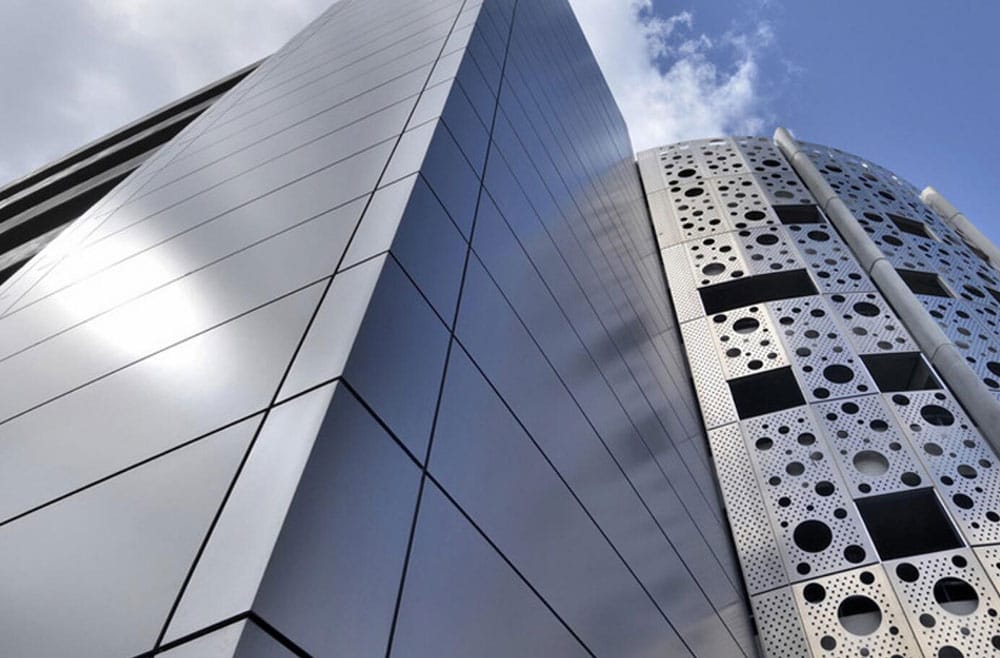
ZDMQ’s Role in Africa’s Aluminum Curtain Wall Supply Chain
With extensive experience in curtain wall projects worldwide, ZDMQ has long been providing high-quality aluminum curtain wall systems to global markets. The company has accumulated valuable experience in landmark building projects, giving it a natural advantage in the African market.
As a key player among African aluminum curtain wall suppliers, ZDMQ not only offers aluminum profiles that meet international standards but also delivers complete curtain wall system solutions — including structural design, profile processing, surface coating, glass integration, and on-site technical support. This integrated “design + manufacturing + installation guidance” model effectively addresses the technical and service gaps in Africa’s local curtain wall industry.
The Importance of Aluminum Curtain Walls in African Commercial Buildings
Enhancing Architectural Image
Aluminum curtain walls offer a modern appearance with clean lines, greatly improving a building’s visual impact and helping shape new urban landmarks. For commercial complexes and high-end office buildings, this visual value often translates directly into higher rental income and brand prestige.
Adapting to Diverse Climate Conditions
Africa’s climate ranges from tropical and humid to hot desert environments. Thanks to their excellent corrosion resistance and weather durability, aluminum curtain walls maintain stable performance in coastal areas with high salt exposure as well as in regions with intense sunlight.
Energy Efficiency and Sustainability
When paired with insulating glass or Low-E glass, aluminum curtain walls achieve excellent thermal insulation, reducing air-conditioning energy consumption. This is particularly important for African cities facing energy shortages and aiming to develop green buildings.
High Construction Efficiency
Most curtain wall systems are prefabricated in factories and assembled on-site, which shortens construction schedules and reduces the risks associated with high-altitude work. This is a significant advantage for projects in Africa where site conditions may be challenging.
The Supply Strength of Middle Eastern Curtain Wall Companies
Middle Eastern curtain wall companies often possess several strengths that make them highly competitive as African aluminum curtain wall suppliers:
Comprehensive Production Systems: From aluminum extrusion and anodizing to electrophoresis, powder coating, and PVDF coating, ensuring surface treatments meet different climate needs.
Systematic Design Capabilities: In-house curtain wall engineering teams capable of optimizing structural designs to balance safety, energy performance, and aesthetics.
International Project Experience: Familiarity with cross-border logistics, customs procedures, quality standards, and construction coordination reduces project risks.
Localized Service Networks: Partnerships with African contractors and installation teams, providing on-site technical training and after-sales support.
Case Study: Middle Eastern Curtain Walls in the African Market
In one project in Senegal, we successfully completed the supply and installation of an aluminum curtain wall system. We provided complete aluminum profiles and glass curtain wall solutions, dispatched technical experts to the site for installation guidance, and trained the local construction team. This model not only ensured project quality but also helped develop a local workforce skilled in curtain wall installation, creating a foundation for ongoing cooperation.
Opportunities and Challenges in the African Market
Looking ahead, Africa’s urbanization rate is expected to keep rising over the next decade, with demand for commercial buildings and facilities continuing to expand. This will drive sustained demand for African aluminum curtain wall suppliers.
However, differences in infrastructure, logistics, tariffs, and policies among African countries pose challenges to the supply chain. Suppliers aiming to enter this market must ensure product quality while establishing flexible logistics systems and strong local partnerships to maintain competitiveness.
Africa is now at a critical stage in upgrading its construction industry. For local projects, finding an experienced, technically capable, and reliable African aluminum curtain wall supplier is key to ensuring successful project delivery and gaining an edge in an increasingly competitive market.
With its mature curtain wall system solutions, international project experience, and flexible local collaboration capabilities, the Middle Eastern curtain wall industry is well-positioned to become a core supply force in the African market.

