
In today’s urban architecture, one trend is becoming increasingly visible. More and more buildings are adopting sleek, lightweight facades with a metallic finish. From office towers and shopping malls to hospitals and upscale residential complexes, aluminum curtain wall systems are being widely used to shape the modern skyline.
But what exactly is an aluminum curtain wall system? Why is it suitable for so many types of buildings? And what key advantages make it a strong alternative to traditional exterior wall materials like concrete, ceramic tiles, or stone? Let’s explore these questions in detail.
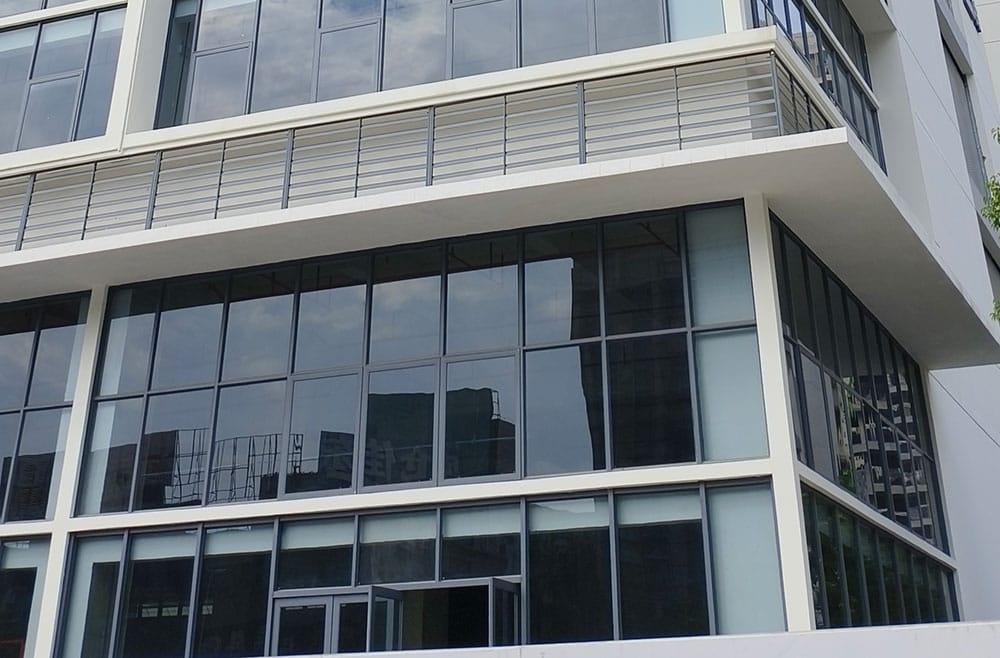
What Is an Aluminum Curtain Wall System?
An aluminum curtain wall system is a non-load-bearing external wall made primarily of aluminum sheets or aluminum alloy profiles, installed on the exterior of a building’s main structure. While it does not support structural loads, it plays a critical role in protecting the building, enhancing its appearance, and improving overall performance.
Aluminum curtain walls generally come in two main types:
Aluminum panel curtain walls: Made from high-strength aluminum alloy sheets that are processed through bending, welding, coating, and assembling.
Aluminum profile curtain walls: Constructed with aluminum framing, combined with other materials such as glass, metal panels, or composite panels.
One of the biggest advantages of this system is its design flexibility. It allows for various custom shapes, colors, and surface finishes to match the specific architectural vision of a project.
What Types of Buildings Use Aluminum Curtain Wall Systems?
Aluminum curtain wall systems are highly versatile and are now commonly used across a wide range of building types:
- Commercial Complexes
Shopping centers, malls, and retail plazas often choose aluminum curtain walls for one simple reason — they look modern, are quick to install, and are easy to maintain.
Today’s commercial buildings need more than just functionality; they need façades that draw attention and express brand identity. With diverse color options, metallic textures, and bold three-dimensional designs, aluminum curtain walls help create a high-end and contemporary look. They are also easy to clean, dust-resistant, and fade-resistant, making them ideal for high-traffic public areas.
- Office Towers and Corporate Headquarters
Aluminum curtain walls are a classic choice for office buildings. Many corporate towers feature a façade made almost entirely of glass and aluminum.
The logic is practical. These systems are lightweight yet strong, reducing structural load while offering excellent air and water tightness, as well as sound insulation. This is especially important for high-rise buildings and those in coastal or high-wind areas, where stability and wind resistance are critical.
Maintenance costs for tall structures are also a key concern. Aluminum curtain walls are highly durable, corrosion-resistant, and weatherproof — helping reduce long-term upkeep expenses.
- Hospitals and Educational Buildings
Hospitals, universities, and other institutional buildings often have specific demands for durability, sustainability, and long-term efficiency.
Aluminum curtain walls meet these needs well. The materials are recyclable, non-toxic, and do not emit harmful substances. In addition, they can be integrated with insulation layers to improve energy efficiency and indoor climate control.
For hospitals in particular, the anti-microbial finishes available with aluminum surfaces help prevent the buildup of bacteria and mold, contributing to a healthier indoor environment.
- High-End Residential and Apartment Projects
While residential buildings used to avoid curtain wall systems, the market is shifting.
In upscale residential developments and modern apartment buildings, developers are now adopting aluminum panel or profile curtain walls to achieve a more sophisticated and modern look. Aesthetic appeal aside, these systems offer real technical benefits:
Prevent water leakage, cracking, and wind deformation
Standardized installation quality with improved project control
Lightweight materials that enable faster installation and shorter construction timelines
For residents, this means improved temperature consistency indoors, reduced external noise, and an overall more comfortable living experience.
- Public and Landmark Buildings
Major public buildings such as airports, museums, convention centers, libraries, and stadiums often serve as visual landmarks in a city.
These projects tend to feature bold, custom-designed façades that push the limits of form and structure. Traditional materials struggle with curved, angled, or large-span shapes, but aluminum curtain wall systems can be precisely fabricated using techniques like bending, slotting, and welding to bring complex architectural visions to life.
The lightweight nature of aluminum also helps reduce structural loads — especially important for large-span roofs and curved façades.
Key Advantages of Aluminum Curtain Wall Systems
The growing popularity of aluminum curtain walls is no accident. Their real-world benefits make them a compelling choice across industries and building types:
Lightweight and Strong – Ideal for High-Rise Buildings
Compared to stone or concrete walls, aluminum curtain walls weigh only a fraction as much — yet their strength is sufficient to withstand strong winds, seismic activity, and long-term structural stresses. This makes them ideal for tall buildings and areas prone to earthquakes.
Weather and Corrosion Resistant – Lower Maintenance Costs
With surface treatments like anodizing or fluorocarbon coating, aluminum can withstand UV rays, acid rain, and humid conditions for years without fading, cracking, or warping.
Flexible Aesthetics – Fully Customizable Designs
Aluminum panels can be coated in thousands of colors and finished with special textures such as brushed, copper-like, stone-like, perforated, or laser-cut designs. This opens the door to bold architectural expression and personalized façade aesthetics.
Systemized Installation – Efficient and High-Quality Construction
Aluminum curtain walls are manufactured and pre-fabricated off-site, then assembled on-site. This reduces construction errors and speeds up project delivery while ensuring consistent quality and safety standards.
A Modern Solution That Balances Form and Function
Aluminum curtain wall systems are not a luxury — they are a practical and efficient exterior wall solution for modern buildings. Whether for commercial, institutional, or residential applications, these systems can be tailored to meet various budget levels and performance needs.
As the global construction industry continues to prioritize sustainability, energy efficiency, and faster project cycles, aluminum curtain walls will no doubt expand their role in shaping the architecture of tomorrow. Choosing the right materials is always the first step toward building a reliable, future-proof structure.

