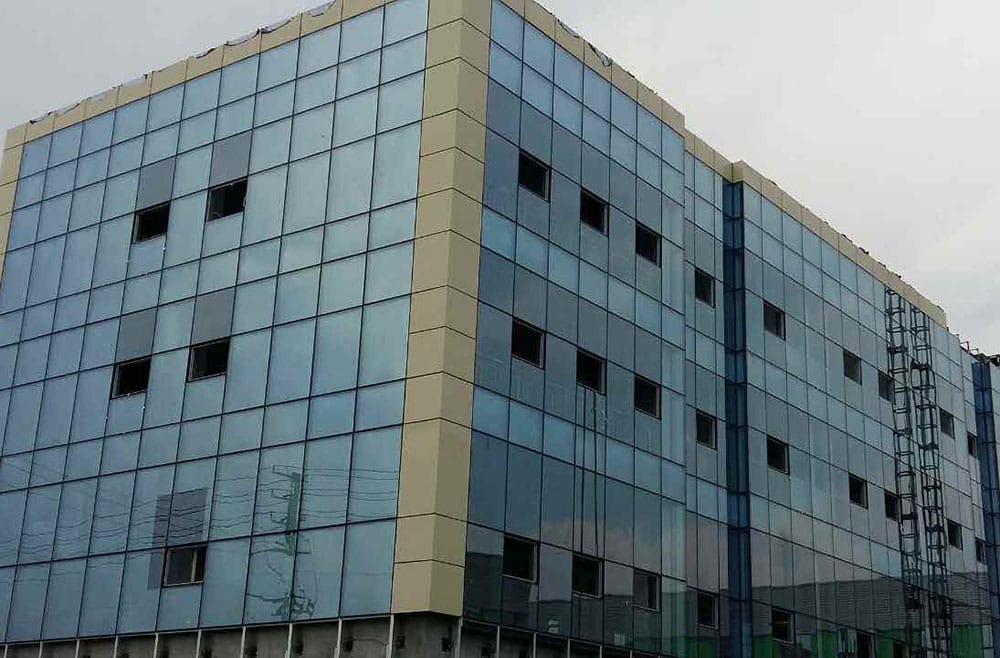
With the acceleration of urbanization, glass curtain walls are increasingly used in various types of buildings. In Africa, whether in Kenya, Nigeria, Ghana, or Ethiopia, high-rise office buildings, commercial complexes, star-rated hotels, and even some residential projects are increasingly inclined to use glass curtain walls as building facade solutions.
However, glass curtain walls are highly systematic building components. Unlike ordinary doors and windows, they involve a series of links such as design, structure, production, transportation, construction, and maintenance. So, in the actual building environment in Africa, what processes are required to install a complete glass curtain wall system from scratch? And what are the areas that need special attention?
Zhongdong Curtain Wall will gradually sort out the processes required for glass curtain walls in Africa from the perspective of more than 30 years of glass curtain wall projects, combined with the local environment in Africa (climate, construction conditions, customs logistics, etc.), to help you smoothly promote glass curtain wall projects.
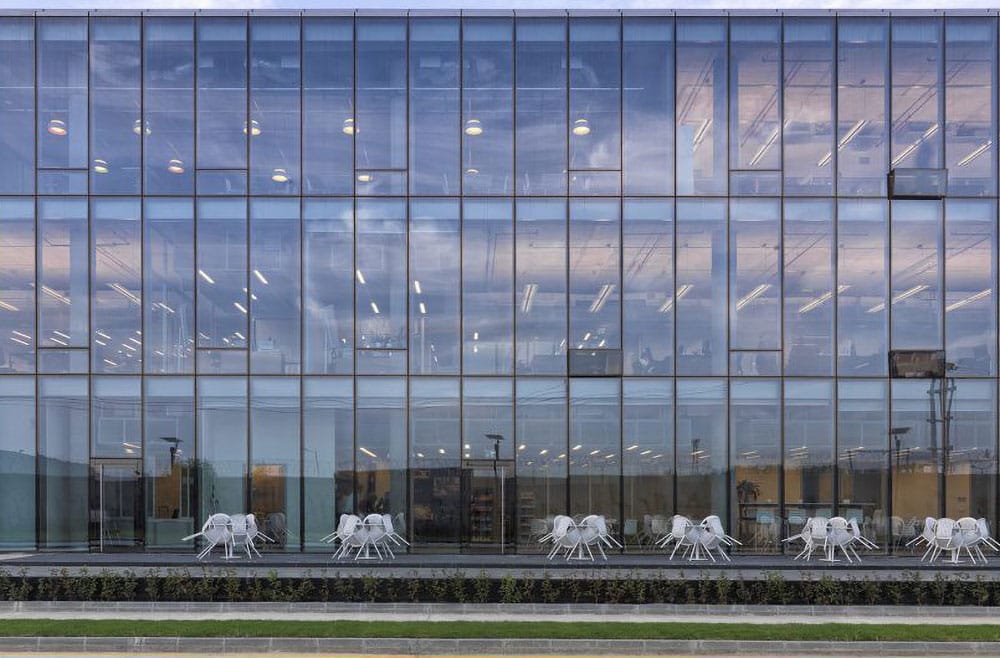
1. Glass curtain wall project establishment stage: clarify demand and feasibility
Before the glass curtain wall project officially starts, developers, designers and construction units need to conduct project establishment assessment and clarify the following core contents:
Project type and function
Commercial office building, shopping center, hotel, school, hospital, or residential project?
Does it require insulation, energy saving, noise prevention, windproof, and UV protection?
Budget and material grade estimation
Is it an economical or high-end building?
How big is the area of the glass curtain wall? What is the initial unit price control range?
Local building codes and regulations
Do countries (such as Kenya and Nigeria) have mandatory standards for safety, energy efficiency, earthquake resistance, etc. for facades?
Does it need government approval or technical evaluation?
The output of this stage is: whether to use glass curtain walls, which type to choose, and control the budget range.
2. Architectural glass curtain wall design coordination stage: in-depth design and technical parameter confirmation
Glass curtain walls are not “universal templates”. They must be professionally designed according to factors such as building facades, structural loads, and geographical locations.
Design deepening coordination (elevation + section)
Determine the curtain wall grid, window position, door opening size
Whether the design adopts open frame, hidden frame, unit type or point support structure
Climate condition analysis (African characteristics)
East Africa/West Africa has a tropical climate, and insulation and sunshade need to be strengthened
The Sahel region has strong winds and sand, and the strength and sealing of the glass need to be considered
Coastal areas have high humidity and strong salt spray corrosion, so high-quality aluminum profiles and anti-corrosion glue are required
Technical parameter confirmation
Glass specifications: such as 6+12A+6 tempered hollow, Low-E glass, laminated safety glass
Aluminum profile section, thickness and surface treatment method
Compatibility of hardware and installation system
At this stage, the engineering design team of the Chinese glass curtain wall supplier completes the detailed drawings and connects with the local construction party in Africa.
3. Glass curtain wall material procurement and production stage: curtain wall customized factory manufacturing
Once the design drawings are confirmed, the glass curtain wall supplier will enter the production stage. The advantages of Chinese glass curtain wall manufacturers are high efficiency + customization:
Customization and processing of aluminum profiles
Fixed-length cutting according to the facade structure
Surface anodizing, electrophoresis, spraying and other treatments, strong anti-oxidation ability
Glass production and processing
Tempered treatment, lamination, hollow gas injection, Low-E coating, etc.
All glass has passed domestic/international certification (CCC, CE, SGS)
Accessories and structural adhesive packaging
Packaging and classification according to numbers to facilitate efficient assembly during overseas construction
The factory will conduct pre-assembly tests to ensure accurate dimensions and high system coordination.
4. Logistics and customs clearance stage: efficient transportation to African construction sites
Logistics from China to Africa is mature and reliable, usually using full container shipping (FCL):
Shipping arrangement and packaging
Steel pallets for aluminum profiles, wooden boxes with anti-collision foam for glass
All material numbers correspond to installation drawings for easy identification by local construction parties
Shipping to designated ports
Such as Kenya (Mombasa Port), Ghana (Tema Port), Nigeria (Lagos Port), etc.
Customs clearance process
Familiar with the tariff structure of various countries: such as tariff + value-added tax (VAT)
Customs clearance process can be accelerated through local agents
5. On-site construction stage of glass curtain wall: installation, commissioning, safety inspection
This is the most critical stage, which determines the final effect, safety and delivery time of the glass curtain wall. The usual process is as follows:
1. Installation of keel structure
First, install steel subframe or aluminum keel on the exterior wall of the building
Control the installation error within ±4mm to ensure the accuracy of subsequent glass positioning
2. Glass unit hoisting
Use a suction cup crane or hanging basket to hoist the glass to the designated position
Use structural glue + mechanical fixing installation
3. Sealing and waterproofing
Apply weather-resistant glue to all joints to prevent rainwater leakage
Especially strengthen the bottom drainage design to adapt to the heavy rain weather in Africa
4. Safety and quality inspection
Curtain wall verticality and horizontality inspection
Pull-out test, air tightness, water tightness test
Cleaning and local repair
It is recommended to keep in touch with Chinese suppliers, remote video assistance or arrange a technical guidance team on site.