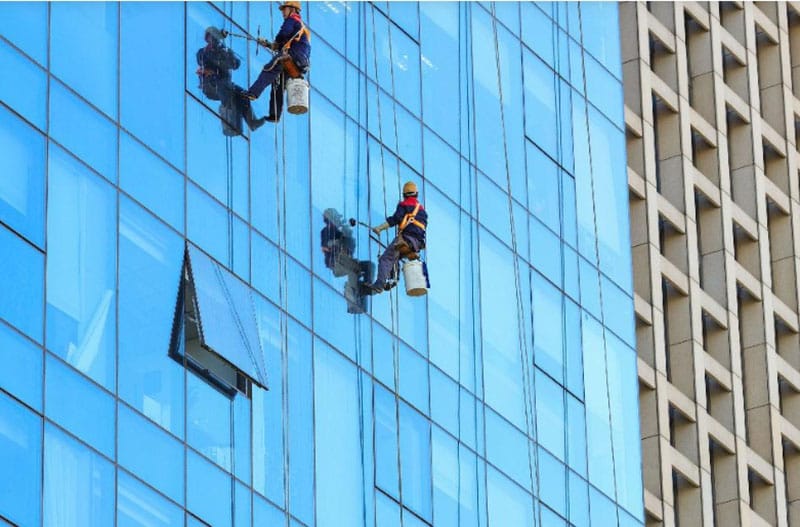
Many modern high-rise buildings use glass curtain walls, which look high-end and have good lighting. But over time, dust will accumulate on the glass, and there will be traces of rain, even bird droppings, oil stains, etc., which will not only affect the appearance, but also the life of the glass. So, how should the glass curtain wall be cleaned regularly?
1. Why should the glass curtain wall be cleaned regularly?
Many people think that it’s okay if the glass curtain wall is dirty, anyway, it can be washed clean when it rains. In fact, it is not. Regular cleaning is very important, mainly for the following reasons:
1. Maintain beauty and enhance the image of the building
The glass curtain wall is the “face” of the building. If it is covered with dust and water stains, the whole building will look old and unprofessional. Especially for office buildings and shopping malls, clean glass can give people a better impression.
2. Extend the service life of glass
If the glass surface is covered with dust for a long time, especially acid rain and salt fog in industrial areas and coastal areas, it will slowly corrode the glass and metal frame, causing the glass to become blurred, the sealant to age, and even water seepage problems.
3. Improve lighting and save energy
Clean glass has good light transmittance, making the room brighter, reducing the time of turning on the lights during the day and saving electricity. If the glass is too dirty, natural light will be blocked, and the lights will have to be turned on for a long time, increasing energy consumption.
4. Prevent the accumulation of mold and pollutants
Dust, bird droppings, and rain marks are easy to accumulate at the glass joints, which may breed mold over time and even affect the indoor air quality.
2. What are the common stains on glass curtain walls?
In different environments, the dirtiness of glass curtain walls is different. Common stains include:
1. Dust and sand-dust is easy to accumulate in windy places, especially near construction sites.
2. Rain marks-water stains left after rain evaporates, especially in hard water areas (rich in minerals in the water), which will form white spots after drying.
3. Bird droppings and insect residues-bird droppings are highly acidic and will corrode the glass if not cleaned in time.
4. Oil and industrial dust – Glass near the road or factory is easily stained with oily pollutants from vehicle exhaust and industrial emissions.
Different stains require different cleaning methods. Some only require clean water, while others require special cleaning agents.
3. Cleaning methods for glass curtain walls
The cleaning methods for glass curtain walls mainly depend on the height and structure of the building. The following are common methods:
1. Manual scrubbing (suitable for low-rise buildings)
If the building is only a few stories high, you can use the traditional “manual scrubbing method”. The tools include:
Telescopic rod + glass scraper (scraper with rubber strips)
Sponge or microfiber cloth
Glass cleaner (or homemade: water + detergent + a small amount of white vinegar)
Steps:
1. Rinse the glass with clean water first to soften the dust.
2. Spray the cleaner and scrub with a sponge or brush.
3. Use a glass scraper to scrape off the dirty water from top to bottom to avoid leaving water marks.
4. Finally, wipe the edges and frame with a dry cloth.
Advantages: low cost, suitable for cleaning small areas.
Disadvantages: low efficiency, not suitable for high-rise buildings.
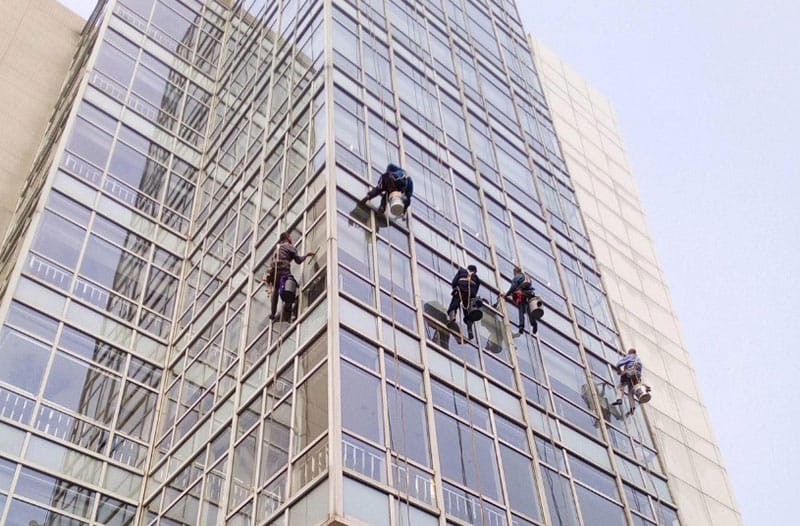
2. Cleaning with a hanging basket or rope (commonly used for high-rise buildings)
For high-rise buildings with dozens of floors, manual scrubbing is not realistic, and a hanging basket or spiderman (high-altitude workers) is generally used for cleaning.
(1) Cleaning with a hanging basket
The worker stands in an electric hanging basket and rinses the glass with a high-pressure water gun + detergent.
Then scrape it clean with a glass scraper and finally rinse with clean water.
Advantages: high safety, suitable for large curtain walls.
Disadvantages: requires professional equipment and is relatively expensive.
(2) Spiderman (rope operation)
The cleaning personnel tie a safety rope and descend from the roof, scrubbing the glass while descending.
Suitable for special-shaped buildings or situations where a hanging basket cannot be installed.
Advantages: flexible, suitable for complex structures.
Disadvantages: high risk, must be operated by a professional team.
3. Automatic window cleaning robot (new technology)
Some high-end office buildings now install track-type window cleaning machines, similar to “automatic sweeping robots”, which can automatically clean glass along the preset track.
Advantages: safe, efficient, suitable for super high-rise buildings.
Disadvantages: high initial installation cost and complex maintenance.
IV. Precautions for cleaning glass curtain walls
1. Safety first! High-altitude operations must be professional
High-altitude cleaning must be performed by certified high-altitude workers, ordinary people should not try!
When the wind speed exceeds level 6 (about 12 meters/second), high-altitude operations are prohibited.
Safety belts must be worn during operation, and a safety warning area must be set up.
2. Choose a suitable cleaning agent
Ordinary dust: clean water + neutral detergent.
Stubborn water stains: white vinegar + water (1:1) or special glass water stain remover.
Oil stains: wipe with alcohol or decontamination powder.
Attention! Do not use strong acid (such as hydrochloric acid) or strong alkali (such as caustic soda) cleaners, which will corrode glass and metal frames.
3. Avoid cleaning under the scorching sun
When exposed to the sun, the cleaner will evaporate quickly, leaving water marks on the glass. The best time to clean is in the morning or evening.
4. Clean regularly, don’t wait until it is too dirty to deal with it
It is generally recommended to clean office buildings every 36 months.
Industrial areas or places with serious pollution can be cleaned every 23 months.