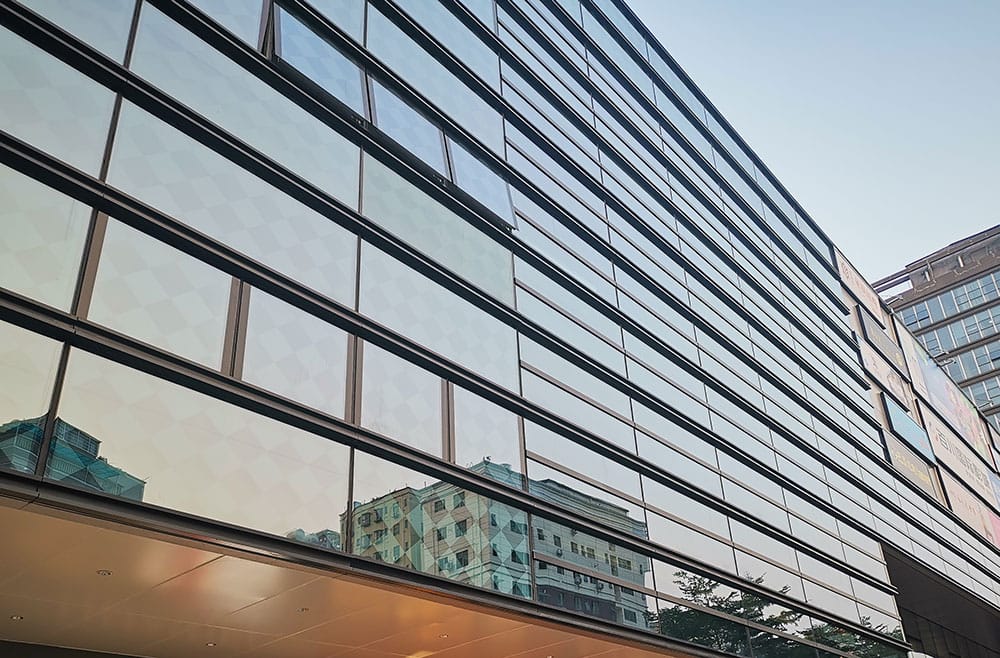
As the core element of exterior wall buildings, glass curtain walls not only bear the function of enclosure structures, but also are the carriers of the integration of architectural aesthetics and technology. Faced with a variety of glass curtain wall types on the market, designers and owners often fall into a dilemma of choice. Today, from the perspective of the entire life cycle of the building, Middle East Curtain Wall systematically sorts out the selection logic of glass curtain walls and provides a decision-making framework covering technical parameters, economic costs, and operation and maintenance.
1. Basic selection principles based on building attributes
1. Functional positioning determines the level of curtain walls
– The preferred unitized curtain wall system for super high-rise landmark buildings (300m+) has a factory prefabrication rate of 85%, an on-site installation accuracy of ±1.5mm, and a construction speed of 1 layer/day, which is 30% more efficient than traditional frame curtain walls.
– Commercial complexes recommend a combination of frame curtain walls + local point-supported curtain walls, which not only controls the cost (about 1,200 yuan/㎡), but also creates frameless visual transparency in spaces such as atriums.
– Industrial buildings should use an exposed frame curtain wall system, with an openable fan ratio of up to 30%, combined with Low-E glass to maintain energy-saving performance while meeting natural ventilation needs.
2. Climate adaptability technology matrix
Establish a selection model containing 5 core parameters:
– Wind pressure resistance (≥5kPa in level 9 wind zone)
– Water tightness (≥700Pa in typhoon zone)
– Air tightness (≥4 level in severe cold areas)
– Heat transfer coefficient (K≤1.5W/(㎡·K) in cold areas)
– Shading coefficient (SC≤0.35 in tropical areas)
For example, the Burj Khalifa in Dubai uses a unitized double-layer curtain wall, with an outer layer of insulating glass (K=1.2) and an inner layer of vacuum glass (K=0.6), which still maintains indoor thermal stability under a temperature difference of 50℃.
2. Full-cycle cost optimal solution model
1. Initial investment comparison
– Frame curtain wall: 800-1500 yuan/㎡ (including installation)
– Unit curtain wall: 2000-3500 yuan/㎡
– Photovoltaic curtain wall: 4500-8000 yuan/㎡
2. 20-year operation and maintenance cost simulation
– The average annual maintenance fee of the hidden frame curtain wall is about 80 yuan/㎡ (the replacement cycle of the structural adhesive is 8-10 years)
– The maintenance cost of the point-supported curtain wall is as low as 30 yuan/㎡/year, but an emergency maintenance fund of 0.5% of the cost needs to be reserved
3. Technical life matching analysis
– The life of ordinary aluminum alloy profiles is 25 years VS the life of stainless steel point-to-point fittings is 50 years
– The effective period of structural adhesive is 15 years VS the weather-resistant adhesive is 10 years
– The efficiency attenuation rate of photovoltaic modules (0.5% per year) matches the life cycle of the building